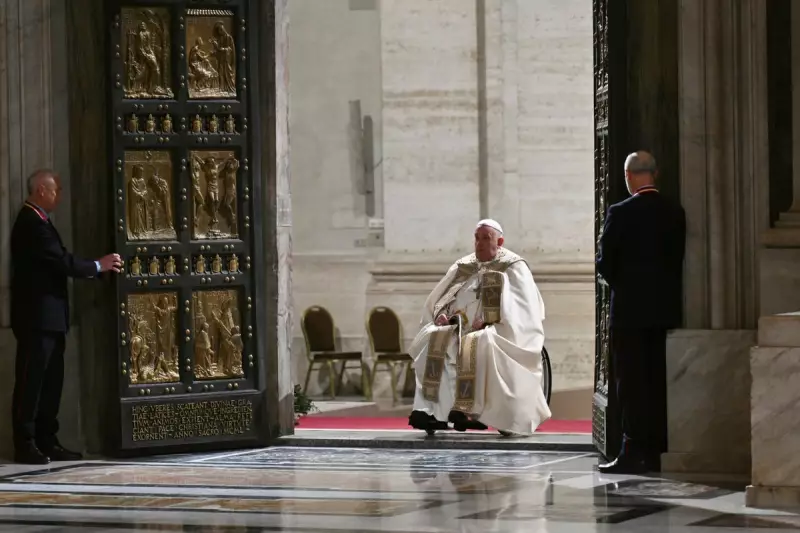
The Vatican has declared its 2025 Holy Year a resounding success, releasing final figures showing that more than 33 million pilgrims participated in the centuries-old religious event. The rare Jubilee, which saw one pope open it and another close it, concluded on Tuesday 6th January 2026 as Pope Leo XIV shut the Holy Door of St. Peter’s Basilica.
Record Pilgrimage Numbers and Papal Transition
According to the Vatican's final accounting, a total of 33,475,369 pilgrims took part in the Holy Year events. The top nationalities represented were from Italy, the United States, and Spain. The Vatican's lead organiser, Archbishop Rino Fisichella, noted the figure was an estimate and could include some double counting, as it merged data from official registrations, volunteer counters, and CCTV footage.
Cameras at St. Peter’s Basilica recorded between 25,000 to 30,000 people daily crossing the threshold of the Holy Door. Over the year, this suggests around 10 million pilgrims passed through that specific portal, with others visiting Holy Doors at Rome's other major basilicas.

Officials reported a significant surge in participation following the death of Pope Francis in April 2025 and the subsequent election of Pope Leo XIV. This transition made the 2025 Holy Year only the second in history, after the 1700 Jubilee, to be opened by one pontiff and closed by another.
The Fountain Dispute: Aesthetic Clash in the Eternal City
While the spiritual event proceeded smoothly, a minor but notable disagreement emerged over urban design. The main public works project, funded by roughly 4 billion euros in public money, aimed to modernise Rome's infrastructure. Of 117 planned projects, 110 were completed, including the ambitious creation of Piazza Pia—a pedestrian square at the end of Via della Conciliazione.
The point of contention centred on the two contemporary stone fountains framing the view towards St. Peter's. Rome Mayor Roberto Gualtieri approved of them, while Archbishop Fisichella did not, quipping that he thought they "looked like foot baths." As the piazza sits on Italian soil, the Vatican representative conceded the point. "This was probably the only point on which we had to say, laughing and smiling, that we didn’t completely agree," Fisichella stated.
A Historic Tradition of Faith and Renewal
The Holy Year, or Jubilee, is a tradition dating back to 1300, drawing the faithful to Rome to seek indulgences and visit the tombs of Saints Peter and Paul. Historically, these events have also catalysed major urban renewal. This year's projects followed a long lineage, including the construction of the Sistine Chapel for the 1475 Jubilee and a large Vatican car park for the millennium event in 2000.
For Rome, the 2025 Jubilee provided a crucial opportunity to address years of neglect and undertake long-delayed improvements, lifting the city towards modern European standards. The final pilgrim count even surpassed an initial academic forecast of 31.7 million, underscoring the event's global draw and the unique historical moment created by the change in papacy.