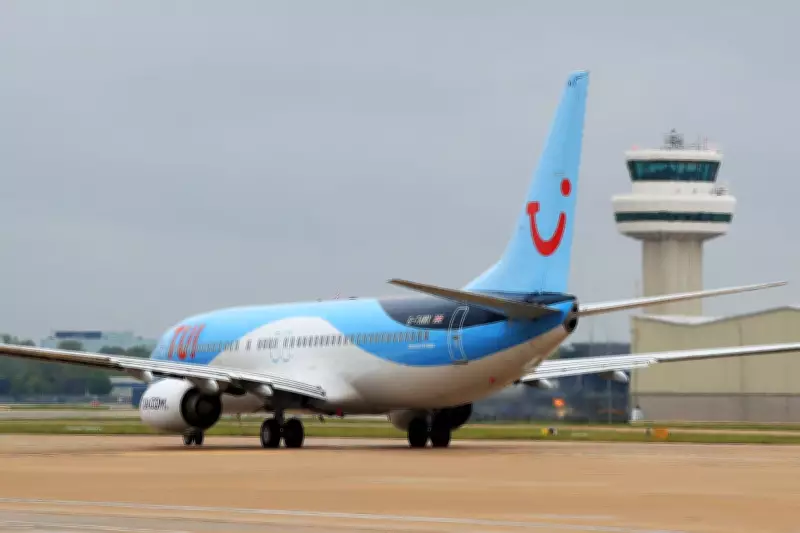
Europe's premier travel operator Tui has disclosed a substantial financial setback of approximately €40 million, equivalent to £34.8 million, directly linked to the escalating conflict in the Middle East. The turmoil has compelled the holiday giant to repatriate thousands of passengers and staff members, leading to significant operational disruptions and a downward revision of its profit expectations.
Immediate Financial Impact and Market Reaction
The Frankfurt-listed company confirmed to shareholders on Wednesday that it incurred these costs during March, primarily due to extensive repatriation efforts and associated operational challenges. As a direct consequence, Tui has been forced to cut its profit forecast and suspend its revenue guidance, triggering a decline in its share price. The travel firm joins a growing list of companies severely affected by the regional hostilities that erupted in late February.
Mass Repatriation Efforts Detailed
Tui executed a large-scale repatriation operation, evacuating around 5,000 passengers from two cruise ships that were anchored in ports near Abu Dhabi. These vessels remain docked and have had their itineraries cancelled until at least mid-May due to the ongoing security concerns. Additionally, the company repatriated another 5,000 European customers from affected destinations across the region, including Cyprus, Turkey, and Egypt.

The repatriation efforts extended to staff members, with a further 1,500 employees being safely returned to their home countries. This comprehensive operation underscores the breadth of the disruption caused by the geopolitical instability.
Broader Industry Pressures and Consumer Behaviour
The conflict has exacerbated existing pressures on the travel industry, notably driving up jet fuel prices as oil costs rise, which further strains airline operations. Tui highlighted that the ongoing uncertainty continues to limit near-term visibility and is fostering increased consumer caution across its markets.
Customers are demonstrating a noticeable shift in booking patterns, opting for destinations in western Europe over traditional eastern Mediterranean locations. There is also a trend towards booking closer to departure dates, reflecting heightened apprehension among travellers.
Revised Financial Projections and Market Performance
As a result of these challenges, Tui has adjusted its full-year operating profit guidance to a range of €1.1 billion to €1.4 billion, down from previous estimates of around €1.5 billion to €1.6 billion. The company reported a 7 per cent decline in booked revenues for its markets and airline division for the upcoming summer season compared to the previous year, with hotel occupancy also down by 7 per cent.
Despite these setbacks, Tui maintains that it is well-positioned to navigate the volatile environment. The group emphasised its strong financial position and robust balance sheet, which provide the flexibility needed to execute its strategic transformation while managing current geopolitical headwinds.