Shetland's Up Helly Aa: Lerwick Transformed by Viking Fire Festival Spectacle
Every January, the northernmost reaches of Scotland witness a truly breathtaking transformation as the ancient Shetland Islands become consumed by a spectacular display of fire and heritage. The world-renowned Up Helly Aa festival, a vibrant tribute to the region's deep Norse ancestry, stands as one of the most visually stunning events in the entire Scottish cultural calendar.
A Night of Fire and Norse Pageantry
The grandest celebration unfolds in the town of Lerwick on the final Tuesday of January. Here, a formidable force of more than 1,000 participants, known as the Jarl Squad, commandeers the streets in full Viking regalia. This impressive procession parades through the town, visiting local schools, medical centres, and greeting civic officials, all building anticipation for the night's main event.
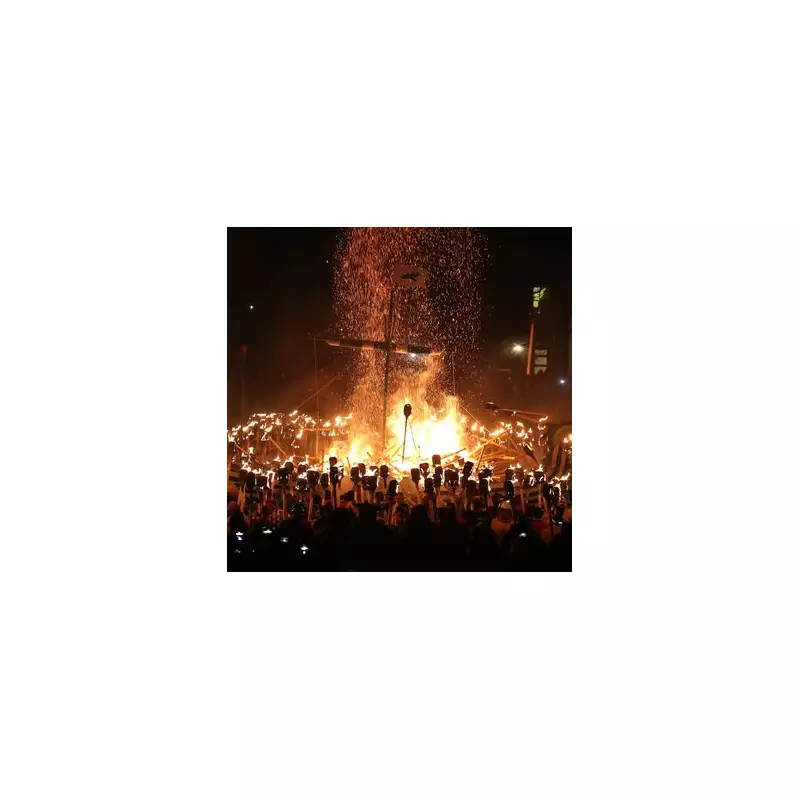
As darkness envelops the island, the festival reaches its dramatic climax. The torch-bearing Jarl Squad marches through Lerwick's darkened streets, their flames creating a mesmerising river of light, before converging on a specially-constructed, intricately carved Viking longship. In a magnificent and symbolic spectacle, the longboat is ceremoniously set ablaze, its flames leaping into the night sky and casting an orange glow over the gathered crowds.

Honouring Ancient Roots and Evolving Traditions
This extraordinary event honours the profound historical impact of Scandinavian culture on the Shetland Islands, the United Kingdom's most northerly territory, situated just 140 miles west of Norway. While Up Helly Aa draws inspiration from ancient Norse customs, its modern incarnation began in the 1880s.
The festival has been held nearly every year since its establishment, with cancellations occurring only during major global disruptions such as the two World Wars and the recent Covid-19 pandemic. Since its post-war resumption in 1949, the celebration has evolved significantly while retaining its core spirit.
"The numbers participating in the festival have become much greater, and the resources required correspondingly larger," notes the festival's official history. "Whereas in the 19th century individuals kept open house to welcome the guizers on Up Helly Aa night, men and women now co-operate to open large halls throughout the town to entertain them."
A Cinematic Spectacle Captured for Modern Audiences
The sheer scale and drama of Up Helly Aa have been captured in vivid detail for contemporary audiences. Social media footage reveals the breathtaking transformation of Lerwick, where by day the town appears normal, but by night it switches entirely into Viking mode.
The scene is described as feeling like a history film brought to life, complete with helmets, fur capes, and shields. The focal point is the hand-built longship, a museum-grade creation featuring detailed carvings, constructed not to sail but specifically for this fiery ritual.
The town extinguishes all electric lights, and thousands of torches ignite simultaneously. The North Sea wind bends the flames into long, dramatic arcs. The Yarl, or Viking leader, raises his torch, signalling for the assembled crowd to hurl theirs upon the ship. Wood cracks, flames engulf the dragon-headed prow, and for a moment, the night turns a brilliant, fiery orange. As the ship continues to burn, the crowd quietly disperses, leaving the flames to complete the ancient ritual.
This unique fusion of historical commemoration, community participation, and sheer visual spectacle ensures that Up Helly Aa remains an unmissable and deeply symbolic event, firmly placing the Shetland Islands on the global map of cultural heritage.