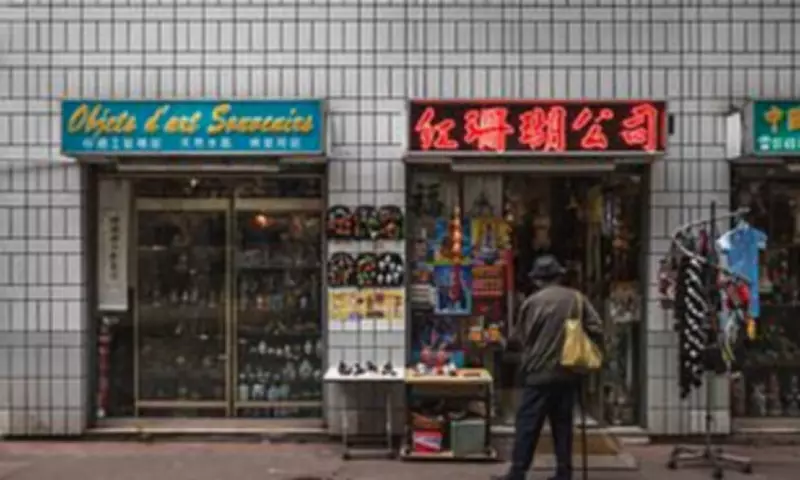
Paris's Chinatown: Europe's Largest Yet Overlooked Asian Hub
While London's Chinatown draws crowds eager to sample its restaurants and photograph its vibrant red and gold decorations, lanterns, and arches, it is not the largest in Europe. Other British Chinatowns in cities like Liverpool and Manchester also attract visitors, but none match the scale and population of Paris's Chinatown. Despite being the biggest in Europe, this neighbourhood in the French capital's 13th arrondissement is frequently overlooked by tourists, offering a more authentic and resident-focused experience.
A Working Neighbourhood Tailored for Residents
Paris's Chinatown spans 1.7 square kilometres, covering Avenue de Choisy, Avenue d'Ivry, and Boulevard Masséna, and is home to 50,000 permanent residents. In stark contrast, London and Liverpool's Chinatowns each have around 1,000 residents and occupy only fractions of a square kilometre. Unlike the iconic red gates and lantern-adorned streets of other Chinatowns, Paris's version is a functional, working neighbourhood designed to meet the needs of its community rather than cater to tourists.
The area evolved in the mid-20th century as Chinese, Vietnamese, Laotian, and Cambodian communities settled there, transforming it into a hub of local restaurants, supermarkets, and temples. Key landmarks include the Temple de l'Amicale des Teochew en France, a functioning Chinese Buddhist temple run by the Teochew community, and various cultural centres that serve residents. This focus on local life results in significantly cheaper prices compared to tourist-centric hubs like London and Liverpool.

Authentic Experiences and Growing Tourism Trends
Paris's Chinatown boasts attractions like the huge Asian supermarket Tang Frères, which is filled with fresh herbs, vegetables, noodles, sauces, and snacks not commonly found in French stores. For dining, spots like Ngọc Xuyên Saigon are popular for phở, offering genuine culinary experiences. This aligns with a broader tourism trend identified by online travel agency First Choice, which reports increasing demand for authentic, less tourist-centred trips.
Kevin Nelson, managing director at First Choice, noted, 'We're seeing more and more customers opt for authenticity over cookie cutter trips. It's a trend we've seen for a few years in the likes of destination dupes. But there's still a big market for tourists who want to see traditional hotspots but through the eyes of a local.' He recommends that travellers skip some of Paris's more obvious tourist spots and instead explore the surprising neighbourhood of Chinatown for a deeper, more genuine experience.
In summary, while British Chinatowns remain popular for their visual appeal and dining options, Paris's Chinatown stands out as Europe's largest and most resident-oriented Asian community. Its lack of traditional tourist trappings makes it a hidden gem for those seeking authenticity, reflecting a shift in travel preferences towards immersive local experiences.