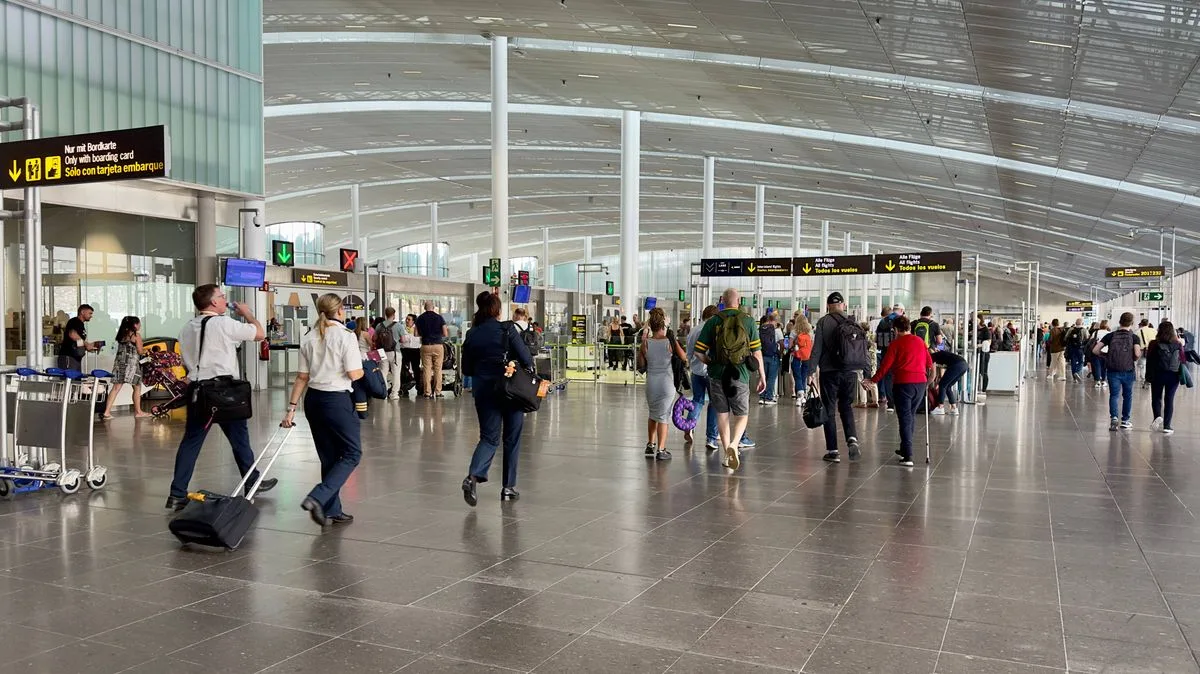
British tourists holidaying in the Canary Islands are being advised to arrive at the airport three hours before their return flights, as the EU's new Entry/Exit System (EES) has caused significant delays at border control. The biometric system, which requires facial recognition and fingerprinting for non-EU travellers including UK passport holders, has led to queues of up to three hours at popular airports such as Gran Canaria and Tenerife South.
Spanish airport operator Aena has officially recommended a three-hour arrival window for all non-Schengen flights, which includes flights returning to the UK. Airlines such as Wizz Air have reinforced this advice. However, a practical obstacle remains: many baggage drop and check-in desks at Canary Island airports do not open until two hours before departure. Airlines still recommend arriving early to be at the front of the queue when desks open, allowing passengers to clear security and proceed to congested passport control.
Travel influencer David Gainford, known as MrTravelON on TikTok, shared his perspective on the guidance in a recent video. He noted that passengers with luggage may be unable to check in three hours early if desks are closed, but suggested airlines are looking to open earlier. He also advised that those on package holidays with TUI or Jet2 should rely on their tour operators to ensure timely airport transfers. Independent travellers, he said, should 'probably get to the airport three hours early'.
Gainford warned that queue lengths vary depending on flight schedules, with some travellers reporting waits of two to two-and-a-half hours. Viewer comments on his video reflected mixed experiences: one person reported a one-hour wait for a gate to open at Lanzarote airport, while another described a difficult departure process with only three machines available for re-screening. A third traveller had a smooth experience, clearing EES in ten minutes with no queue.
A representative of Spain's Ministry of the Interior confirmed that the EES has been fully operational since April 10. The system's technical glitches and processing times have overwhelmed passport control lanes, particularly when multiple non-Schengen flights depart simultaneously. The Canary Islands, a major destination for UK tourists, have been especially affected.