Milan's 'Path of Beauty' Initiative Welcomes Olympic Visitors to Hidden Churches
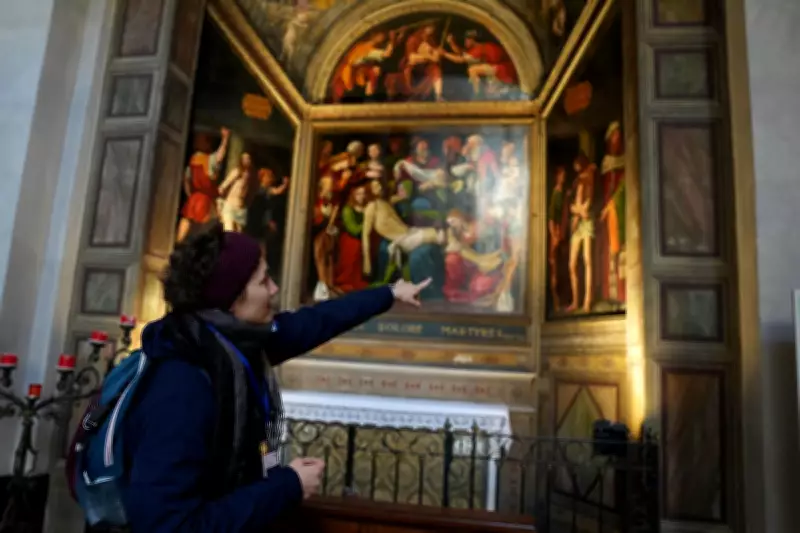
As the Winter Olympics draw crowds to Milan, a unique volunteer effort is steering visitors away from the bustling Duomo and toward the city's lesser-known churches. Organized by the archdiocese's youth ministry office, this initiative, known as "La Via della Bellezza" or "The Path of Beauty," offers free visits to a dozen Catholic sanctuaries across Milan, inviting guests to explore sacred heritage beyond the usual tourist spots.
From Tourists to Pilgrims: A Journey of Discovery
The project, which began in 2020, typically operates on weekends but has extended to weekdays during the Olympic Games, running through March 15. According to Sara Cainarca, the coordinator of the volunteer team, the goal is to welcome visitors into these churches and encourage them to rediscover artistic beauty that speaks to both the past and present. "The idea is to accompany visitors so they move from being tourists to becoming pilgrims who discover a deeper desire within themselves," said Cainarca, 26.
Between 15 and 20 volunteers are involved, each specializing in one or two churches. They wait inside their assigned buildings, offering free introductions to the history and sacred art, though they emphasize they are not certified tour guides. During the Olympic weeks, volunteers have welcomed visitors from the United States, France, Germany, and Spain, some drawn for the Games and others simply curious to explore beyond Milan's famous landmarks.

Art, Faith, and Personal Connections
Giovanna Giuditta Mazza, a 22-year-old art history student who joined two years ago, conducts visits in English, French, and Italian, often at the Basilica of San Lorenzo Maggiore, one of Milan's oldest churches dating to the late 4th and early 5th centuries. "When people enter the church, they often do not know what to expect," Mazza said. "But when they leave, I see a sparkle in their eyes and that is precious to me."
For volunteers like Mazza and Víctor Ortíz, a 22-year-old cultural heritage student, these encounters provide opportunities to discuss faith through art. Ortíz, who often guides at the church of Santa Maria presso San Satiro, explains its Renaissance trompe-l'oeil apse by Donato Bramante and links it to a 13th-century miracle involving a bleeding image of the Virgin Mary. "Beauty is not just about art," Ortíz said. "It is also about the Word of God."
Training and Expanding the Initiative
"La Via della Bellezza" started as training sessions where university students from Lombardy explored the relationship between art and spirituality. Volunteers now meet monthly with experts for additional training in art history and related topics, and they travel to nearby locations like Ravenna, known for its UNESCO World Heritage mosaics, to deepen their understanding of artistic and spiritual traditions.
Cainarca notes that Milan's churches are integral to the city's identity, shaped by its patron, Saint Ambrose, who promoted community and collaboration. "Today, Milan is known for fashion, shopping, finance, and skyscrapers," she said. "These churches offer a moment of pause, contemplation, and discovery."
The initiative has also spread to other cities such as Brescia and Bergamo, where churches feature rich Romanesque and Baroque art, further extending its reach beyond the Olympic period.