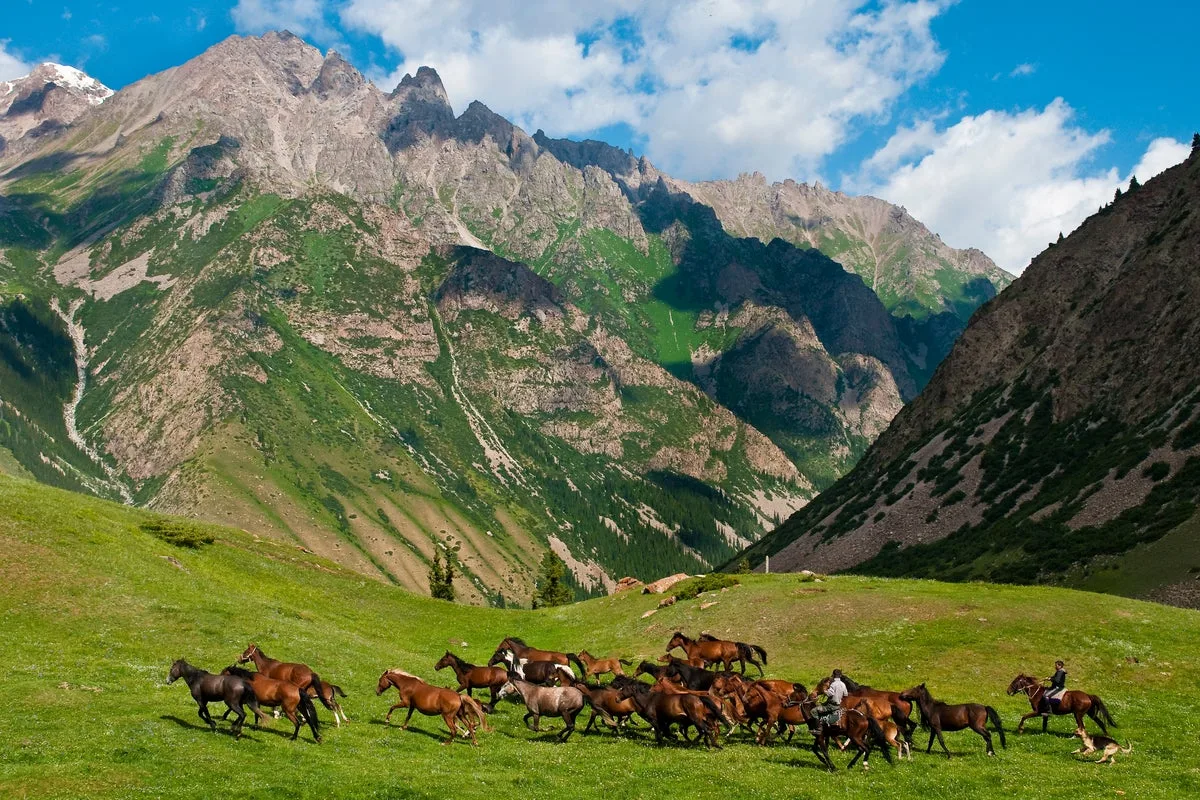
Kyrgyzstan, a nation long defined by its nomadic heritage and deep bond with horses, is emerging as an accessible and captivating destination for British travellers. The country’s culture, shaped by centuries of horse-based traditions, remains vibrant today, from the consumption of fermented mare’s milk called kumis to the high value placed on riding skills. Even modern speech is peppered with references to this historic relationship.
For adventurous visitors, the best way to explore Kyrgyzstan is still on horseback. Vast stretches of the country are untouched by roads, offering journeys through soaring mountains, crystal-clear alpine lakes, and rolling hills. The Kirghiz range, one of 158 mountain ranges in this nation of six million Turkic-speaking people, provides a stunning backdrop, with snow-capped peaks visible even in summer.
Kyrgyzstan’s modern capital, Bishkek, blends multi-level shopping malls and concrete office blocks, but the emotional connection to horses endures. Travellers can experience the ancient rhythm of the land, where the modern world recedes and nature takes over. This sense of timelessness is a hallmark of the Kyrgyz experience.
The country is one of the easiest in Central Asia to visit, having deliberately avoided bureaucratic entry requirements. British passport holders receive a visa on arrival with no prior paperwork. During the pandemic, Kyrgyzstan was among the first to drop quarantine for tourists, instead deploying mobile PCR testers. It is an ideal entry point to the region.
My journey began in Osh, a city near the Pamir mountains that has been a trading hub since Silk Road times. The Jayma Bazaar, one of the region’s largest, attracts sellers from China, Tajikistan, and Kazakhstan. Its aisles are lined with stalls selling spices, blacksmith-forged tools, and imported goods, offering a blend of ancient and modern commerce that has thrived for 2,000 years.