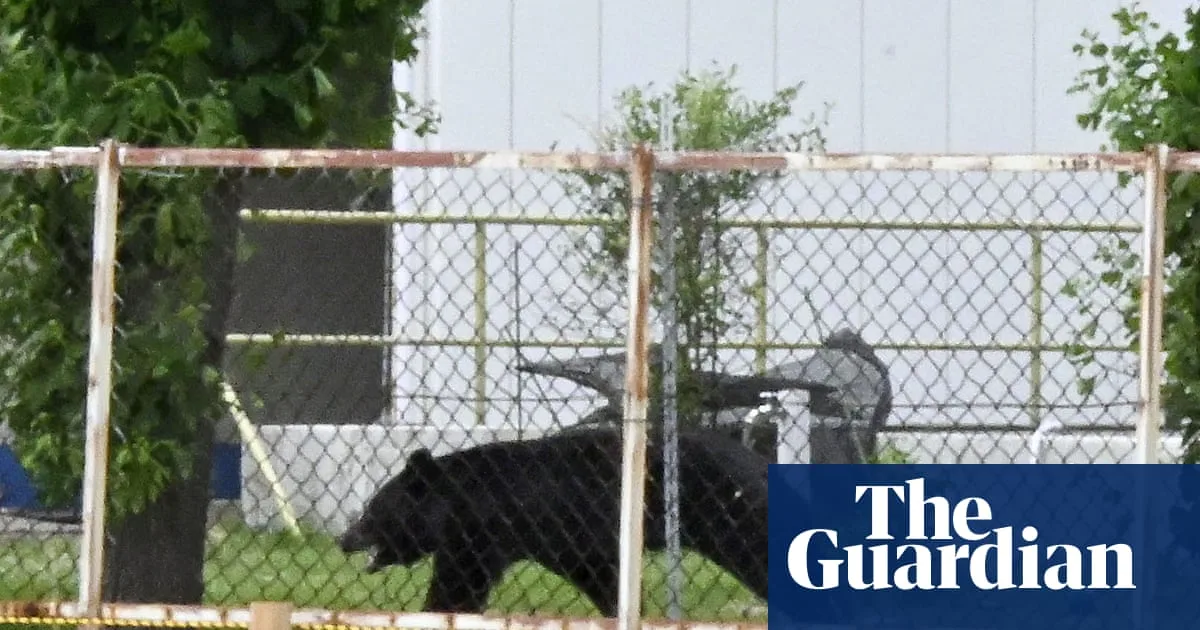
A one-metre-long bear that attacked four people in Fukushima, Japan, remains on the loose after apparently unlocking a window from the inside to escape. Police and hunters have been searching for the animal, which was seen turning on a tap to drink water and showed no reaction when struck by a tranquilliser dart.
The bear was filmed on CCTV chasing and mauling an employee in a company car park on Wednesday, before being chased off by a passerby who drove their car at it. The animal then ran into an office building where it attacked another man, and later injured two more people. It entered an electronics factory, where workers saw it using its paws to turn on a tap.
Local officials set four traps and deployed personnel with tranquilliser guns. A police officer saw the bear climb over a gate just before 11pm on Wednesday, but after searching the factory, it was discovered that the bear had escaped by unlatching and opening a locked window. Scratch marks were found around the lock.
At an emergency press conference on Thursday, Fukushima City mayor Yuki Baba said: “This bear was seen turning on a faucet to drink water and appeared capable of opening a locked window by itself. I believe it was an extremely intelligent bear.” An expanded search involving local government officers, police, hunters and drones was launched, but the bear is still at large as of Friday.
Local schools were closed on Thursday but reopened on Friday, with extra precautions including locking all ground floor doors and windows. Japan recently amended its strict gun laws to allow firearms in residential areas in emergencies, but regular guns were not used in this case due to flammable materials at the factory.
In the year to March, bears killed a record 13 people in Japan, with 238 serious attacks also an all-time high. Factors such as rural depopulation and climate change affecting food supplies are believed to be driving the increase in encounters with humans.