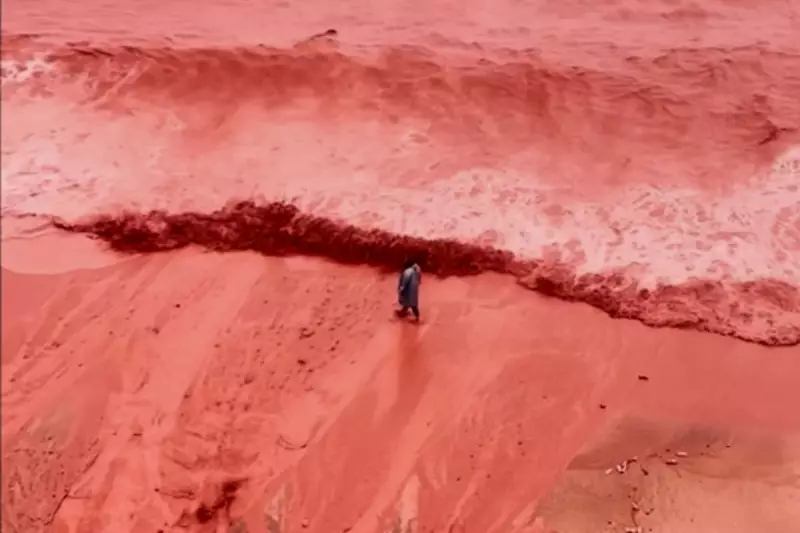
Heavy rainfall has triggered a startling natural spectacle on Iran's Hormuz Island, transforming the turquoise waters of the Persian Gulf into a vivid, blood-red expanse. The dramatic change occurred this week as downpours washed the island's distinctive crimson soil directly into the sea.
A Geological Canvas: How the Sea Turned Red
The phenomenon, which began on Tuesday, and was reported on Saturday 20 December 2025, centres on the island's famous Red Beach. This popular tourist destination is renowned for its striking landscape, characterised by soil and cliffs rich in iron oxide. Locally known as gelak, this mineral-heavy earth was swept into the coastal waters by the intense rain, creating a stark contrast against the normally blue sea.
The result was a breathtaking natural display, with the shoreline taking on a deep crimson hue. This event is not entirely uncommon given the island's unique geology, but its intensity captivates onlookers whenever it happens. The visual drama consistently draws tourists and photographers eager to witness the surreal scene, with images rapidly gaining traction across social media platforms.

More Than Just a Spectacle: The Uses and Warnings
Beyond its visual appeal, the red soil of Hormuz Island holds economic and cultural significance. The gelak is exported in limited quantities for use in cosmetics and industrial pigments. Perhaps more intriguingly, it is also incorporated into local traditions. Islanders use the soil in traditional products and even in their cuisine, most notably as a colouring agent in a local bread known as 'tomshi'.
However, scientists have issued a note of caution regarding this practice. Despite its culinary use as a local spice, researchers warn against consuming the soil due to its potential heavy metal content. The very minerals that give the earth its vibrant red colour could pose health risks if ingested in significant amounts.
A Lasting Impression on Tourism and Culture
This latest geological event underscores Hormuz Island's position as a unique destination where nature, culture, and industry intersect. The temporary transformation of the coastline serves as a powerful reminder of the dynamic processes that shape our planet. For visitors, it offers an unforgettable, Instagram-ready moment; for scientists, a live case study in erosion and mineralogy; and for the local community, a reaffirmation of their distinctive environment and heritage.
While the crimson tide will eventually dissipate as the sediment settles, the memory of the blood-red waters lapping at Red Beach will linger, ensuring the island remains a point of fascination for global travellers and nature enthusiasts alike.