Dubai Before the Influencers: A Surreal Journey Through a City in Transition
When I first glimpsed the towering Burj Khalifa during my visit to Dubai in late 2012, my underwhelmed reaction fell short of my taxi driver's expectations. Speeding through downtown with an oversized backpack on my lap, I was struck by the surreal, futuristic cityscape that felt more like a sci-fi film than reality. At the time, Dubai was dusting itself off after the financial crisis, with real estate and tourism slowly regaining momentum. In hindsight, it was an oddly in-between era: the city was rapidly sprouting gleaming towers, but the influencer wave had yet to crash ashore.
The Unlikely Backpacking Launchpad
Dubai served as the improbable launchpad for my shoestring backpacking adventure through Southeast Asia, Australia, and New Zealand. Starting my travels in a billionaire's playground seemed absurd for a twenty-something with a bargain-bin Osprey bag, but a relentlessly cheerful travel agent insisted that flying Emirates through Dubai was the thriftiest option. He promised a desert adventure, though I did minimal research and brushed off my family's dramatic warnings about my sass landing me in trouble in this famously strict city.
In 2012, Dubai operated under conservative legal and social regulations, with tight controls over online behaviour, political speech, and public decency. Public displays of affection were strictly prohibited and punishable by fines or deportation. Visitors and residents were expected to dress modestly, avoid public drunkenness, and refrain from swearing—a challenge for any young traveller seeking casual fun.

Navigating a City of Contrasts
After choosing the cheapest accommodation we could find, our cab whisked us away from the glittering downtown to a wallet-friendly, alcohol-free spot in Al Jaddaf. No bar in sight, but for thrifty travellers, the pool, gym, and tiny gift shop felt downright luxurious. The catch for three girls craving a night out? We had accidentally landed in a hotel in an area that was both unwalkable and half-finished. As Cardiff natives used to strolling everywhere, it was a shock to discover we needed a cab or shuttle just to reach the nearest hint of entertainment. We surrendered to sleep by 8 p.m., feeling like the city had slammed its doors on us before we had even begun.
The next morning, we set out to explore Dubai on a shoestring. In 2012, the city was erupting with glittering skyscrapers and a parade of new luxury hotels, restaurants, and shops. Even then, wandering the vast malls and downtown sidewalks felt surreal; everything was too shiny, too perfect, too blindingly bright. The Burj Khalifa and Dubai Mall anchored the city, but much of the skyline remained a patchwork of cranes and half-finished towers.
The Synthetic Soul of a Megacity
Perhaps my discomfort stemmed from Dubai's identity as a city built overnight for the world, rather than one that grew slowly over time. You cannot catapult from a small fishing village to a global megacity in a generation without leaving traces of something synthetic. It often feels designed around shopping malls, luxury hotels, and record-breaking attractions, like a curated Disneyland version of a city rather than one built for actual living. A largely transient population adds to the strangeness, but the most uncomfortable truth is that this glittering metropolis was largely built on the backs of workers in questionable conditions.
Awareness of labour abuse in Dubai began to rise in the early to mid-2000s, driven by reports from human rights organisations and international media. Human Rights Watch criticised the UAE in 2003 for discriminating against Asian workers, and by 2006, protests by migrant construction workers gained significant attention. It remains a massive issue, yet many Brits who live or holiday there are extremely reluctant to discuss it, brushing aside uncomfortable truths like forced labour and migrant deaths.

The Global Slavery Index 2023 estimates that 13.4 people per thousand in the UAE are trapped in modern slavery, including forced labour and forced marriage. As human rights organisation Walk Free explains, the kafala system in Dubai hands employers sweeping control over migrant workers' lives, making it nearly impossible for them to seek help or escape abuse. Migrant workers face risks of forced labour in construction, domestic work, and service industries, with allegations during the Dubai Expo 2020 of passport confiscation, withheld wages, long hours, and poor conditions.
The Palm Jumeirah: A Man-Made Wonder
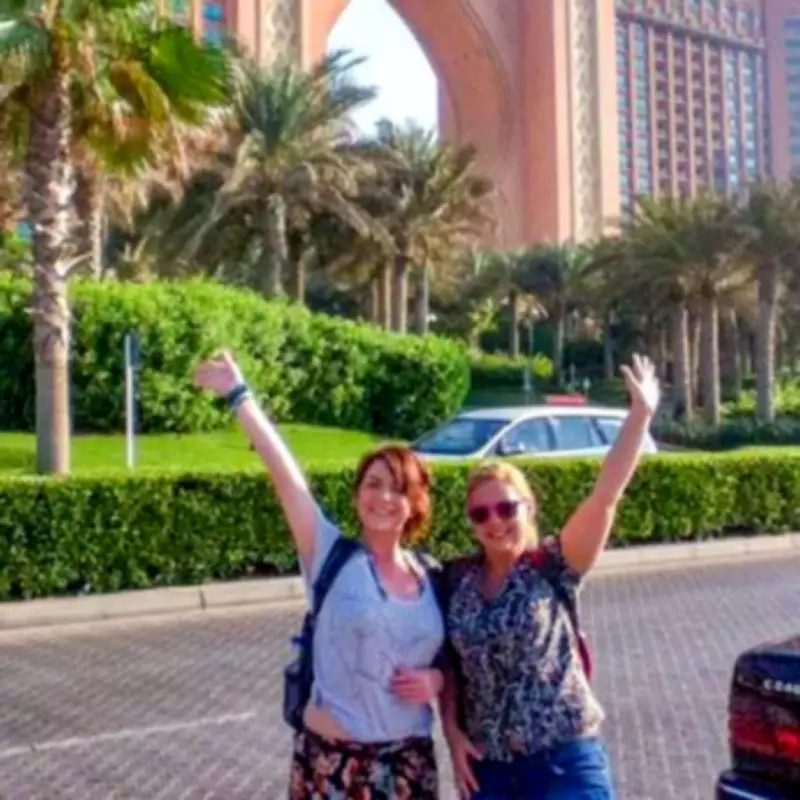
Back then, as we boarded the monorail to explore the man-made wonder of Palm Jumeirah, I had no idea about Dubai's shadowy secrets; I was not as terminally online in my 20s. Finished in 2001, Palm Jumeirah is one of Dubai's crown jewels, sparkling with luxury: Atlantis, The Palm, exclusive homes, private beaches, and an 11-km boardwalk. Architecturally, it is impossible not to be impressed—the palm-shaped island is so massive you can spot it from space. We visited the beach and the astonishing Atlantis aquarium, which was honestly my favourite part of the trip.
In 2012, it was open but still being developed; now, Palm Jumeirah is a polished playground of private residences, chic hotels, and beach clubs teeming with beautiful people. If I felt out of place then, I would be utterly invisible now. Is entry even possible without a face sculpted by filler and Botox?
The Influencer Era and Modern Realities
Looking back from rainy Britain, I ponder whether, if Dubai felt surreal in 2012, I am completely unequipped to process the soulless version that exists today. While Dubai is home to many wonderful, ordinary people, a quick scroll through social media paints a different picture. In recent years, the city has become a magnet for TikTokers, crypto evangelists, motivational grifters, and dead-eyed manosphere influencers who call themselves high value men while renting Lamborghinis by the hour. The pitch is always the same: zero tax, infinite sunshine, and a gold-plated life free from the horrors of Western democracy.
Unfortunately, the fantasy has hit a minor snag of late—missiles. As the US-Iran conflict spilt into the Gulf, Dubai's skies filled with air defence intercepts, emergency sirens, and flaming debris, not exactly the #blessed life promised. As the UK Foreign Office urged Brits in Dubai to shelter in place, protein bowl photos and workout videos were replaced by viral clips of luxury hotels on fire or sustaining damage during intercepted Iranian missile and drone strikes.
For a few surreal hours, wide-eyed influencers moonlighted as war correspondents. Then, something strange happened: the videos vanished. In their place, a bizarre new genre emerged: slow-motion clips of the country's rulers set to soaring music, and beaming beach club selfies with captions that reeked of PR in overdrive. A repeating phrase appeared across dozens of accounts like a copy-pasted mantra, lauding Dubai as the safest place you could possibly be right now.
We know who protects us. It has the slightly haunted cadence of a message recorded under supervision. The tone is less triumphant patriotism and more hostage video filmed beside an infinity pool. Blink twice if you need a repatriation flight. The enthusiasm is understandable when you remember that publicly insulting the government in the UAE can lead to fines of up to £200,000, deportation, or several years in prison. Under those circumstances, most people would also discover a sudden appreciation for the regime.
And so, the spectacle continues. Influencers beam blinding veneers under the desert sun, striding along sidewalks to preach discipline, masculinity, and crypto as fragments of intercepted drones are resoundingly ignored. The soundtrack is always motivational, lighting is flawless, and the smiles never slip. Just another day in paradise, only slightly on fire.