The Decline of Productivity Culture in Britain
According to groundbreaking new research, the era of relentless productivity and constant goal-setting appears to be waning across Britain. Britons are increasingly questioning whether traditional self-improvement methods focused on performance and achievement might actually be detrimental to their overall wellbeing.
A Fundamental Shift in Personal Wellbeing Approaches
Marissa Sim, area director for northern and southwestern Europe at the Singapore Tourism Board, which commissioned the survey, stated: "We're witnessing a fundamental shift in how Brits are approaching personal wellbeing." She elaborated that the research clearly indicates a movement away from conventional goal-setting toward more experiential forms of self-improvement.
The data reveals that self-improvement and performance planning, which have dominated social media and everyday life for years, are now being reconsidered. Many individuals are actively seeking alternative pathways to enhance their mental and emotional balance.

Statistical Evidence of Changing Attitudes
The survey provides compelling statistics that underscore this cultural transition:
- One in ten Brits (12%) believe that New Year's resolutions could actually be harmful to their wellbeing.
- More than a third (31%) admit to feeling guilty when they fail to stick to a personal goal.
- Four in ten respondents believe holidays have a significantly positive impact on their overall wellbeing.
- When asked how they recover from stress and overwhelm, 42% said they turn to nature and green spaces.
- Approximately 14% opt for city breaks as their preferred method of recovery.
The Rise of Experiential Wellbeing
The findings suggest a broader societal shift in how people approach self-improvement. Rather than focusing on measurable outcomes and productivity metrics, many Brits now favor experiences that deliver more meaningful and lasting benefits to their mental and emotional health.
Travel and spending time in nature have emerged as particularly popular alternatives to traditional productivity-focused approaches. This represents a significant departure from the constant goal-setting that has characterized recent years of personal development culture.
Singapore's Unique Positioning
A spokesperson for the Singapore Tourism Board highlighted how the city-state is uniquely positioned to cater to this new wellbeing trend. Singapore offers what they describe as "the ideal combination of urban energy and restorative greenery."
Marissa Sim explained: "Singapore's unique positioning as a City in Nature makes us particularly well-suited for British travellers seeking this new form of meaningful reset. Here, lush greenery is seamlessly woven into everyday urban life, allowing visitors to reconnect with nature without stepping away from the energy of a global city."
Singapore's Green Infrastructure
Nearly half of Singapore's territory is covered in greenery, with innovative architectural features creating what are often called "parks in the sky." These include extensive rooftop gardens and vertical green walls that integrate nature into the urban landscape.
These green spaces support remarkable biodiversity, including more than 2,000 native plant species and over 400 bird species thriving within the urban environment. The green theme begins immediately for visitors, starting at Changi Airport which features the world's tallest indoor waterfall and a lush indoor forest.
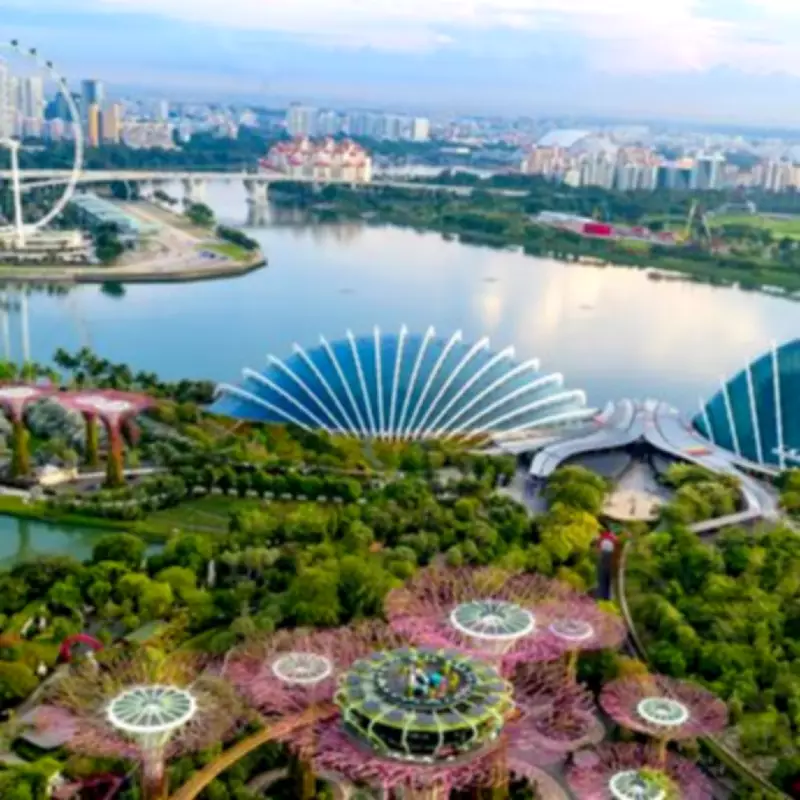
Additional green spaces across the city include the UNESCO-listed Singapore Botanic Gardens, a stunning oasis famous for its exquisite collection of orchids and perfect for peaceful walks. Other notable green attractions include the Supertree Grove at Gardens by the Bay and the waterfront parks at Marina Bay.
Sim concluded: "It's this effortless blend of nature and urban lifestyle that makes Singapore such an ideal destination for those seeking a modern reset." The research indicates that as Brits move away from productivity-focused wellbeing approaches, destinations offering this balance between urban excitement and natural restoration are likely to see increased interest from British travelers seeking meaningful experiential boosts to their wellbeing.