British Tourists Stranded Abroad as Middle East Conflict Disrupts Flights
As the conflict in the Middle East continues to escalate, numerous British holidaymakers remain stranded abroad two weeks after the outbreak of war. The situation has left travellers facing significant financial burdens and emotional distress, with many discovering their travel insurance policies offer little protection against disruptions caused by warfare.
Couple's Cancer Treatment Delayed Amid Travel Chaos
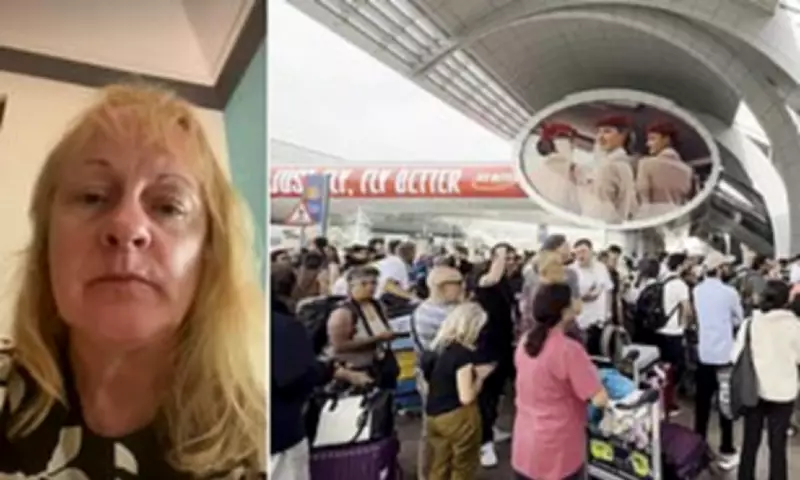
Andrea Pendrey and her partner embarked on what was meant to be a relaxing holiday in the Maldives before Andrea commenced treatment for breast cancer. Their plans were abruptly shattered when their March 1st flight was cancelled following the outbreak of hostilities between the United States, Israel, and Iran.
The airline instructed them to find accommodation at their own expense, leaving the couple scrambling as airports filled with stranded passengers. They have since secured a resort room but estimate their additional costs will reach £12,000 by the time they return home.

"Emirates just told us we need to find a room, at our own cost and the airport was filling up with more and more people," Andrea revealed to the BBC. With her partner having lost his job before their holiday, the mounting expenses on their credit card have become a source of considerable stress.
Andrea was scheduled to begin her cancer treatment last Thursday, adding medical urgency to their predicament. "Even though this place is paradise, we've been crying and feel really upset," she confessed. Their insurance company has now classified their situation as a medical emergency, offering hope they might fly home through Frankfurt on Monday.
Insurance Limitations Leave Travellers Exposed
The crisis has exposed significant gaps in travel insurance coverage, with most policies explicitly excluding war and conflict-related disruptions. This leaves holidaymakers with little recourse for compensation when their travels are affected by geopolitical events.
Lauren Higgins and Adam Wilson, who travelled to the Maldives for what they described as a "once in a lifetime luxury holiday," found themselves similarly stranded when their return flight via Bahrain was cancelled. Instead of their planned stay at the plush Siyam World Resort, they are now paying £500 per night at a Holiday Inn, having already spent £2,500 with concerns they may need to cover up to three weeks of additional accommodation.
Chaotic Scenes Across Multiple Destinations
The disruption has affected British tourists across various Middle Eastern and Asian destinations. Rosie Murray-West and her husband found themselves trapped in Doha as conflict erupted, discovering their insurance covered few of their additional expenses. Fortunately, the Qatari government covered their extended hotel stay while they awaited new flights, though they still faced costs for cat sitting, mobile data, and approximately £30 daily for food.
Sarah Short, 54, and her husband Ed, 58, experienced dramatic circumstances when their Dubai holiday coincided with the outbreak of war. Their return flight to London was cancelled, prompting them to embark on an eight-hour, 300-mile taxi journey through the desert to Muscat at a cost of £1,500.
"It was absolute chaos," Mrs Short described of the Muscat airport scene. "We didn't know what was going to happen next. There were people who were absolutely in floods of tears, sobbing, shaking." The self-employed consultants eventually secured a flight home, arriving at Heathrow to an emotional reunion with family.
Systemic Travel Disruption Continues
Laura and Paul Webster from Birmingham found themselves stranded in Phuket, Thailand, after their travel agent informed them no flights were available to return them home for two weeks. The couple, who both work in insurance software, had planned to transit through Dubai before the conflict closed airspace.
"We've got work, we've got kids. We want to get back ASAP," explained Mrs Webster, 40. "We don't care if that means four flights." Despite searching for alternatives via Singapore, Hong Kong, and even Japan – where they found tickets priced at £10,000 each – they remain trapped.

Their travel agent arranged three additional nights of accommodation, but beyond that, they must "fend for ourselves" as insurance won't cover war-related claims. "It's just horrible. It's literally a holiday from hell," she lamented. "We had two days of a nice holiday, and then since Saturday we've just had such stress and anxiety of not knowing when you can get home to your kids."
The situation affects more than 140,000 Britons who registered their presence in the Middle East with the UK government following the large-scale attacks. With airlines struggling to reroute flights and insurance limitations leaving travellers financially exposed, the human cost of geopolitical conflict continues to mount for ordinary holidaymakers caught in the crossfire of international tensions.