June Books: O'Farrell's Land, Hepburn Bio-Fiction, and More
June Books: O'Farrell's Land, Hepburn Bio-Fiction

June is a strong month for non-fiction. Perhaps the most timely book is Stolen Revolution: Betrayal and Hope in Modern Iran (Penguin Viking), in which Bozorgmehr Sharafedin and Yeganeh Torbati look at the story of six Iranians and what their lives tell us about the arc of modern Iranian history, from the hope of the 1979 revolution to the controversial Islamic regime of recent times. The book features an epilogue that goes up to the start of 2026's war. The authors conclude of the natives who hoped Israeli strikes would bring down the Islamic Republic's rulers “that any Iranian would welcome such an assault was stark evidence of how deeply the Islamic Republic had alienated most of its people”. This powerful book explains how matters reached such a stage.

I was impressed by Natasha Carthew's Rough Edges: Where Land Meets Water, the Untold Stories of Coastline Communities (Sceptre), which uses the structure of life over the four seasons to explore how much Britain's seaside communities are in trouble. Cornwall-born poet Carthew looks at the issues of gentrification, social isolation, climate change, transport deficiencies, mental health concerns, drugs and homelessness to show the pain behind the picture-postcard image of life by the sea. She brings a light, entertaining touch to a choppy subject. In the section about winter, she concludes that “the coastal edge of Britain is often a lonely and miserable place when you're poor”.

Among the disturbing information in Danish anthropologist Sine Plambech's eye-opening Global Sex: What Sex Workers Know About Love and Capitalism (Akoya, translated by Michael Favala Goldman) is the section on the alleged goings-on within the affluent Persian Gulf. “Sex work is Dubai's open secret,” writes Plambech, who describes a “hierarchy based on skin colour”. She states that the rich white male tourists at seven-star hotels want lighter-skinned sex workers from Russia and Eastern Europe; the women with “brown skin” sell sex at brothels to poor migrant workers, while “Nigerian women sell sex on the streets at night”. Colour still matters, it seems, amid the shady business beneath luxury artificial palm trees.

Wide Pickt banner — collaborative shopping lists app for Telegram, phone mockup with grocery list

Novel of the Month: Land by Maggie O'Farrell ★★★★★

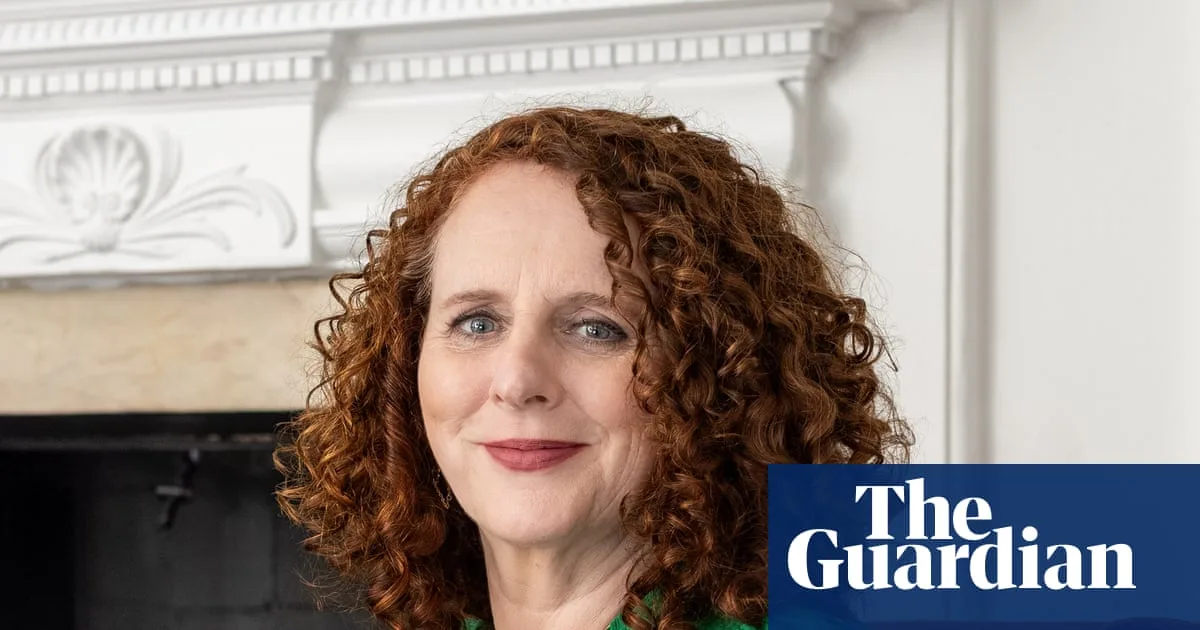
Maggie O'Farrell's 10th novel, Land, opens with mapmaker Tomás and his son Liam surveying a windswept peninsula in the west of Ireland in 1865, a time when the country is still ravaged by the disaster of the “Great Hunger”. “I am waterproof,” Tomás likes to say. His son Liam (in an early, surefooted simile) is “quivering like a wet hound” as they map a strange peninsula. What Tomás encounters in the woods there transforms this taciturn figure into a “wild and deranged man” whose decisions will ultimately turn the lives of his wife Phina, sons Liam and Eugene and daughters Enda and Rose upside down. There is no single protagonist in Land, although all of O'Farrell's characters in the novel are stunning – even the enormous greyhound called Bran.

Into her compulsive tale of separation and tragedy come elements of magical realism – the legends, the myth, the ghosts in the landscape – and a life-changing battle between Tomás and a priest called Father Joseph, who is determined to pay the mapmaker back for his disrespect towards the church by “plucking away the son” and turning Liam into a Jesuit. O'Farrell takes a shillelagh to Father Joseph as she cudgels his character, presenting him for the wretched man he is and what he represents about Ireland's past. She is deft, too, destroying him with tiny, telling descriptions of his “wheedling” way of talking and his complacency over a fellow human's hunger. The writing throughout Land – a multigenerational epic inspired by O'Farrell's great-great-grandfather and his work on the Ordnance Survey maps of Ireland – is just so skilful and evocative. When Rose is in crisis, O'Farrell describes her as having become “a sack eaten away by mice”. And Land is about so many things, including the lasting, unsheddable impact of parents and the cruel twists of fate to which we are all subject (the heartbreaking plot reveal of what happens to Phina's father at the workhouse is worthy of Thomas Hardy).

Pickt after-article banner — collaborative shopping lists app with family illustration

O'Farrell's novel is also a homage to the resilience and courage of the generation of Irish citizens driven out of their homeland in the 19th century by natural disaster and the cruelty and callousness of British imperial rule. O'Farrell beautifully captures the longing for home of the displaced emigrant. Above all, Land is a magnificent reminder from O'Farrell that the deceptively simple task of telling a good story – and this one is a feat of historical imagination – is a true art.

'Land' by Maggie O'Farrell is published by Tinder Press on 2 June, £25

Non-fiction Book of the Month: Disability: A History of Resistance by David Turner ★★★★☆

“Disability history is best described as a forgotten history or a suppressed history,” writes David Turner, a historian based at Swansea University, in his splendid Disability: A History of Resistance. His detailed study explores the objectification and stigmatisation in the UK's past and instead celebrates a history of activism that helped the disabled rights movement grow over centuries. Along the way he pays specific tribute to trailblazers such as William Dodd, “a founding father of British disability activism”, and James Wilson, whose 1821 memoir Biography of the Blind was, Turner notes, “a radical departure from the way most people regarded sight loss in the early 19th century”.

There are so many interesting threads to a story I suspect few of us know much about. Along the way, Turner delves into the treatment of witches, the persistence of tales of miraculous healing, the human experiences behind sensationalist stories of bodily oddity, the role of warfare and the struggle to create decent artificial limbs. His sections on the appalling treatment of the disabled within the slave trade and the sordid history of the industrial revolution are particularly moving. In Liverpool, a group of 18th-century men started “The Most Honourable and Facetious Society of Ugly Faces”, although Turner suggests it actually ended up being a place for slave owners to delight each other with their “casual racism” during drinking sessions. The book also deals with the dispiriting “freak show” pattern of using the disabled as wonders or “curiosities”. In the 17th century, Turner reports that London's elite would order “a boxed-up living 'dwarf'” to entertain dinner party guests. I was also left wondering whether anyone really gained any pleasure from watching one of Turner's examples of freak-show entertainment, a woman called “Blind Granny”, “whose party piece was to lick her empty eye socket with her elongated tongue in return for beer money”.

An important theme of Disability: A History of Resistance is the hardship faced by the disabled poor of the 16th and 17th centuries, problems that continue in present times, where, Turner states, “the struggles of disabled people under austerity seem to take us back to where our history started”. There are 16.1 million disabled people in the UK today and the battle to have their needs met and to be recognised as fully human is a message that rings loud and clear in Turner's well-researched, engrossing book.

'Disability: A History of Resistance' by David Turner is published by Bodley Head on 4 June, £25

Bio-Fiction of the Month: The Original by Priya Parmar ★★★★☆

In 2015, Priya Parmar did an excellent job of imagining Vanessa Bell's life with her temperamental elder sister, Virginia Woolf. Parmar returns to biography as fiction in The Original, the story of the young Katharine Hepburn pursuing a career in Hollywood in the years after the death by suicide of her brother Tom at the age of 15 in 1921. Parmar was inspired to write the story of Hepburn, who won four Oscars from 12 nominations, after watching 1940's The Philadelphia Story and hearing her mother say, “she outfoxed them. This was her comeback.” What makes The Original so enticing is that we see how Hepburn survived the brutal movie studio system and bucked the rules. She was bisexual, strong-willed and refused to conform, taking on the film patriarchy with her “lioness stance”. Hepburn is “table hard, where other actresses have the softness of shelled pea”, Parmar explains.

Some of the most affecting moments are those that capture her early life in a household full of rivalries, hostilities and loyalties, overseen by a surgeon father who was “always looking for weakness”. The writing is delicate and potent, as in Parmar's description of the aftermath of Tom's death. “Really what the younger Hepburn children know is that there is something broken where there was once a sense of triplicate, three daughters, three sons, teams of children paired together like dancing partners, or harnessed oxen. They know they are lopsided,” she writes.

The book explores some ever-pertinent themes, including the insidious nature of inherited money (“life is muffled in a downy egg of comfort”) and the complicity and corruption of the press. The author also captures the intrigue of Old Hollywood and the allure of an era of slinky, elegant dresses and beautifully cut suits. A memorable cast comes into the account of the 1930s, including the sleazy film producer David Selznick, megastar Cary Grant, director John Ford, and millionaire tycoon Howard Hughes. An extended author's note explains what happened next to the characters and how much of the story is closely aligned with the “truth” of what happened. A moot point, given there is always a question with biography or memoir of how much is fiction anyway. The true appeal of Parmar's book is the way she brings the players to life in a way that appeals to both the heart and the intellect. She expertly captures the vulnerability and the strength of one of the greatest actors of all time.

'The Original' by Priya Parmar is published by Allison & Busby on 18 June, £18.99