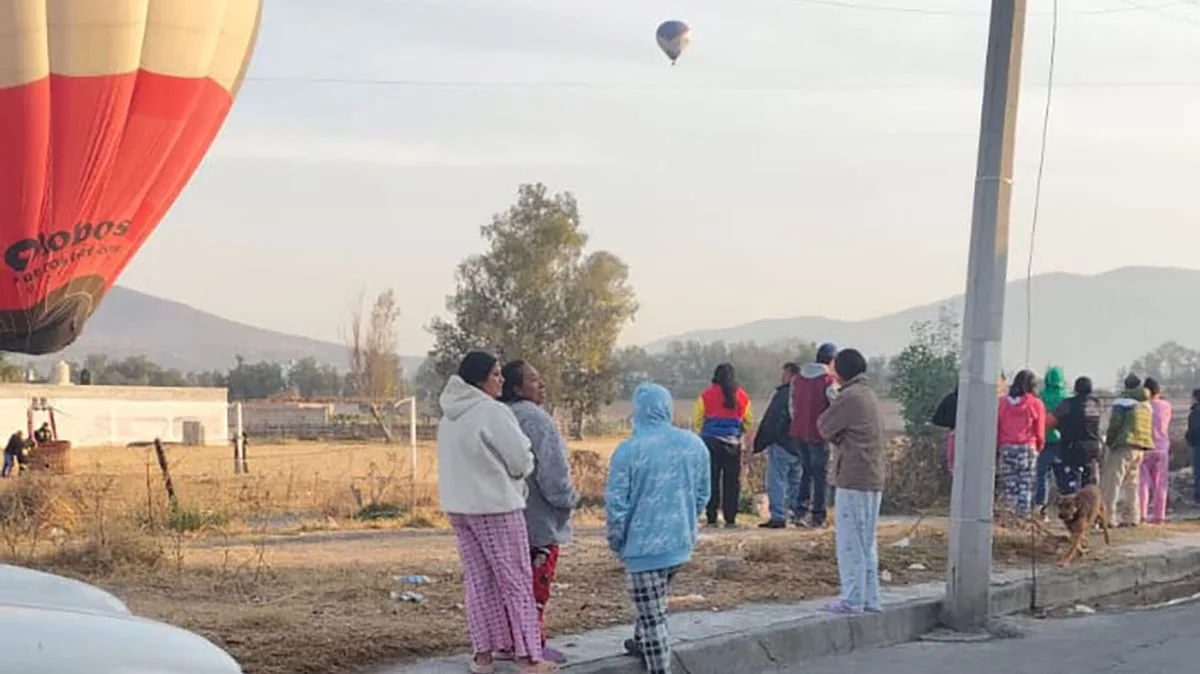
A hot air balloon carrying two British tourists has crashed in Mexico, leaving one of them fighting for their life in a critical condition. The incident occurred when the pilot lost control after the balloon struck power cables, causing it to descend onto a football pitch in the Teotihuacan Valley, approximately 25 miles north-east of Mexico City.
Details of the Accident
The crash happened just before 9am local time yesterday, with emergency paramedics rushing to the scene to treat the injured tourists before transporting them to a hospital in Mexico City. The tourists are believed to be a man and a woman from London, with the female tourist reported to have sustained the most severe injuries, including burns from an electric shock.
Investigation and Response
Mexico's Federal Civil Aviation Agency (AFAC) has confirmed that the hot air balloon, registered as XA-OZY and operated by the company Happy Puerto, came into contact with power lines during the incident. In an official statement, the AFAC announced that it is launching an administrative investigation into the crash, which also left nearby residents without electricity due to the damage caused.
The agency detailed that the two individuals on board suffered burns from the electrical contact and were transferred to a private hospital in Mexico City for urgent medical treatment. The investigation remains ongoing as authorities work to determine the exact cause of the pilot's loss of control and the subsequent impact with the power lines.
Historical Context of Balloon Accidents
This tragic event is not an isolated incident in the region. In April 2023, a married couple, Jose Nolasco, 50, and Viridiana Becerril, 39, were killed in a hot air balloon accident over the pre-Hispanic ruin site of Teotihuacan, close to where yesterday's crash occurred. Their 13-year-old daughter was injured in that incident, which was captured on video showing the balloon deflating as flames engulfed the basket.
Furthermore, in June of last year, a hot air balloon caught fire and crashed in Praia Grande, Brazil, resulting in the deaths of eight out of the 21 people on board. These previous accidents highlight the potential risks associated with hot air balloon tourism, particularly in areas with challenging terrain or infrastructure like power lines.
Immediate Aftermath and Community Impact
The crash has caused significant disruption, not only to the tourists involved but also to the local community. Residents living near the football pitch where the balloon landed experienced power outages as a result of the damaged cables, adding to the urgency of the situation. Eyewitness accounts and footage from the scene have yet to emerge, but authorities are likely reviewing any available evidence as part of their investigation.
As the investigation continues, questions may arise about safety protocols and regulations for hot air balloon operators in Mexico, especially in popular tourist areas like Teotihuacan. The AFAC's probe will aim to address these concerns and prevent similar incidents in the future, ensuring the safety of both tourists and locals.