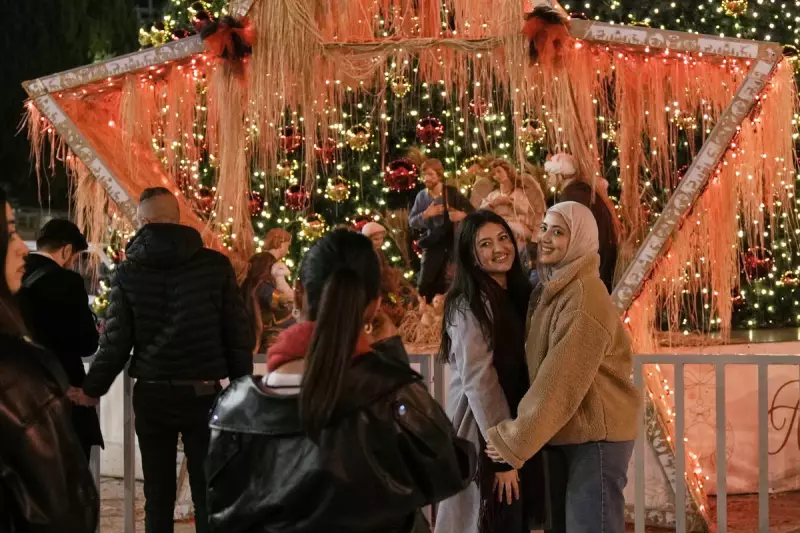
For the first time in two years, the authentic spirit of Christmas has returned to the biblical city of Bethlehem, following the implementation of a ceasefire in the Gaza conflict. The sound of festive music and the glow of decorations have replaced the subdued atmosphere that had gripped the city, signalling a fragile but welcome sense of renewal.
Festive Lights Return to Manger Square
This Christmas Eve, at the stroke of midnight, the traditional hymn “The Night of Christmas” will resonate within the sacred grotto of the Church of the Nativity. The site, believed by Christians to be the birthplace of Jesus Christ, will host its customary midnight service, with local choirs rehearsing lyrics that now carry profound weight. “On the night of Christmas, war is buried, On the night of Christmas, love is born,” they sing.
Conductor Joseph Hazboun, who leads a local Catholic lay choir, explained the renewed significance. “It reminds us that no matter the difficulties, the darkness, there is always a light and that hope is always alive,” he said. The change is palpable on the ground. Manger Square, once quiet in protest and solidarity, is now bustling. A Christmas market, music shows for children, and festive lights have drawn families back, providing a crucial economic boost.

Zoya Thalgia, a Bethlehem resident, captured the mood: “You can see the town come alive again. Everyone’s happy, everyone’s coming out to celebrate, no matter religion, no matter their stance, everyone is here.”
Economic Lifeline and Enduring Challenges
The resurgence of tourism is vital for Bethlehem's survival. The local government states that around 80% of the city’s residents, in a Muslim-majority area, depend on tourism-related businesses. Their earnings traditionally support communities across the Israeli-occupied West Bank. However, the war had a devastating impact. Mayor Maher Nicola Canawati revealed earlier this month that the unemployment rate in Bethlehem skyrocketed from 14% to 65% during the Gaza conflict.
In previous years, some churches staged poignant protests, displaying Nativity scenes depicting the infant Jesus surrounded by rubble and barbed wire. Despite the ceasefire that began in October, underlying tensions persist. The UN reports that attacks by Israeli settlers against Palestinians in the West Bank this year reached their highest recorded level since 2006, amid frequent Israeli military raids.
A Message of Endurance from a Shrinking Community
For the Christian community in the Holy Land, this Christmas is also a testament to endurance. Odette Al Sliby, a lifelong choir member, described the unique holiness of singing in the grotto at midnight Mass. “As Christians in the Holy Land, there is a big message of being here,” she said, emphasising that their presence is itself a message of hope.
This presence is under threat. Christians now account for less than 2% of the West Bank’s roughly 3 million residents. Mayor Canawati noted that about 4,000 people have left Bethlehem recently in search of work, part of a wider regional trend of Christian emigration driven by conflict and economic hardship.
Joseph Hazboun voiced a Christmas prayer that the Christian population in Bethlehem and other key biblical sites does not dwindle further. He acknowledged that while Palestinians remain devastated by Gaza's plight, the simple act of lighting the community Christmas tree in Manger Square for the first time in two years provided a surge of much-needed joy.
“We continue to pray for peace. This is the land of peace, it’s the land where the Prince of Peace was born, and we continue to pray and hope that one day we all will enjoy peace,” Hazboun said. The returning festivities, including a thronged Christmas market in Ramallah, offer a vital respite and a symbol of resilience for a region yearning for stability.