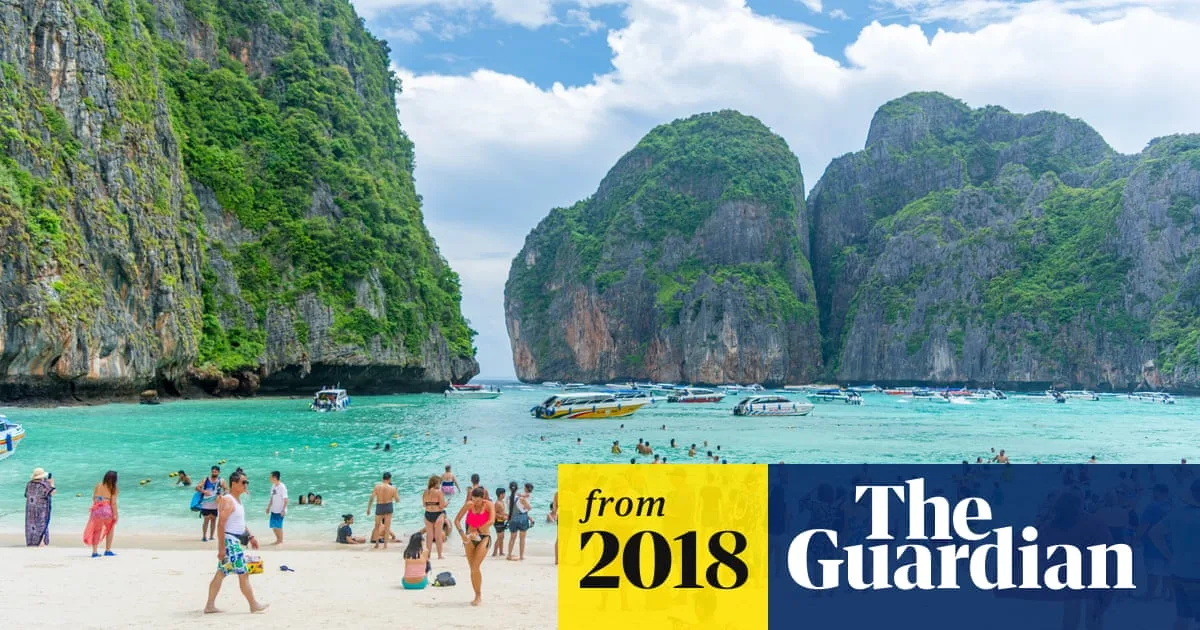
Maya Bay on Ko Phi Phi Leh island, made famous by the 2000 film The Beach starring Leonardo DiCaprio, has been closed indefinitely to allow its ecosystem to recover from the damage caused by mass tourism. Thai authorities initially announced a four-month closure from 1 June, but have now extended it to at least a year after evaluating the extent of the destruction.
The small beach, known for its golden sands and crystal-clear waters, had been receiving up to 5,000 tourists and 200 boats daily. Pollution from litter, boats, and sun cream has destroyed more than 80% of the coral around Maya Bay. Songtam Suksawang, director of the national parks department, stated that the ecological system was seriously damaged and that recovery within the original timeframe was impossible.
Despite mounting evidence of damage, Thai authorities had been reluctant to close the bay because it generates approximately 400 million baht (£9.5 million) in revenue each year. However, a royal gazette published on 1 October announced that restrictions would not be lifted until the ecosystem 'fully recovers to a normal situation'.
Local environmental campaigners welcomed the extended closure, noting that coral grows only about half a centimetre per year, meaning full restoration will take years. Worapoj Lomlim, the Maya Bay park chief, said that more than 1,000 corals have already been planted and that the rehabilitation project will continue to expand.
The closure reflects a broader trend in Southeast Asia, where countries such as the Philippines and Indonesia are addressing the impacts of excessive tourism. In April, the Philippines closed Boracay beach resort for six months, and Indonesia declared a 'garbage emergency' along parts of Bali after a viral video showed a diver swimming through rubbish-filled waters.