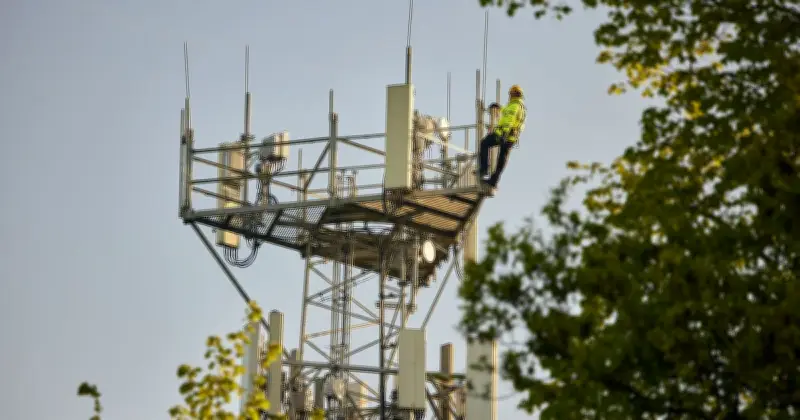
The United Kingdom has fallen to eighth place in a global ranking of mobile network connectivity, according to new research from VodafoneThree. The Mobile Market Index places the UK behind Norway, Australia, Germany, and Hungary, with Singapore leading the world, just ahead of South Korea and the United States.
Factors Holding Back the UK
VodafoneThree attributes Britain's lagging performance to several key factors: high energy costs, an emerging retirement gap among engineers, restrictive regulation, high spectrum charges, and intense market competition. The company warns that the UK risks falling further behind as international competitors accelerate investment in mobile networks.
Andrea Dona, networks director at VodafoneThree, said: "Since the merger we have raised the bar for connectivity in the UK, eliminating thousands of not spots and providing millions of people with access to our fastest 5G speeds. But we cannot afford to lose momentum. Fast, reliable, and quality mobile networks are a fundamental driver of economic growth and prosperity."
Investment and Regulatory Challenges
The index highlights that UK operators face the second-highest energy costs among the countries surveyed and the second most planning red tape. Additionally, Britain ranked seven out of 10 for the skills pipeline required to support the rollout of more advanced networks. VodafoneThree is calling on the government to remove regulatory and planning barriers and to mitigate energy costs to bring the UK in line with other leading nations.
Andrea added: "Bringing the UK’s investment environment up to the standard of our international peers could help to support public services, eliminate digital divides and enable communities to thrive."
Future Investment
Despite the challenges, VodafoneThree is investing £11 billion across its network to achieve 99% 5G Standalone population coverage by 2030. The company emphasizes that progress has been made in recent years, but sustained effort is needed to keep pace with global rivals.