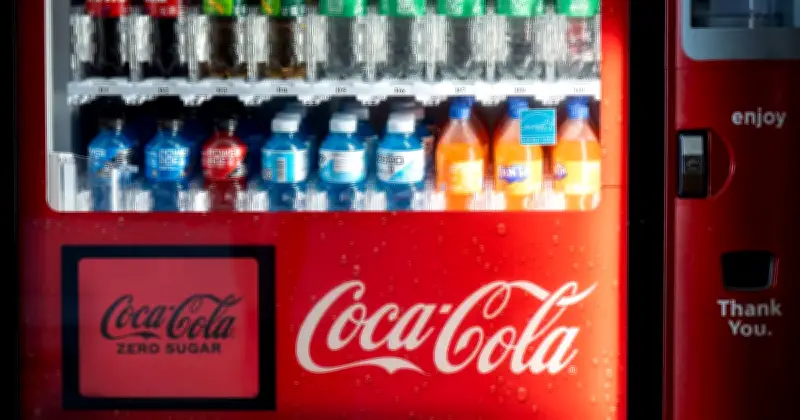
The Coca-Cola logo, one of the most recognisable brand marks in the world, may contain a hidden detail that changes how it is perceived. The long sweeping tail under the letter “C” could be designed to look like a smile, linking to the company’s long-running “happiness” message.
Design expert points to subtle message
Richard Lau, president of LOGO.com, which specialises in logo design, said the tail might not just be there to look pretty. Some observers believe it resembles a smile, reinforcing Coca-Cola’s association with happiness.
Lau said: “This subtle message may go unnoticed, but it subconsciously creates a positive association with the brand in the minds of consumers.”
Brand campaigns reinforce the theme
Whether the “smiley” was planned when the logo was first created or not, the brand has played on the idea. The 2009 “Open Happiness” campaign fits perfectly with the concept, as do the “Taste the Feeling” and “Share a Coke” marketing campaigns. The former represents the happy ritual of opening a fizzy drink, while the latter celebrates the joy of human connection.
Fans have also noticed the detail. On Reddit, one user described Coca-Cola's design as the "perfect logo", while a second said: “Ever since someone told me about the faces in the logo, I can't unsee it whenever I look at it.” A third added: “Coca-Cola is a cool logo, that's why they didn't change it.”
History of the iconic script
The Coca-Cola name was introduced in 1886, and the flowing script logo is generally credited to Frank M. Robinson, who is said to have written it in a distinctive cursive style to make it stand out in advertising. While the design has been cleaned up and standardised over the years, the core look has stayed remarkably consistent.
The name itself is pretty literal, referring to coca leaves and kola nuts. Robinson is also widely credited with backing that spelling because he thought it looked better in advertising.
Coca-Cola began as a “tonic” created in 1886 by Atlanta pharmacist John Stith Pemberton, marketed as a pick-me-up. In the US, it was sold for five cents for a long period, helping it become an affordable everyday treat. Coke even made it into orbit, consumed on Space Shuttle missions in 1985 with special packaging for zero gravity. Its 1930s Christmas advertising is widely credited with helping to popularise the warm, jolly Santa many people picture today, including the red-and-white look.