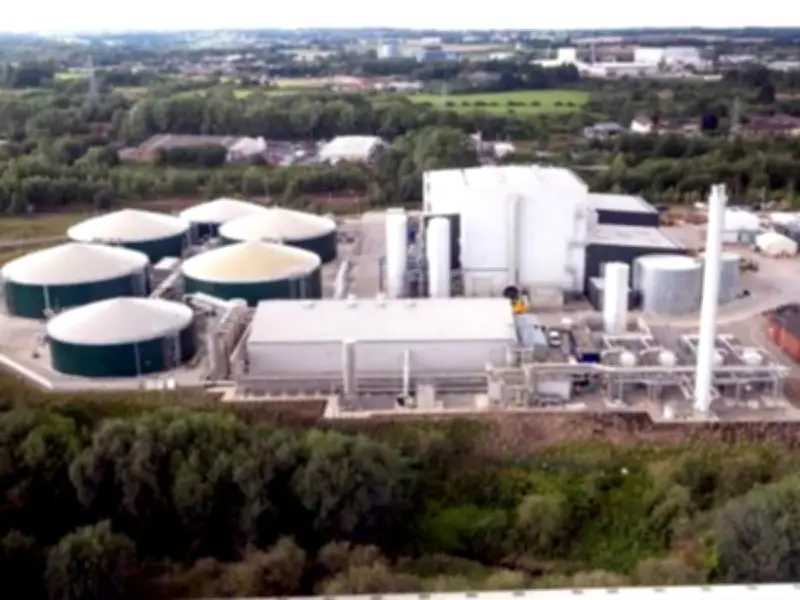
Planning chiefs have unanimously backed a scheme to turn a Northwich waste site into a biomethane plant. Cheshire West and Chester Council's planning committee met on Tuesday, October 6, where it gave its full backing to the transformation of the former Renescience site into a biomethane production facility.
Biomethane is the purified version of biogas, which is produced from the controlled breakdown of organic matter such as food waste. The plans had been lodged by Northwich Biogas Ltd – a subsidiary of Copenhagen Infrastructure Partners – which purchased the Lostock Gralam site from Ørsted in 2025.
Refurbishment and new technology
It will see a total refurbishment to phase out the existing municipal solid waste pre-treatment operation, turning it into a dedicated biogas plant featuring a new digester tank, biomethane upgrading units, and carbon capture technology.
The facility off Griffiths Road will import and process 177,000 tonnes of industrial organic and food waste a year. The resulting biomethane will then be supplied to the national gas grid. The food waste will be brought in by lorry but there will be a cap on HGV numbers of 96 movements per day. The facility will employ up to 25 staff.
Odour concerns and mitigation
During the planning consultation, multiple surrounding parish councils and Northwich Town Council had raised concerns, particularly in relation to odour. The committee was told by officers that mitigation measures would be put in place around odour and air quality.
Rob Charnely, head of planning at Cheshire West, told the meeting: "Noise and odour can be quite subjective so we get the advice of our technical experts. One person might be much more affected by odour than another person, so you have to draw a line and that's why we consulted our technical experts. There are set limits."
Green energy and CO2 capture
The committee voted unanimously to approve the project. Biomethane is widely seen as a greener alternative to fossil fuel-derived gas. The firm says the plant will generate enough to heat more than 10,000 homes every year. The waste it will decompose will include industrial food production effluents, wash waters, fat trap waste, and other organic liquids.
It said the plant will also capture 28,100 tonnes of biogenic CO2 – which is formed from organic waste – a year, providing sustainable CO2 for food, beverage and manufacturing industries.