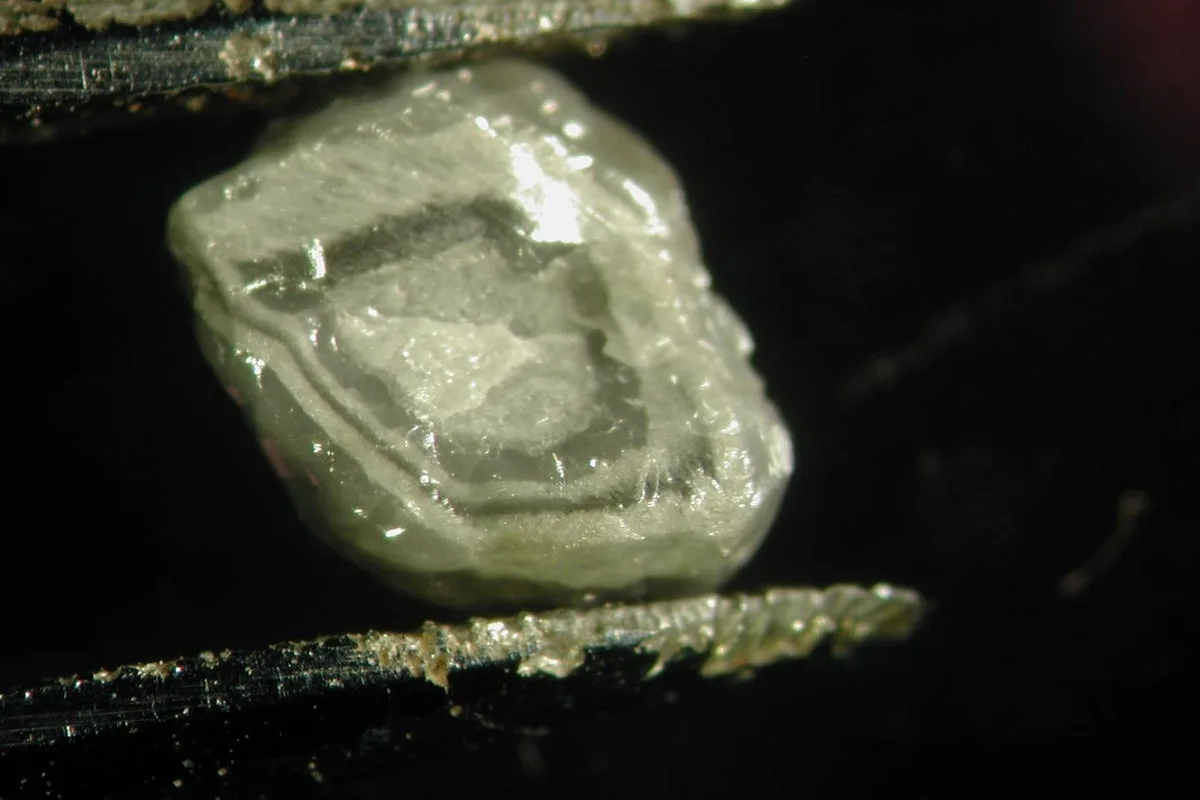
Chinese scientists have successfully created a hexagonal diamond in the lab, a material long theorised but only previously found at meteorite impact sites. The new diamond is slightly harder than natural cubic diamonds, according to a study published in the journal Nature.
Researchers from the Henan Key Laboratory of Diamond Materials and Devices used extreme pressure and heat to transform highly ordered graphite into a millimetre-sized piece of pure hexagonal diamond. They applied 20 gigapascals of pressure—about 200,000 times atmospheric pressure—and temperatures between 1,300°C and 1,900°C.
The team confirmed the structure using X-ray diffraction and advanced microscopy, revealing the unique hexagonal stacking of carbon atoms. Mechanical tests showed the hexagonal diamond has a hardness of around 114 gigapascals, compared to about 110 gigapascals for many natural diamonds.
“Bulk hexagonal diamond exhibits a slightly higher hardness than cubic diamond and high thermal stability,” the researchers wrote. They noted that the findings resolve the long-standing debate over the existence of hexagonal diamond as a discrete carbon phase and could lead to advanced technological applications.