

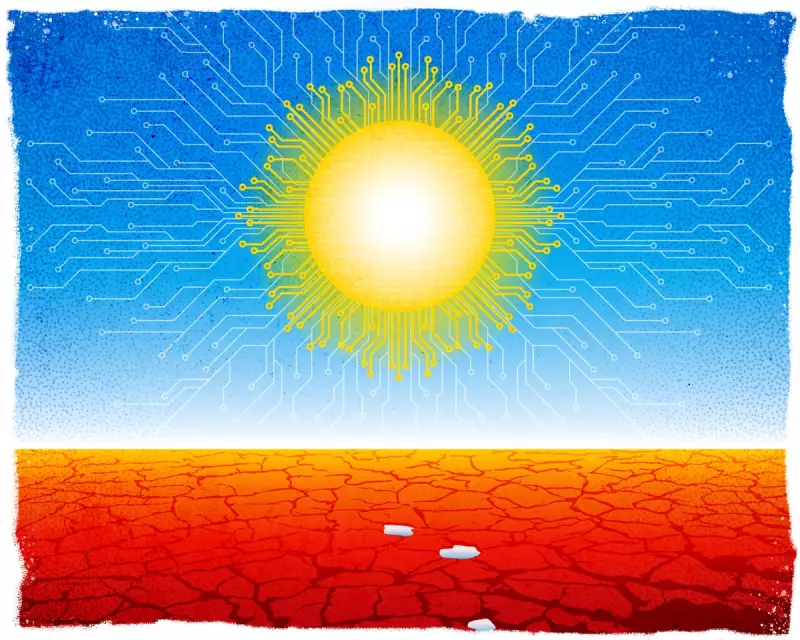
The rapid expansion of artificial intelligence (AI) in Australia is facing a significant environmental hurdle, as experts issue stark warnings about the colossal volumes of water required to cool the new generation of data centres powering the technology.
The Cooling Conundrum of the AI Boom
Australia is currently riding a wave of investment in AI infrastructure, with dozens of new data centre projects planned for major hubs like Sydney and Melbourne. However, this technological surge comes with a hidden and substantial cost: an immense demand for water for cooling systems. Analysts caution that these facilities will place unprecedented strain on the nation's already pressured water resources.
To put the scale of the problem into perspective, the water needs of data centres in Sydney alone are projected to exceed the entire drinking water supply of the capital city, Canberra. This revelation highlights a critical trade-off between technological advancement and resource sustainability that policymakers and industry leaders must urgently address.

A Broader Landscape of National Challenges
This environmental concern emerges amidst a series of other pressing national issues. The Albanese government is under mounting pressure from unions and manufacturers to confront major gas producers. The goal is to secure a more favourable deal for domestic consumers as it designs a new gas reservation scheme for east coast reserves.
In a separate financial scandal, new US court documents have shed light on an alleged global $3bn Ponzi scheme. An American promoter, referred to as "Bitcoin Rodney," claims he was ensnared by an elaborate fraud orchestrated by an Australian, Sam Lee, and is seeking release from custody.
On the humanitarian front, asylum seekers transferred by Australia to Nauru report going hungry on the island. They are prohibited from working and receive only $115 per week for food, an amount rendered insufficient by the location's notoriously high prices.
Global Echoes and Domestic Affairs
Internationally, the news landscape is equally turbulent. In the United States, top vaccines official Robert F Kennedy Jr. has promised a regulatory overhaul, controversially claiming without evidence that current regulation had "killed more than it saved." Meanwhile, four countries have announced a boycott of next year's Eurovision Song Contest after organisers allowed Israel to compete.
European tensions are also high, with French President Emmanuel Macron reportedly warning leaders of a potential US betrayal on Ukrainian territory, according to a leaked note cited by German magazine Der Spiegel.
Back in Australia, the political scene includes a supreme court mention over a legal challenge concerning a $1.55m loan made by the Victorian Liberals to their former leader. Furthermore, Tasmania's parliament has given final approval to a contentious $1.13bn AFL stadium in Hobart, paving the way for the Tasmanian Devils to enter the AFL and AFLW competitions.
Sporting Context and Cultural Legacy
In sporting news, the second Ashes Test in Brisbane saw a day of fluctuating fortunes. England finished the first day on 9-325, bolstered by a first century on Australian soil from Joe Root. However, Australian bowler Mitchell Starc delivered a sublime performance, claiming another six-wicket haul. The Australian attack was notably without veteran spinner Nathan Lyon, who was reportedly "absolutely filthy" after being dropped from the side.
The nation also paused to remember a cultural icon, as tributes flowed for Toni Lamond, the celebrated vaudevillian and star of stage and screen, who died this week at the age of 93.
As Australia navigates the promises and perils of the AI revolution, the warning about its water-intensive infrastructure serves as a potent reminder that technological progress must be carefully balanced with environmental responsibility and resource management.






