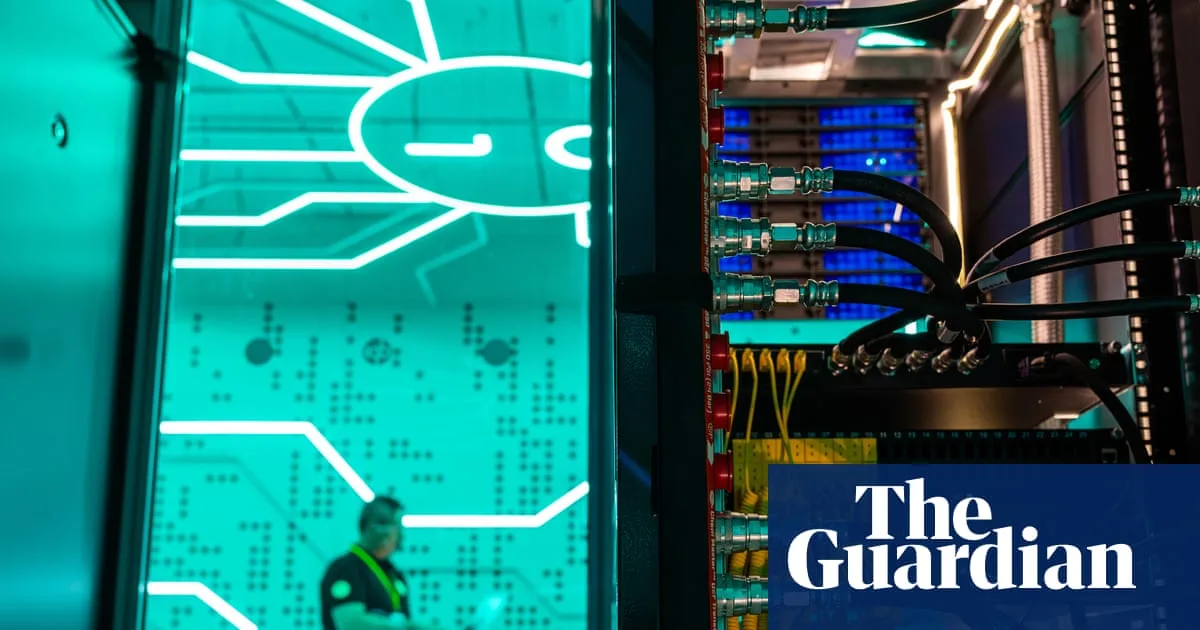
A new report has estimated that global spending on AI data centres could reach $3tn (£2.3tn) by 2028, fuelled by surging demand for artificial intelligence technology. The vast warehouses, which power tools like ChatGPT and Google’s Veo 3, are at the heart of a spending spree that has seen Nvidia become the first $5tn company and Microsoft and Apple hit $4tn valuations.
Despite concerns of a potential bubble, investment shows no sign of slowing. Amazon, Meta, Google and Microsoft are expected to spend over $750bn on AI-related capital expenditure in the next two years. In the UK, Microsoft is building a data centre in Newport, Wales, while Equinix plans a £4bn facility in Hertfordshire.
However, analysts warn that the scale of debt financing poses risks. Morgan Stanley estimates that $1.5tn of the $3tn total will need to come from sources like private credit, a sector that has raised alarms at the Bank of England. Meta has already tapped private credit for $29bn to fund a data centre in Louisiana.

Gil Luria of DA Davidson described the hyperscaler investment as the “healthy” part of the boom, but cautioned that speculative assets without committed customers could trigger wider repercussions. “The providers of this debt are so eager to deploy capital into AI that they may not be properly assessing the risks,” he said.