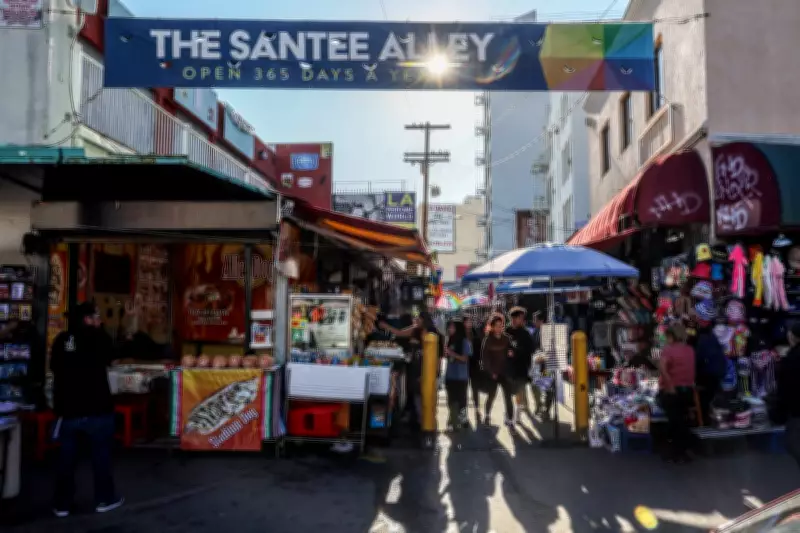
The Los Angeles Fashion District, a historic epicentre of garment manufacturing and wholesale trade, is confronting an uncertain future as economic pressures and shifting consumer habits reshape the industry. Once bustling with activity, the district now faces declining foot traffic, rising operational costs, and a rapid transition towards e-commerce, leaving many long-standing businesses fighting to stay afloat.
Declining Footfall and Rising Costs
For decades, the Fashion District served as a vital supply chain hub for designers, retailers, and manufacturers across the United States. However, the rise of online shopping has significantly reduced the demand for physical wholesale operations. Many small businesses report a sharp drop in visitors, with some estimating a 40% decline in customer numbers since 2020. Simultaneously, rents in the area have increased by over 25% in the past five years, squeezing already tight margins.
Impact on Local Businesses
Local entrepreneurs like Maria Gonzalez, who has run a fabric store in the district for 30 years, describe the struggle to adapt. "We used to have constant traffic from designers and students. Now, many of them buy online or have moved to cheaper locations," she said. The district's traditional model of bulk sales and in-person negotiations is increasingly outdated, forcing owners to invest in digital platforms they often cannot afford.

The shift is not uniform across the district. Some businesses that have embraced online sales and social media marketing have managed to survive, but many lack the resources or expertise to pivot. Industry experts warn that without significant investment in modernisation and support from local authorities, the district could lose its distinctive character and economic contribution.
Broader Economic Trends
The challenges facing the Fashion District reflect wider trends in American retail and manufacturing. The US garment industry has lost over half its jobs since the 1990s, with production moving overseas to countries with lower labour costs. While Los Angeles remains a centre for high-end fashion and sample-making, the volume of mass production has dwindled. Additionally, the COVID-19 pandemic accelerated the shift to online shopping, a change that shows no signs of reversing.
Local Government Response
City officials have acknowledged the district's plight and are exploring measures to support small businesses. Proposals include rent subsidies, tax breaks for manufacturers, and grants for digital transformation. However, critics argue that these efforts are too slow and insufficient. A representative from the Los Angeles Economic Development Corporation noted, "We need a comprehensive strategy that addresses both the immediate financial pressures and the long-term structural changes in the industry."
Community organisations are also stepping in, offering workshops on e-commerce and financial management. Yet, many business owners remain sceptical about the future. "We've survived wars and recessions, but this feels different," said Gonzalez. "The whole way we do business is changing, and I'm not sure we can keep up."
Looking Ahead
The future of the Los Angeles Fashion District hinges on its ability to reinvent itself. Some envision a hybrid model combining physical showrooms with online sales, while others suggest a shift towards custom, artisanal production that cannot be easily replicated overseas. The district's fate will also depend on broader economic policies and consumer preferences. As the holiday season approaches, many are watching closely to see if the district can weather the storm or if it will become another casualty of the digital age.