Dudley, once a major industrial centre and proud market town, now faces a stark reality with over 40 shopping units closed across its town centre and youth unemployment rates among the highest in the UK. Concerned locals have spoken out about their home and fears for the future.
A proud industrial past
Dudley, widely dubbed the "heart" of the Black Country, sits atop expansive mineral wealth that fueled the Industrial Revolution. It grew into a heavy manufacturing powerhouse, driven by coal and limestone mining, in the 18th and 19th centuries. The town and wider area became renowned for metalworking, including nail making, chain manufacturing, and anchor production. Most notably, the 16-tonne centre anchor for RMS Titanic was produced in Netherton, part of the Metropolitan Borough of Dudley.
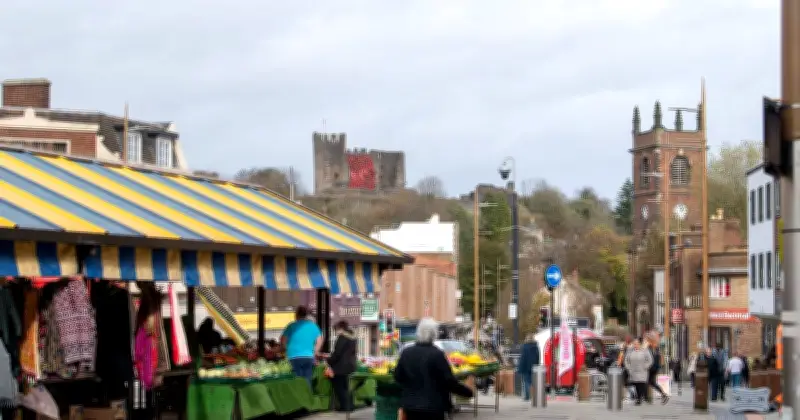
By the mid-19th century, heavy industrial smoke and soot gave the surrounding regions their famous name - the Black Country. Dudley was considered its capital. As well as thriving industry, Dudley's open-air market dates back to the 12th century, serving as a busy hub for trading across the West Midlands. The High Street and Market Place also operated as a bustling retail centre packed with busy shops.
Decline and lost jobs
Fast-forward to 2026, and Dudley town centre is a far cry from what it once was. Shops stand shuttered, balaclava-clad youths roam the streets, and locals have little reason to visit the town they once loved.
David Stanley, Conservative Councillor for Gornal Ward in the Dudley Metropolitan Borough Council and representative on the West Midlands Combined Authority Council, told the Daily Express: "I always look at the statue of the Earl of Dudley and think: 'If he came back, what on earth would he think about the town now?'" The 82-year-old former Mayor of Dudley added: "The shops and traders here are struggling, there's no doubt about that. The trade is poor. I've just been to the market and there were three stalls; two selling vegetables and one selling clothes. It was sad to see. The issue we've got is an empty market and empty town means anti-social behaviour hasn't improved."
Mike Woodall, 76, has lived in Dudley for 60 years and looks back fondly on the town's "heyday." He explained: "One of the major iron producers in the area was a company called Round Oak Steel Industries at Brierley Hill. It was a major employer for people in the area, there were jobs for everyone. We also had Bilston Steel and you just had full employment and lots of opportunities. You literally left school on a Friday and you had a job on a Monday. If you didn't like it, you'd find something else. You really had a lifetime of full employment."
Impact of Merry Hill and current challenges
The situation changed following the closure of Bilston Steelworks in 1979 and Round Oak Steelworks in 1982. These closures were promptly followed by the opening of Merry Hill Shopping Centre in 1985, which soon became one of the biggest malls in the country. Mr Woodall added: "So now we have a situation where there are loads of low-paid shop assistant jobs that weren't suited to people that worked in a steelworks. This led to unemployment in the area going through the roof."
Merry Hill Shopping Centre, located around three miles outside the town centre, now boasts over 250 shops, a large food hall and 9,000 free parking spaces. Its presence has drawn shoppers away from the historic Dudley market and high street. Mr Woodall said: "Prior to Merryhill, Dudley was a thriving market town. There was a market every Saturday and Wednesday, it was always teeming with people. But they then withdrew and that was the start of the decline. Then more shops on the high street suddenly withdrew and it got worse. I've seen the decline of Dudley from its heyday of heavy industry and a market town to what it is now. You walk through the town centre now and it's either charity shops or large shops that have been split into loads of little stalls. It's a very sad place."
In the 1970s and 80s, Dudley town centre was home to Marks & Spencer, BHS, Littlewoods, Dorothy Perkins, Woolworths, Burtons and H Samuel. All of these big names have now disappeared and market traders continue to struggle. Dudley Council has invested £24 million in a new bus-and-tram station set to open in weeks. It also installed a new £150,000 seating area at the market in 2025, using funding from the government's UK Shared Prosperity Fund. However, the seating area was ripped out after just 16 months due to anti-social behaviour and cleanliness issues. Local media says the stalls became infested with pigeons and attracted groups of street drinkers.
Youth unemployment and hopes for revival
Official data shows that up to one in five school-leavers aged 16-17 in Dudley are in NEET (not in education, employment, or training). This makes it a focal point of national concerns around youth joblessness. Young workers in the area report strong competition for entry-level and part-time positions, standing in stark contrast to Dudley's booming post-industrial economy. Mr Woodall describes the situation as "sad" and struggles to see hope for the future. "People don't go into Dudley anymore as there's nothing for them there," he says. "There's no shops at all worth visiting and there's no jobs. It's sad because it's a very proud town with a good history. A pivotal point was the pandemic when we were told to stay at home and not go out to work. Then, when it was over, nobody wanted to go back to work or spend their money."
Local resident Anthony Smith says he's "bleated on about Dudley for years." He believes the town's history and heritage mean it has a way back to its glory days. "Think about it - a medieval market town, a castle at the end of the High Street, a world-famous zoo, the Black Country Living Museum, and an underground world of caverns and limestone mines," the 46-year-old says. "The irony is that Dudley has the history, attractions and character that other towns would kill for, yet it's blighted by crime, anti-social behaviour and a tired, neglected town centre. The ingredients are all there. What's missing is the vision, investment and pride to bring it all together and sell Dudley for what it really is. The potential is enormous. It's just never been properly realised."
Cllr Stanley also notes the major attractions, such as Dudley Zoo and Castle, the Black Country Living Museum, and Himley Hall and Park as major reasons not to give up on the town. His message is clear: "I am working extremely hard for the revival of Dudley town centre."