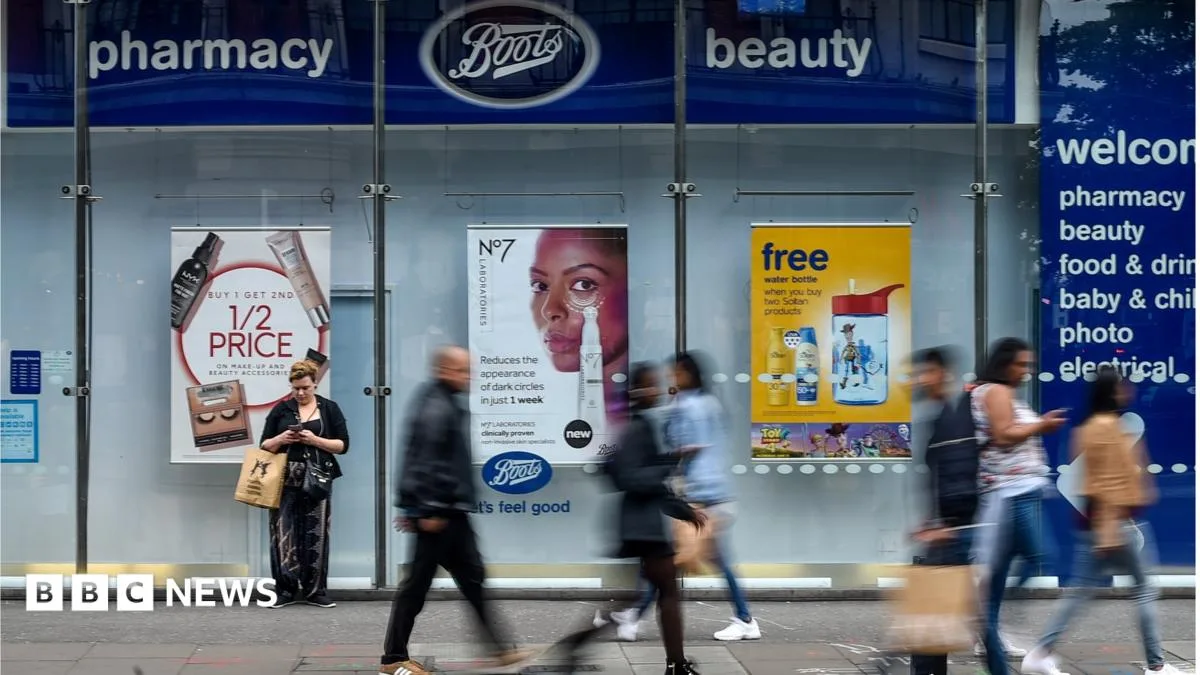
More than 50 retail bosses, including those at Asda and Boots, have written to the chancellor calling for an overhaul of the business rates system. The group, co-ordinated by the British Retail Consortium, described the tax as 'broken' and outdated, and said it had risen by 50% since the 1990s, contributing to retailers going out of business.
The letter argues that the retail sector accounts for 5% of the economy but pays 25% of all business rates. It says this disparity is damaging high streets and harming communities, pointing to a four-and-a-half year high in shop vacancy rates. Business rates are a property-based tax set by central government and collected by local councils.
James Lowman, chief executive of the Association of Convenience Stores, told the BBC's Today programme that the system was designed for a time when there was only physical retail. He said it acted as a disincentive to investment, meaning improvements such as CCTV, solar panels or a cash machine could significantly increase a business's rates bill. 'Surely it should be the other way round,' he said.
The retailers are asking for businesses in London and the South East to pay a larger share to ease pressure on firms in the North and Midlands, while avoiding an overall tax increase. They also warn that a no-deal Brexit would place considerable strain on retailers, and that reform of the rates system should be at the centre of the prime minister's economic package.
The Treasury responded that it had announced a £3.6bn fund last month to support high streets and town centres, with further details to come. Retail is the UK's largest private sector employer, with three million jobs. Other industries have also sought help for a no-deal Brexit, including food companies asking for competition law to be waived. Meanwhile, take-up of an £8m government training fund for customs preparations has been low, with just 741 companies applying.