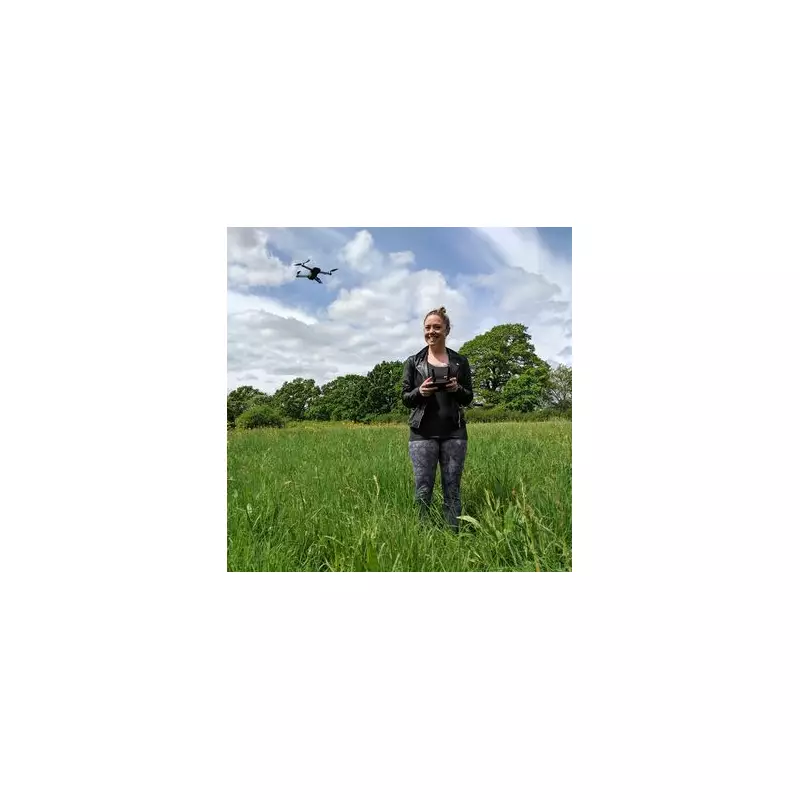
Drone enthusiasts across the United Kingdom are waking up to a significant change in the rules of the sky. As of 1 January 2026, new Civil Aviation Authority (CAA) regulations are in force, meaning many pilots must now pass a theory test and officially register their aircraft before flying outdoors. Failure to comply could result in fines.
What Are the New Drone Registration Rules?
The updated framework introduces mandatory identification based primarily on the weight of your drone or model aircraft. This marks a shift from the previous system, where registration was only required for heavier devices.
For drones weighing between 250g and less than 25kg, you now need to obtain both a Flyer ID and an Operator ID. The same requirement applies to any drone classified as UK1, UK2, UK3, or UK4, regardless of its exact weight.

Owners of lighter craft are not exempt. If your drone weighs between 100g and less than 250g, you must secure a Flyer ID. Should that same weight-class drone also be equipped with a camera, an Operator ID becomes compulsory as well.
Exemptions and Recommendations for Safe Flying
There are specific scenarios where these IDs are not required. You will not need a Flyer or Operator ID if your flying is strictly confined indoors or within a fully enclosed, netted area where the aircraft cannot escape.
For the very smallest drones weighing less than 100g, a Flyer ID is not a legal necessity. However, the CAA strongly advises pilots to voluntarily take the free online theory test to gain one, promoting safer flying practices and greater awareness of airspace rules.
The regulations also address younger flyers. Children under 13 can obtain a Flyer ID but must have a parent or guardian present when taking the test. Furthermore, any child aged 12 or younger must be supervised by someone over 16 during flight, and a parent or guardian must obtain the Operator ID for the drone.
A Necessary Shift for a Crowded Sky
CAA spokesperson Jonathan Nicholson highlighted the importance of these changes, especially following a period where drones have become a popular gift. "With the new drone rules coming into force this week, all drone users must register, get a Flyer ID and follow the regulations," he stated.
"We want people to enjoy their drones but it's vital that they have checked the new rules and know how and where to operate their drone safely before they fly," Nicholson added.
It is already a legal requirement for any organisation, such as a business or club, responsible for a drone to register with the CAA. The updated law now extends this principle of accountability and safety to a much broader range of private individuals and hobbyists, reflecting the rapid integration of drones into UK airspace.