
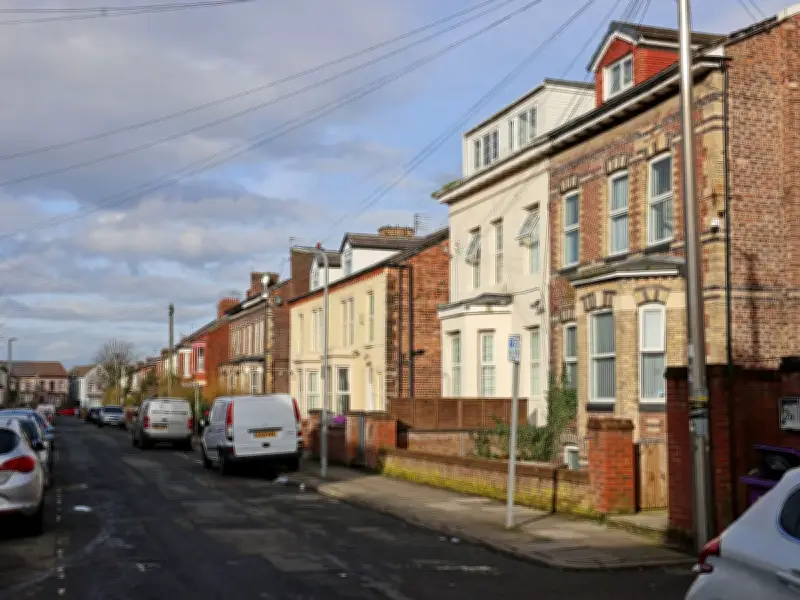
Liverpool City Council has declared a "war" on houses of multiple occupation (HMOs) as part of a new local plan aimed at curbing the concentration of such properties in residential areas. The plan, which sets out the city's development direction for the next 15 years, includes specific policies to limit HMO numbers and prevent the loss of family homes.
Council's Action Plan Against HMO Blight
The local plan, launched by city council leaders, aims to provide at least 33,000 new homes through a brownfield-first approach. However, a key component is managing HMO concentrations. Councillor Nick Small, cabinet member for growth and economy, stated: "What we are doing within the local plan is around managing the concentration of HMOs. We don’t want to see more than 10% of HMOs in any one area, we don’t want to see a loss of family dwellings, and we’ve got new policy in here around sandwiching that doesn’t result in a non-HMO being sandwiched between two HMOs."
Since June 2021, an Article 4 direction has restricted HMO conversions in areas with high concentrations, such as Tuebrook. Councillor Joe Dunne, who has campaigned against HMO expansion, welcomed the stronger language but stressed the need for action: "Residents will judge this by action rather than declarations of a 'war'. Communities such as Tuebrook have lived with the consequences of poorly managed and unauthorised HMOs for years, including overcrowding, waste problems, increased pressure on local services and the loss of much-needed family homes."
Enforcement and Coordination Challenges
Dunne emphasised that planning policy alone is insufficient: "It must be backed by properly resourced enforcement, faster investigations and much closer coordination between planning, housing options and licensing." He also raised concerns about properties operating as HMOs without planning permission, calling for cross-departmental action. Councillor Small noted that officers are separately exploring the expansion of the Article 4 direction, building an evidence base.
Councillor Angela Coleman, cabinet member for adult social services, described HMOs as "such a blight on so many communities" and praised the policy as a "legal blueprint for development" that responds to residents' concerns. The council leader, Liam Robinson, did not mince words: "I am very pleased the next stage of what I’ll very straightforwardly call the war on HMOs in communities like the one me and Liz represent." He highlighted successes in rejecting applications and the additional powers from Article 4 extensions, sandwiching prevention, and protecting family dwellings.
Balancing HMO Needs with Community Impact
Despite the crackdown, the policy acknowledges HMOs as "an essential part of Liverpool’s housing stock, meeting a diverse range of housing needs." It aims to manage distribution to prevent harm to neighbourhood character and amenity. Councillor Hetty Wood, the city's housing lead, stated: "We know residents have genuine concerns about the impact of poorly managed HMOs in some neighbourhoods. That is why the council has strengthened its work in this area, including more intelligence-led enforcement, additional housing enforcement capacity and a wider review."
According to Labour group data, 260 HMO applications have been rejected since 2021. The new policy limits HMOs to no more than three per frontage and prohibits sandwich conversions. The council has also improved cross-service checks to ensure planning status is verified before accommodation is used.




