
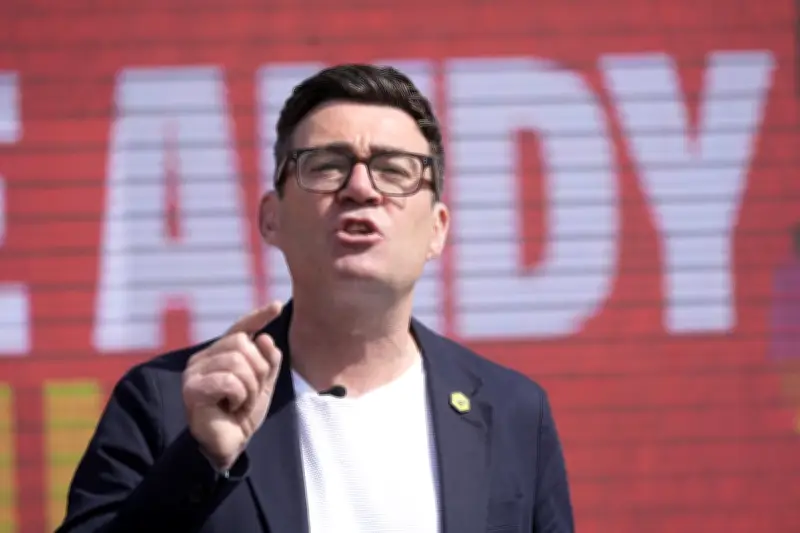
Andy Burnham's push for a proportional property tax (PPT) could land London with a staggering £7.5 billion higher bill, according to estimates from the Fairer Share Campaign. The former Greater Manchester Mayor, set to become Labour leader and Prime Minister after Sir Keir Starmer's forced resignation, has long supported replacing council tax and stamp duty with a property levy based on home values.
How the Proportional Property Tax Would Work
The PPT would be set at 0.48% of a property's value, rising to 0.96% for second homes, empty properties, and those owned by foreign nationals. The Fairer Share Campaign's 2021 manifesto stated that outside London, communities would benefit from a £6.5 billion reduction in property taxes, a figure now estimated at £7.5 billion due to inflation. This means London would effectively fund tax cuts for the rest of the country.
Hundreds of thousands of Londoners could see their property tax bills increase by £1,000 or more, with many facing smaller rises. The campaign argues that the owner of a £700,000 home would pay £3,360 in PPT—roughly equivalent to current council tax for that property value. However, owners of more expensive homes would pay more, while those with lower-value properties would see decreases, depending on varying council tax rates across London.
Impact on London and Potential Opposition
The PPT is designed to be fiscally neutral, meaning London's higher contributions would offset benefits elsewhere. Andrew Dixon, chair of the Fairer Share Campaign, told The Standard: “Council Tax is unfair, Stamp Duty is economically damaging, and Londoners pay the price for both. Fair reform means lower bills for low and middle-income households, protection for those facing increases, and a higher contribution from empty, second and overseas-owned homes.” He added that this is a “pro-London reform” targeting empty homes, speculative ownership, and punitive moving costs.
Despite these arguments, the plan faces likely backlash in London, where many residents already struggle with high mortgages and falling house prices—down for nine consecutive months. Any PPT increase would initially be capped at £1,200, and the campaign estimates £5 billion would come from the 0.96% levy on second homes, foreign-owned properties, and empty housing, with London bearing the brunt.
Burnham's History with Property Tax Reform
Burnham has a long track record of supporting land value tax (LVT) and property tax reform. In 2010, during his first Labour leadership bid, he said: “The LVT, an annual tax on the market rental value of land, would allow for the abolition of stamp duty—a tax on the aspiration of young people to put down roots and get on with life.” More recently, he reiterated: “I’ve long been persuaded of the argument for a Land Value Tax. Council tax is a highly regressive tax. I see a big case for land and property and business taxation to be changed.”
Property experts doubt Burnham would implement such a major reform before the next general election, expected in 2029, but believe it could feature in Labour's manifesto. The PPT, while not a pure LVT, is a variation based on property values, and Burnham is listed as a supporter on the Fairer Share Campaign website.




