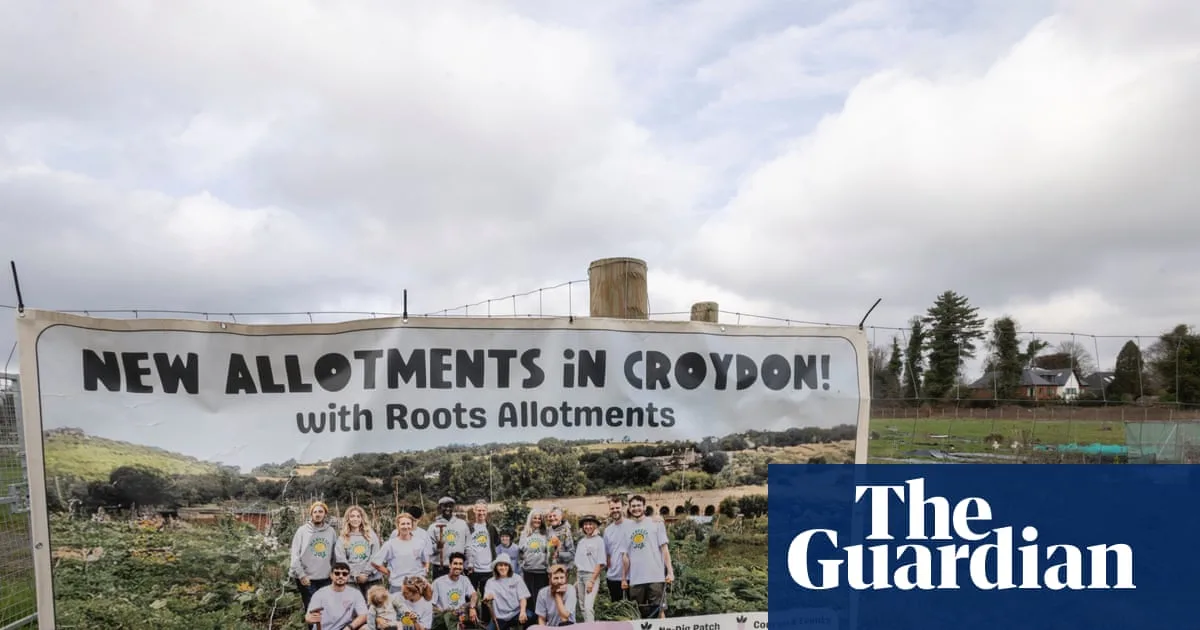
The War Over Privatised Allotments: Roots' Expansion Sparks Nationwide Protests
In a bold response to decades-long waiting lists for council allotments in England, the startup Roots has pioneered a privatised model, leasing farmland to create subscription-based vegetable patches for city dwellers. However, this innovative approach has ignited a fierce nationwide conflict, pitting eager gardeners against local communities and environmental campaigners.
From Frustration to Rapid Growth
Roots was co-founded in 2021 by Christian Samuel, Ed Morrison, and William Gay, who were inspired by a 28-year wait for a plot in Streatham, south London. "We thought: 'This is crazy'," recalls Samuel, 32. "'Why don't we just build our own?'" Their solution has proven wildly successful, with Roots now operating 20 sites from London to Leeds, serving nearly 5,000 customers. In October 2023, the company secured a £6 million fundraise, backed by notable investors including former Tesco chief executive Terry Leahy and Wahaca co-founder Mark Selby, with plans to expand internationally, starting in Austin, Texas.
The startup leases farmland and transforms it into allotment plots, renting them out on a subscription basis priced from £9.99 to £49.99 per month for patches up to 108 square metres. Described by one adviser as "WeWork for allotments," this model taps into a clear demand, as over 170,000 people languish on council waiting lists across the country. "For many people, it's not about growing food; it's the mental health and wellbeing benefits of being outside," explains Samuel. "They see it as an escape, and there's a clear supply and demand gap."
Nationwide Opposition and Protests
Despite its popularity, Roots faces mounting resistance. What began as a local protest in Bristol has evolved into a nationwide campaign, with a Facebook group, Roots Allotments Uncovered, attracting over 1,700 members. Opponents accuse the company of an aggressive expansion strategy, often developing land first and seeking planning permission only when compelled by councils.
In Bristol, protesters blockaded a site in October 2023 with old cars, leading to police intervention. Simon Talbot-Ponsonby, 73, chair of the nearby Abbots Leigh parish council, alleges that Roots has "trashed" the countryside by dumping compost on grazed meadows, churning up grass, and installing a shipping container and an 80-space car park. "They have a total disregard for the feelings of local people," he asserts.
Resistance has spread to other areas. In Ecclesfield, near Sheffield, the council denied planning permission in December after diggers removed hedgerows, a decision Roots is appealing. In West Sussex, outcry erupted when work began on protected land within the South Downs National Park. Some opponents have resorted to sabotage, such as pouring cement into locks, deflating digger tyres filled with superglue, and sowing grass seed on compost deliveries.
Planning Disputes and Environmental Concerns
The founders view themselves as victims of a zealous nimby campaign, with Samuel calling protesters "haters" and recounting an incident where he was slapped at a railway station. He argues that allotments qualify as agriculture under permitted development rules, not requiring planning permission on green belt land. However, critics contend that the scale—with shipping containers, irrigation systems, and hundreds of plots—constitutes commercial development necessitating approval.
Environmental campaigner Chris Packham has criticised Roots, stating in 2024, "Increasing access to green spaces is a must—and allotments are a great way to do that. But when you're a venture capital-backed firm developing on species-rich grassland, with breeding skylarks ... you're in the wrong." This highlights a fundamental tension: allotments have traditionally been a public good run by councils, not a commercial opportunity for startups.
Roots' pricing reinforces these concerns, with a full-size plot costing nearly £550 annually, compared to under £100 for many council equivalents. The company, trading as Allotta Futureland on Companies House, reported assets of £1.7 million in 2024, a threefold increase from the previous year, with investors including JamJar Investments and Redbus Ventures. Samuel defends the model, stating, "It's not cheap to do this, and I don't think the fact that we've had investment should really matter. We are doing something good with the money."
Broader Context and Future Ambitions
The conflict occurs against a backdrop of declining council allotment land, which has fallen by about 65% since the 1950s in England. Since Labour took office in 2024, the government has approved the sale of eight more allotment sites to fund housing. "We are adding to supply," insists Samuel, emphasising Roots' availability amid scarcity.
Undeterred by opposition, Roots plans another fundraise soon to support dramatic expansion, aiming to open 20 more sites this year and reach 1,000 sites worldwide with 250,000 customers by 2033. However, challenges persist, such as in Bristol, where planning permission was granted in summer 2025, but the water supply was cut off after Roots tapped into a farmer's cattle trough pipe without proper authorisation.
Despite sabotage, planning battles, and operational hurdles, Samuel remains resolute. "We hear every day that thousands of people want these things, and we're not planning on stopping," he declares. "All this over growing a bunch of aubergines." As the war over privatised allotments rages on, it underscores deeper debates about green space access, urban development, and the role of private enterprise in public domains.






