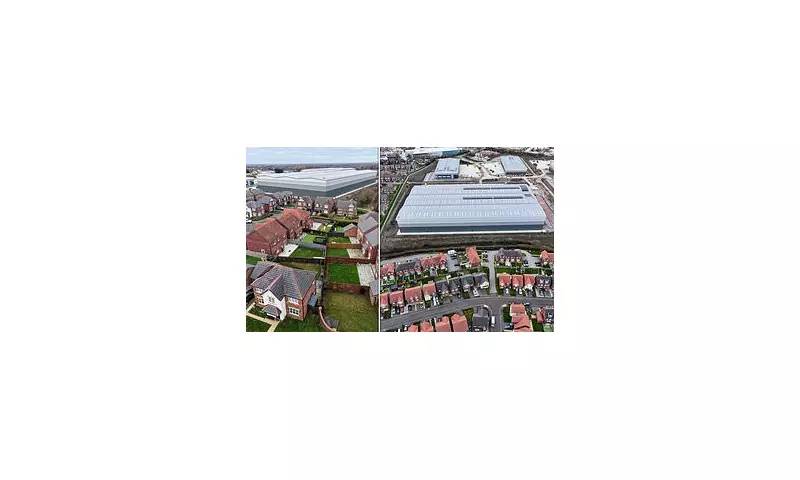
Across the United Kingdom, a new industrial landscape is emerging. Vast, steel-clad warehouses, dubbed 'supersheds', are proliferating, turning swathes of green and pleasant land into zones of logistical activity. Driven by the relentless growth of online retail, these structures are being snapped up by major firms like Amazon and The Range to facilitate rapid delivery. But their spread is igniting fierce battles in rural communities, where residents are mobilising to protect their countryside from what they see as an existential threat.
The Chorley Conundrum: Green Belt in the Crosshairs
In Chorley, Lancashire, a stark conflict is unfolding. Developer FI Real Estate Management, owned by multimillionaire Tim Knowles, is seeking to expand its warehouse empire beyond the existing Botany Bay Business Park onto protected Green Belt land near Finnington Lane. Despite the area's protected status, the company conducted a scoping exercise in 2022, which local resident Ann Christopher, 68, described as "ripping up the land," damaging wildlife habitats around a historic quarry and reservoir.
Lancashire County Council issued a stop notice in 2023, ordering the land be returned to its original state. However, FI has appealed, leaving the enforcement order unenforced. Meanwhile, a pivotal new local plan for Preston, Chorley, and South Ribble is under government examination. Campaigners fear FI, advised by a former council chief executive, is attempting to influence the plan's final section to have the site designated for large-scale warehousing.

"We estimate between 2,800 and 3,000 HGV movements in a day," said Ms Christopher, highlighting the strain from existing logistics traffic. She warns of the visual impact on an area rich with Grade I and II* listed buildings and country pubs, stating the development "would be relentless, day and night, and completely ruin the area."
National Pattern: Local Plans Paved for Warehouses
The tactic of altering local development plans is a recurring theme. In Takeley Street, Essex, Uttlesford District Council's new local plan seeks to redesignate a 67-acre Countryside Protection Zone, adjacent to the protected Hatfield Forest, as a "place for employment." This would sacrifice prime farmland for warehouses. Campaigners warn of "24/7 lorries and lights," severe traffic increases, and potential sewage system overloads.
Similarly, in Diseworth, Leicestershire, developers are leveraging the area's designation as part of an East Midlands Freeport—a special economic zone with tax benefits—to push for huge 'B8' logistics sheds on high-quality agricultural land. Developers East Midlands Airport, SEGRO, and Prologis are in a complex fight over the site, with normal planning protections potentially overridden by the Freeport's "nationally significant infrastructure" status. Locals, who uncovered the details via Freedom of Information requests, feel they are fighting a secretive, uphill battle against corporate giants.
Lived Realities: Flooding, Overlooked Homes, and Mental Strain
For communities already living beside these structures, the impact is tangible and severe. In Tyldesley, Wigan, residents blame four new 60ft warehouses at Astley Business Park for causing severe flooding, with parents forced to carry children through ankle-deep water on the school run. Wigan Council says developers have promised a ditch.
Residents describe the warehouses as "monstrous" and complain of noise, light pollution, and plummeting property values. Ian Southwell, 60, fears for his £550,000 home, while Dawn Hornby said the development felt like "a football stadium" appearing in her back garden overnight. Further proposals in Wigan could see 17 more sheds up to 30 metres high.
In Carrington, Greater Manchester, a government inspector overturned a council rejection, allowing warehouses on Green Belt land despite concerns over wildlife, a listed church, and strain on local services. Campaigner Marj Powner decried a "biased planning process" that prioritises growth over community impact.

The fight against the supershed sprawl unites villages from Suffolk to Gloucestershire. It pits the economic arguments of job creation and investment against the environmental, social, and aesthetic costs to rural Britain. With multiple local plans pending approval in the coming weeks, the fate of countless green fields—and the communities that cherish them—hangs in the balance.