England's Poorest Communities Face Retail Inequality Crisis
England's most deprived communities have 70% more vape shops, off-licences, and bookmakers than wealthier areas while having far fewer cafes, gyms, and childcare facilities, according to a comprehensive new study. The research reveals a stark geographical divide in the availability of essential community services and retail options across different socioeconomic regions.
Concentration of Unhealthy Retailers in Deprived Areas
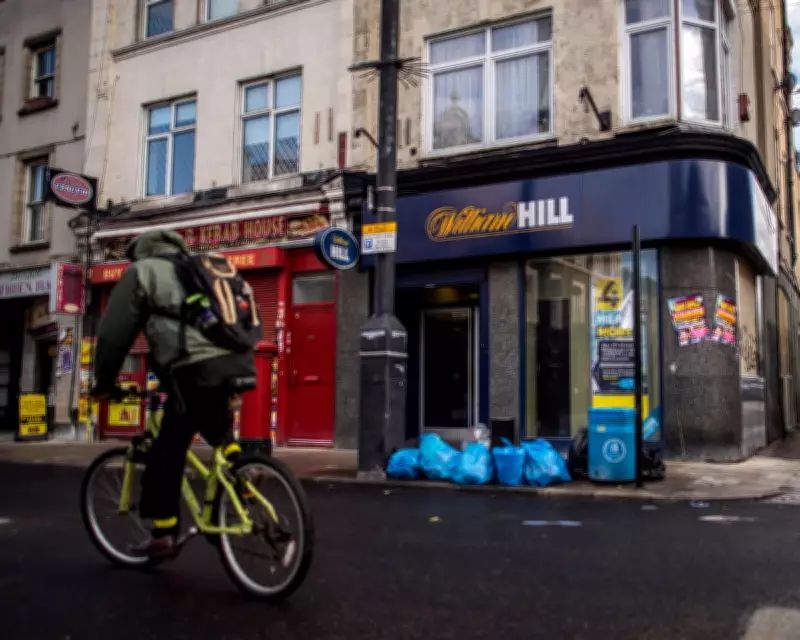
The Independent Commission on Neighbourhoods (Icon), chaired by Labour peer Hilary Armstrong, found that local shopping precincts in deprived areas have roughly double the number of retailers selling unhealthy food compared to more prosperous neighborhoods. These shopping parades, defined as "the shops down the road" that play a central role in daily life, also show significantly higher vacancy rates of 8.1% in the poorest areas versus 5.9% in more affluent communities.
Researchers discovered that deprived areas have 70% more vape shops, bookmakers, off-licences, and takeaways than prosperous areas. Simultaneously, these communities have half the number of childcare facilities such as nurseries and children's centers, and approximately 25% less social infrastructure including gyms, cafes, and pubs.

Government Focus Overlooks Neighborhood Shopping Parades
The Icon study, due for publication on Monday, warns that ministers risk overlooking vitally important neighborhood shopping precincts by focusing primarily on town centers. Ross Mudie, Icon's head of research, stated: "Ministers risk overlooking vital neighbourhood shopping parades as the government focuses on boosting town centre retail. Communities in these areas should be given extra support to take over and run empty units in their local shopping parades as new community facilities."
Researchers criticized what they described as a "fragmented" and disjointed approach to these "hyperlocal" areas, suggesting that as many as 13 government departments were responsible for relevant policies, rising to 16 when including healthy eating initiatives.
Political Context and Policy Responses
Tackling Britain's struggling high streets represents one of the main missions of Keir Starmer's government. In a recent speech, the prime minister announced an expansion of the £5 billion "pride in place" programme, which invests in 284 areas across the UK. The funds will enable communities to seize boarded-up shops and purchase beloved local assets such as libraries and cinemas.
However, researchers expressed uncertainty about whether Starmer's policy would adequately address concerns about neighborhood shopping parades. Meanwhile, Nigel Farage's Reform UK, which holds a 10-point lead in current polls, is focusing on "broken" high streets ahead of potentially devastating local elections for Labour in May.
Broader Social and Political Implications
Recent polling indicates that the decline of high streets ranks among the biggest concerns people have about their local area, surpassed only by high prices in shops. The areas with the most deteriorated high streets predominantly exist within Labour's traditional heartlands, particularly in the Midlands and north-east of England.
Zoë Billingham, director of IPPR North, commented: "People rightly assess the state of the country by their surroundings. When we see local shops fall into disrepair or sit empty, it's a sign of economic failure. Neighbourhood precincts are often people's go-to spaces, especially in places underserved by local transport, so it's right they are taken as seriously as high streets. We need physical spaces to come together, to regain a lost sense of community."
Professor Will Jennings of the University of Southampton warned last week that Labour would face being "washed away in a tide of discontent" at the next general election unless it effectively addresses the decline of Britain's high streets. His research found that people perceive high streets as having deteriorated more than any other aspect of their local area over the past decade, coinciding with household brand collapses and increased shoplifting incidents.

Jennings' study builds upon two previous YouGov surveys and demonstrates a collapse in local pride between the end of Boris Johnson's premiership in September 2022 and the conclusion of Rishi Sunak's term in July 2024, primarily driven by concerns about healthcare, shops, crime, and opportunities for young people. Although a partial rebound occurred last year under Labour, the state of the country's high streets remains the problem people feel has worsened most significantly over the past decade.
The thinktank IPPR North has additionally warned that the "withering away" of local community spaces has contributed to shifting people online, with young men particularly drawn into radical rightwing politics through platforms like WhatsApp and Telegram.