
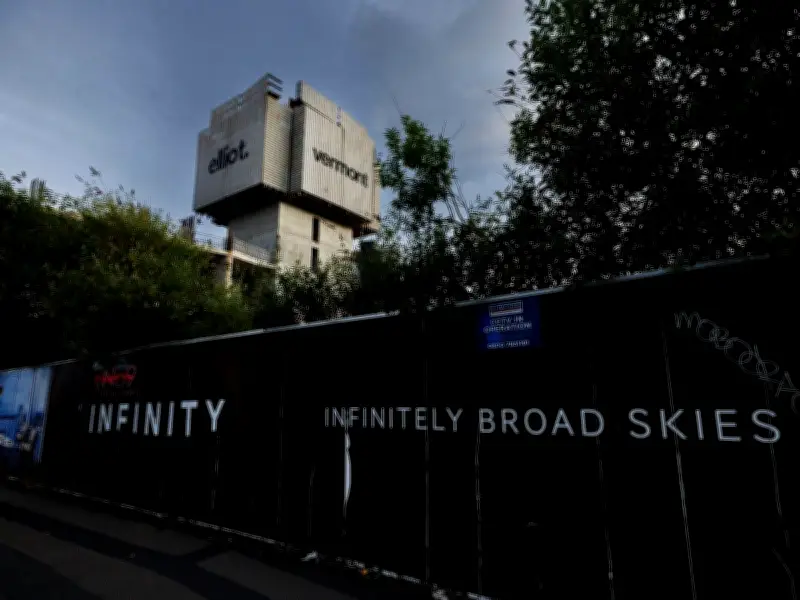
A High Court settlement has ended a years-long dispute over the stalled £250m Infinity Waters development in Liverpool, potentially unlocking one of the city's most high-profile derelict sites. Lawyers representing more than 200 investors confirmed the confidential agreement, which removes a legal obstacle that had prevented the sale or redevelopment of the land on Leeds Street.
Background of the Infinity Waters Project
The Elliot Group, led by developer Elliot Lawless, first announced plans for the site in 2016, proposing three towers of up to 39 storeys. The scheme, billed as a "statement of confidence for people entering the city," was intended to deliver over 1,000 homes. Work began on the first tower in March 2019, but the project collapsed in 2020 when Infinity Developments Liverpool went into administration, leaving only a part-built concrete platform visible to thousands of daily commuters.
The administration followed the arrest of Elliot Lawless in December 2019 as part of Merseyside Police's Operation Aloft investigation into building contracts. Lawless denied wrongdoing, and in 2025 police confirmed he would face no charges. However, the investigation had already caused irreparable damage: joint administrators Paul Cooper and David Rubin noted in May 2020 that a lender withdrew development funding due to the probe, despite it not relating to the Infinity site.
Investors Unite to Buy the Site
In November 2022, more than 200 investors who had purchased apartments in the scheme formed Infinity Developments Propco and bought the site for £2.5 million, outbidding Liverpool developer Legacie. Despite the acquisition, progress stalled due to a lease held by Elliot Lawless that prevented any development. In 2023, Propco sought court action to remove the lease, which was described as "an obstacle" by property news site Place North West.
Specialist insolvency lawyers Isadore Goldman represented the investors in the High Court challenge. The firm announced on June 22, 2026, that a confidential settlement had been reached, resolving the lease dispute. Nick Oliver, director at Isadore Goldman, said: "For years, investors have been told that when a development scheme collapses their options are very limited. This landmark settlement clears the roadblock that stopped more than 200 investors from getting back what they are owed from the Infinity Waters site."
Legal Victory and Path Forward
Christopher Boardman KC, of Radcliffe Chambers, who supported the investors alongside Emily Drake and Louise Griffin of Isadore Goldman, said: "Winning the first High Court case that required the administrators to sell the site and legal claims to the investors was only one part of the journey – as the land was largely worthless and impossible to develop while the lease was allowed to stand. Challenging the lease and the use of investor deposits has meant that the land can now be marketed, financed or redeveloped, and securing this settlement removes the uncertainty, delay and cost of a final hearing."
Oliver added: "The investors, and particularly their steering board who devoted so much of their personal time, deserve huge credit for refusing to lie down and accept that they were beaten. Their unwavering persistence, hard work and courage has won a victory that lays a path for others in similar situations."
Current Site Activity and Future Plans
Recent visits to the site have shown signs of activity, including vegetation clearance. The old Infinity promotional billboards, which have decayed over time, remain in place. Building contractor Vermont, which began work on the towers in 2019, still has its logo displayed on the unfinished structure. The ECHO has approached Vermont to inquire about their future involvement.
Lawyers declined to provide further details on the settlement but said it gives investors "the chance to mitigate their losses, which run into millions of pounds." The agreement could serve as a blueprint for other investors in stalled schemes across the UK, demonstrating that legal action can overcome obstacles in insolvency cases.




