

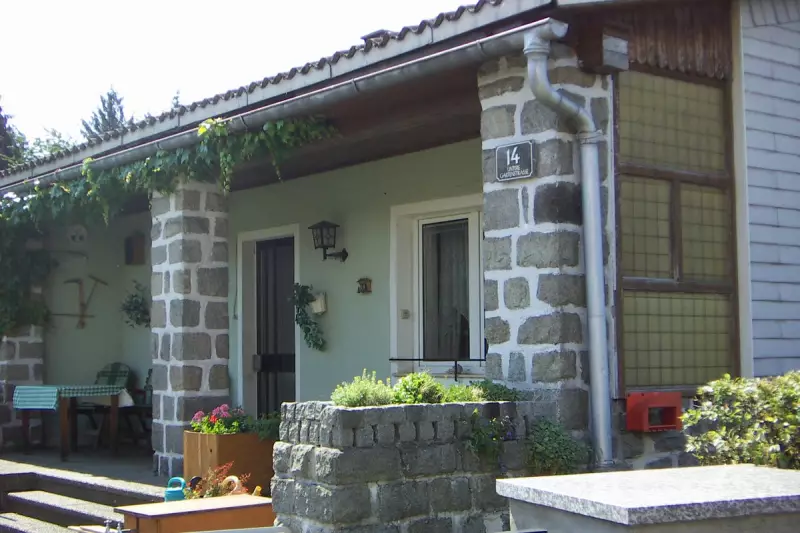
A property listing in Austria has provoked widespread condemnation after it attempted to sell a former Nazi concentration camp brothel as a simple renovation project, omitting its horrific historical context.
Property Advert Fails to Disclose Dark Past
The semi-detached bungalow, located in Upper Austria, was listed on a property website as a "house with a history" suitable for renovation. The advertisement, first highlighted by the regional newspaper OÖN on 28 November 2025, promoted the home's proximity to local amenities like a kindergarten and shops.
However, it completely failed to mention that the building was originally part of the Gusen concentration camp complex, established by the Nazi regime in 1939. More specifically, from June 1942, the property was used as a brothel where female prisoners were forced to provide sexual services to selected inmates.

Shock from Memorial Organisations and Officials
The sale has drawn sharp criticism from historical preservation groups and local authorities, who were reportedly unaware of the listing. Barbara Glück, director of the Mauthausen memorial, stated they only learned of the advertisement on 21 November and were "rather surprised" by its existence and content.
This controversy emerges just days after the Austrian interior ministry, on 17 November, presented plans to expand the memorial site at Gusen. Notably, the former brothel was not included in those proposals.
The Grim History of Gusen Camp
Gusen, a sub-camp of the larger Mauthausen complex, was situated between the villages of Sankt Georgen an der Gusen and Langestein. During the war, it held over 71,000 prisoners, with a death toll estimated at a minimum of 35,800 from forced labour, starvation, and execution.
The camp was initially populated mainly by Polish prisoners, alongside significant numbers of Spanish Republicans, Soviet citizens, and Italians. Inmates were forced to work in nearby quarries, producing granite for the SS-owned company DEST. Life expectancy was as short as six months for many.
While much of the former camp was redeveloped after 1945, the house now for sale retains original features like stone walls and pillars, serving as a tangible, if unmarked, relic of its painful past.






