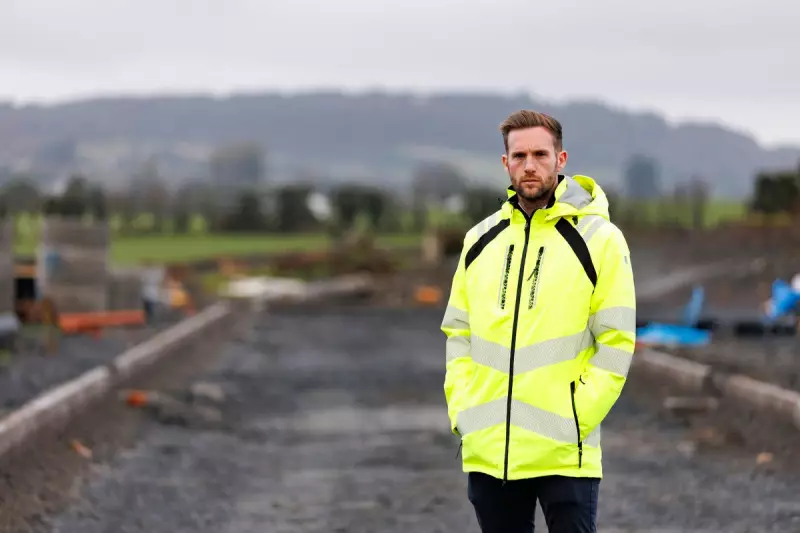
House builders across Northern Ireland are confronting a "very bleak" future, with the region's deteriorating wastewater infrastructure forcing some companies to plan their exit from the market, an industry body has starkly warned.
Political Funding Failure Fuels Housing Shortage
The lobby group Build Homes NI states that the ongoing political failure to properly fund the state-owned utility NI Water is directly worsening a spiralling housing crisis. A chronic lack of new home supply is driving up sale prices and rents across the region.
The body, representing major residential construction firms, was established this year to campaign for urgent action. It claims securing planning permission for new projects is becoming almost impossible in many areas because NI Water cannot grant connections to its overburdened sewerage network.

NI Water has already identified 100 towns and villages where new developments are severely restricted due to connection issues. Build Homes NI highlights that house completion rates are at a 60-year low of around 6,000 annually, while nearly 50,000 households remain on waiting lists for social homes.
Billions in Funding Shortfalls Block Progress
The capital funding Stormont allocates to NI Water falls short of what the company says it needs for essential upgrades. These investment levels are set with the Utility Regulator for defined price control periods.
For the current period (PC21) ending in 2027, NI Water reports it cannot fund £500 million of planned works—roughly 25% of the total. Furthermore, the company projects a staggering funding shortfall of around £2 billion for the next period from 2028 to 2033 (PC28).
Build Homes NI is urging political leaders to introduce an infrastructure levy, potentially adding around £2 per week to domestic rates bills. It argues that resistance to charging for water services creates a greater financial burden for households by constraining supply and inflating housing costs.
Builders Forced to Relocate or Wind Up Operations
James Fraser, director of Fraser Partners, provided a concrete example of the crisis. He is currently unable to proceed with plans for 400 new homes at his Rivenwood development in Newtownards due to a lack of water connections.
"There’s a number of other builders, some that are smaller than me, that have already said they probably will have to wind up in a couple of years’ time," Mr Fraser said. He warned that the industry is set to lose builders, not gain them, as no new entrants are likely to join a market with such fundamental barriers.
Having tried to diversify, Mr Fraser found the same connection problems affected all construction types. Consequently, he has begun exploring moving business operations to the north of England, joining other builders who have looked to the Republic of Ireland.
"The housing supply in Northern Ireland is going to become so short... prices are going to go through the roof," he predicted, stating it would become increasingly difficult for young people to get on the housing ladder.
Paul McErlean, director of Build Homes NI, said householders are ultimately paying more due to the Executive's funding failure. "Both our house prices and our rents are going up at rates that are way more than the rest of the UK, and that is largely to do with supply," he stated.
Government Response and Wider Economic Impact
Infrastructure Minister Liz Kimmins is considering a developer levy model where builders contribute to upgrade costs. However, Mr Fraser criticised this approach, saying it would not fix the core problem and could inflate house prices further, accusing the Executive of having its "head in the sand" over the need for direct public funding.
He also warned of far-reaching economic consequences: "It’s not just house builders... there’s a lot of big companies that are no longer looking at Northern Ireland as a viable place to invest their money."
A spokesperson for NI Water confirmed its PC21 work programme would be £470 million lower than the regulator's determination, meaning a quarter of essential work will not happen. This restricts development in over 100 locations and leaves environmental challenges unresolved.

The Department for Infrastructure (DfI) stated that Minister Kimmins had provided NI Water with "as much funding as possible within the budget available." It noted that since Stormont's restoration in 2024, funding had been provided to unlock wastewater capacity for over 5,000 properties, exceeding original targets. The minister is pursuing a three-pronged approach involving more investment, developer contributions, and sustainable drainage systems legislation.