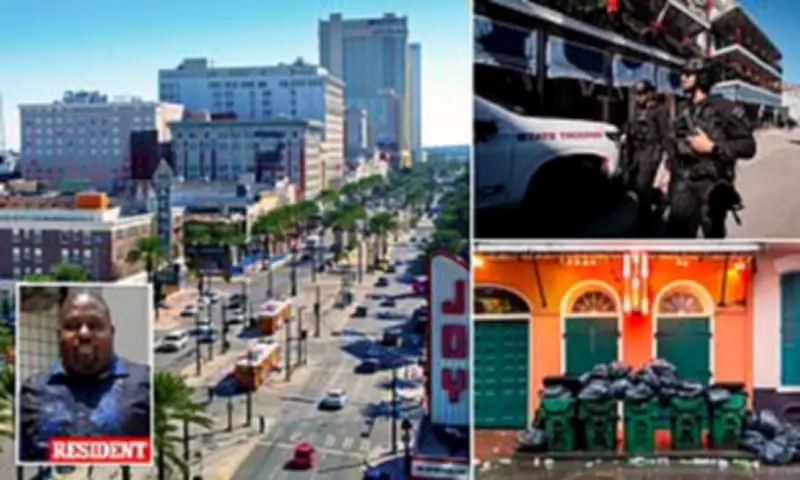
New Orleans has experienced a dramatic population decline of 39,000 residents between 2020 and 2024, cementing its status as the fastest-shrinking metropolitan area in the United States according to the latest US Census Bureau statistics. The data, which shows the city's population stood at just 362,701 in July 2024, reveals a troubling trend that has persisted since Hurricane Katrina devastated the region nearly two decades ago.
A City Struggling to Recover
The catastrophic storm of August 2005 left eighty percent of New Orleans submerged, claimed 1,392 lives, and caused an estimated $125 billion in damage. Despite reconstruction efforts, many neighbourhoods have never fully recovered, and the population has failed to return to its pre-Katrina level of approximately 485,000 residents recorded in the year 2000.
Giovanni Lincoln, a 44-year-old lifelong resident, told the Daily Mail that New Orleans has never truly regained its former vitality since the hurricane. "People are leaving in mass numbers because basic, essential services have been consistently lacking," Lincoln explained, highlighting systemic failures that have eroded quality of life for remaining inhabitants.

Service Breakdowns and Infrastructure Failures
Lincoln detailed numerous service deficiencies affecting daily life, including irregular trash collection despite residents paying for twice-weekly service. "As a resident, homeowner, and landlord, I pay for trash to be picked up twice weekly," he said. "I haven't been receiving that service, yet the city wants to increase the bill."
The infrastructure problems extend beyond waste management. Lincoln described frequent power outages occurring even on clear days without apparent cause. "A month ago, the power was out on a Sunday for eight hours," he recalled. "It was a sunny day with nothing unusual happening."
Public Safety Concerns and Police Staffing Crisis
Public safety represents another major concern driving residents away. The New Orleans Police Department has experienced a dramatic reduction in personnel, losing approximately a quarter of its workforce between 2019 and 2023. Commissioned officer numbers have plummeted from around 1,200 before the pandemic to between 800 and 900 in recent years.
"If something happens to you, there's genuine fear about whether police will respond," Lincoln stated. "The police must prioritise which calls to answer. If I need an ambulance, will it come? Emergency services must decide whose situation is more severe." This staffing crisis has created what many residents describe as an unacceptable level of uncertainty regarding personal safety and emergency response.
Economic Stagnation and Limited Opportunities
Beyond service failures, New Orleans suffers from what experts describe as anemic economic growth and limited job prospects. Greg Rigamer, a New Orleans-based demographer and political consultant, explained in October 2024 that economic considerations primarily drive the exodus. "We're losing many young people," Rigamer noted. "For the vast majority, they're moving to areas offering better job opportunities and higher income potential."
The city's economy remains heavily dependent on tourism, creating what Lincoln describes as limited career paths for those without college degrees. "If you don't have a degree, you're likely limited to hotel or restaurant positions," he observed. This economic reality has prompted even city officials to advise family members to seek opportunities elsewhere.
Sandra Greene Thomas, chief of staff for New Orleans City Councilmember Eugene Green, revealed last July that she had counselled her adult children to leave the city and find opportunities elsewhere—advice they ultimately followed.
A Statewide Problem
Rigamer emphasised that New Orleans' economic challenges reflect broader issues across Louisiana. "The median household income in the US is around $75,000," he explained. "Throughout Louisiana, it's substantially lower. We lack a sustainable job base that generates wealth." This economic stagnation creates a cycle where departing residents further reduce the tax base needed to fund essential services and infrastructure improvements.

Political Change and Cautious Optimism
In October 2025, New Orleans held a mayoral election where the city's numerous challenges took centre stage. Helena Moreno secured victory in a three-way race with fifty-four percent of the vote, bringing a different background to city leadership as a former television journalist who once interned for Hillary Clinton during her tenure as First Lady.
Moreno assumed office on January 12, and some residents express cautious optimism about her potential to address the city's deep-seated problems. Lincoln, despite his criticisms, maintains affection for his hometown. "I love the city, I love the culture," he affirmed. "New Orleans has seen better days, and I want New Orleans to have better days again."
His advice to potential newcomers reflects the city's challenging reality: don't relocate without securing employment first. As New Orleans confronts its status as America's fastest-shrinking metropolitan area, the path to recovery will require addressing economic stagnation, service delivery failures, infrastructure decay, and public safety concerns simultaneously—a formidable challenge for any administration.