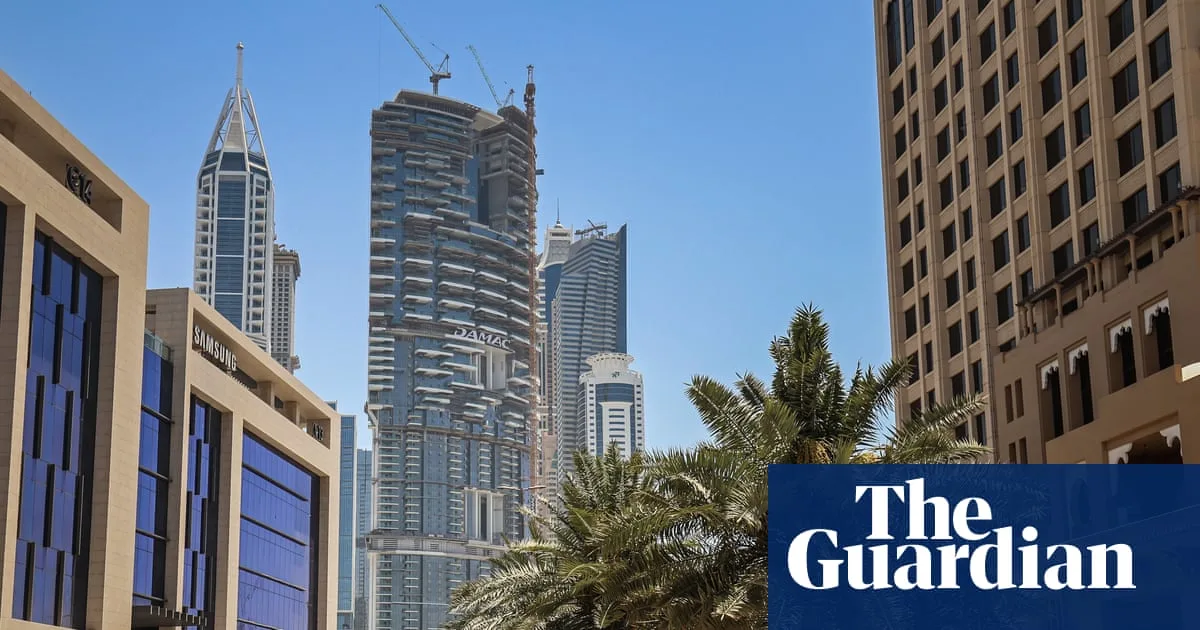
Dubai's property market has suffered a dramatic slowdown, with sales falling 'off a cliff' since the start of the Middle East war, according to market analysts. Sales in May dropped 19% from April, accelerating from a 4% decline the previous month, data from ValuStrat shows. Transactions are now below half their level compared with the same period last year, marking the steepest annual decline since the pandemic.
The war, which began in late February, has shaken investor confidence. An Iranian missile struck a five-star hotel on the Palm Jumeirah in March, intensifying fears. Sellers of luxury villas have slashed tens of millions of pounds off asking prices, with agents reporting discounts of 20-25% on pre-conflict values. 'The ready homes market has not recorded an annual decline of this magnitude since the pandemic,' said Haider Tuaima, head of real estate research at ValuStrat.
Another study by Reidin found that property worth 22.5bn dirhams ($6.1bn) was sold in May, 42% below April's figure and about half the 46.6bn dirhams sold in the month before the conflict. Yasin Valimulla, a buying agent specialising in properties worth at least $10m, noted that many wealthy buyers have left Dubai. 'Every single one of them has now left Dubai,' he said, adding that Western European buyers are reluctant to purchase, preferring to wait a year or two for clarity.
The correction marks a sharp reversal for Dubai, which was the world's busiest city for luxury real estate last year. Knight Frank reported that more homes worth $2.5m to $10m were sold in Dubai than in London, New York, Los Angeles or Hong Kong. In the $10m-plus bracket, Dubai saw 9,050 sales, compared with 6,577 in New York and 3,089 in London. However, agents warn the market was unsustainable. 'The numbers were so high... the market at that level was not sustainable anyway,' Valimulla said.
The slowdown is expected to force many smaller brokerages to close. Richard Waind of Cencorp said the war was a 'black swan event' that put pressure on agencies that set up during the boom. 'There were about 1,000 brokers a decade ago – now it's about 10,000. That is going to fall,' he said. Meanwhile, the nomadic super-rich are turning to other hubs like Milan, London and Singapore.