Gilston's 10,000-Home Village Network Breaks Ground After 20-Year Planning Saga
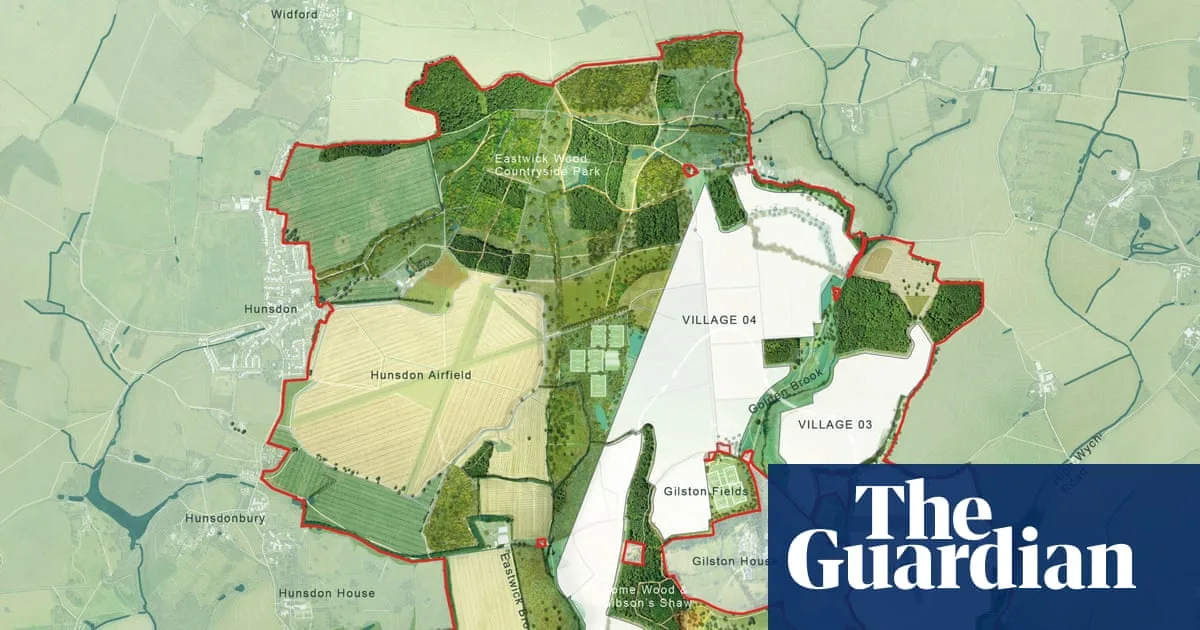
After two decades of legal battles and planning hurdles, a groundbreaking project in Hertfordshire is set to transform the landscape of community building in Britain. Gilston, located in east Hertfordshire, will evolve into a network of seven interconnected villages, comprising 10,000 new homes nestled within a vast 660-hectare expanse of country parks and woodland.
Greg Reed, the chief executive of Places for People (PfP), the social enterprise leading this ambitious development, highlighted the project's lengthy timeline as a stark reminder of the sluggishness inherent in the UK planning system. "PfP's journey with Gilston started at the same time my 20-year-old son was born," Reed remarked. "Reflecting on all the milestones in his life, it's a bit depressing to see how long this has taken."
A Modern Garden Town Vision
Built on a former green belt site, Gilston's acceleration followed a Court of Appeal ruling that dismissed a longstanding legal challenge from a landowner. With judicial obstacles now cleared, the project is positioned not merely as a housing development but as a direct rebuke to the cookie-cutter estates that have long dominated Britain's suburban fringes.
Rooted in the garden town philosophy, Gilston serves as a modern extension of Harlow in Essex, one of Britain's original postwar new towns. Unlike traditional developments where infrastructure often lags behind housing, Gilston boasts a front-loaded £1 billion infrastructure budget, ensuring essential facilities are in place from the outset.
Designing for Community and Sustainability
The design for Gilston explicitly rejects the car-centric models of the late 20th century. "We've strategically placed schools within the villages so that families can walk or cycle with their children," Reed explained. "This emphasis on open space is crucial. In many urban areas, every square inch is developed, leaving no room for greenery."
Plans include comprehensive amenities such as two secondary schools, seven primary schools, health centres, and leisure facilities. Each village will consist of between 800 and 1,800 homes, all interconnected by parks equivalent to more than 800 rugby pitches, covering approximately 5 square kilometres.
Addressing the Housing Crisis
This project arrives at a critical juncture for the UK government, which has pledged to build 1.5 million homes by 2029. While Gilston is not officially part of the government's recently announced "12 new towns," PfP asserts it serves as a live proof of concept for such models.
Reed advocates for national pressure to overcome local inertia in housing development. "Historically, when targets lacked enforcement or were diluted, progress stalled due to contentious local opposition," he noted. He compares the housing crisis to a public health emergency, urging proactive measures: "If we aimed to cure cancer in five years, would we dismiss it outright? Let's fund it and move forward."
Mixed Tenure and Social Integration
Gilston will adopt a "mixed tenure" format, with at least 2,300 of the initial 10,000 homes designated as affordable. As a social enterprise, PfP intends to increase this number over the project's projected 30-year build time. "Our goal is to create rural communities that include social housing, affordable options, shared ownership, and outright sales," Reed stated.
He emphasises a "tenure blind" design approach, where social housing is indistinguishable from private property. "In some developments, you can identify housing types by front doors. We're painting them all the same colour to foster integration and allow everyone to simply get on with their lives," he added.
Economic Impact and Skills Development
The Gilston project represents a significant £6 billion boost to the UK economy and is expected to create over 2,000 permanent jobs. However, even with planning and land secured, the industry faces a shortage of skilled labour. In response, PfP has launched a national training academy to fast-track tradespeople and planners. "When people cite a lack of skills as a barrier, our response is straightforward: let's develop those skills," Reed asserted.
While residents will begin moving into the site within the next few years, full completion is anticipated around 2050. "I won't be here to see it finished," Reed acknowledged. "But we see ourselves as caretakers, stewarding this community for decades to come."
For a nation grappling with a severe housing shortage that has left 170,000 children in temporary accommodation, Gilston stands as more than just a construction site. It is a pivotal test of Britain's ability to build sustainable, integrated communities that endure for generations.






