

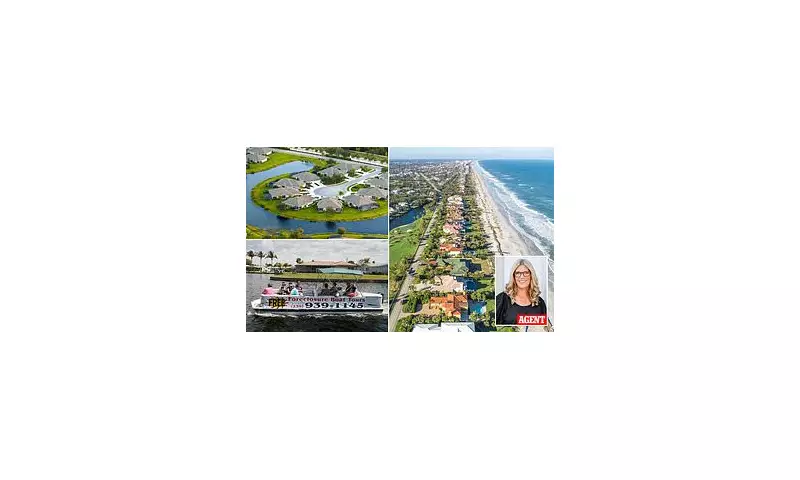
The great American remote work migration to Florida, fuelled by pandemic lockdowns, has gone into dramatic reverse. As companies summon employees back to the office, a wave of departures from the Sunshine State is triggering a significant slump in property values, with experts forecasting further declines.
Sunshine State Dominates List of Worst-Performing Markets
Florida has claimed a dominant and unenviable position in a national year-end analysis, occupying six out of the ten spots for the steepest year-over-year median home value losses. The data from Realtor.com paints a clear picture of a market in correction after the frenzied buying of 2020-2022.
The Gulf Coast metro area of North Port-Bradenton-Sarasota was the hardest hit nationwide, witnessing an 8.6 percent drop in its median home price. This translates to a loss of $36,423, bringing the median listing price down to $478,800.

'During the pandemic, many of these areas saw home prices shoot way up because there was so much demand and so many people were able to work remotely,' explained Sarasota real estate agent Ron Myers, owner of Ron Buys Florida Homes. 'A big part of the problem in this area is people from New York and up North have to move back for work.'
A Perfect Storm of Falling Demand and Rising Costs
The nearby Cape Coral-Fort Myers area recorded the second-largest decline, with median values falling 7.9 percent to $399,900—a $29,393 decrease from the previous year. The scale of the shift is visible on the ground, with rows of 'for sale' signs becoming a common sight.
'It is one of the worst real estate markets for a seller right now,' stated local realtor José Echevarria. He revealed that as of this summer, prices for over half of the homes in Cape Coral had been cut in the preceding two years, a higher proportion than any other major US metro.
The retreat of remote workers is a central factor. 'We no longer have the influx of remote workers looking for homes,' said Jacksonville agent Kati Spaniak. 'In fact the remote workers here are trying to sell, but there is so much new construction it's hard to even compete.'
This exodus has combined with other pressures to create a severe headwind for the market:
- Soaring insurance and property tax costs, which Myers warns will 'get even worse' in 2026.
- An oversupply of homes, giving buyers ample choice and making them hesitant to commit.
- The financial strain on those who bought at peak prices and now face two mortgages or a mortgage and rent.
Widespread Declines and a Bleak Forecast
The downturn is being felt across the state. According to Realtor.com, central Florida metros Lakeland-Winter Haven and Deltona-Daytona Beach-Ormond Beach both saw median values slip by 4.4 percent. The major Tampa-St. Petersburg-Clearwater area on the Gulf Coast declined by 4.2 percent, while the Jacksonville metro experienced a 3.3 percent dip.
For sellers, the advice from agents is stark. Both Spaniak and Myers agree that to have any chance of selling, properties must be priced aggressively below the competition. 'Sellers need to figure out if they'll take a lower price because the market is not going back up anytime soon,' Spaniak cautioned.
The outlook among professionals is decidedly pessimistic. Spaniak predicts the market will 'hit rock bottom in the new year,' with prices continuing to fall into next spring and summer. 'It's only going to get worse,' she concluded, describing a market logjam where buyers are waiting and sellers are reluctant to reduce prices—a standoff that will eventually break in the buyers' favour.
The Florida dream, supercharged by the remote work revolution, is facing a harsh reality check as the era of flexible work arrangements recedes, leaving a cooling property market in its wake.






