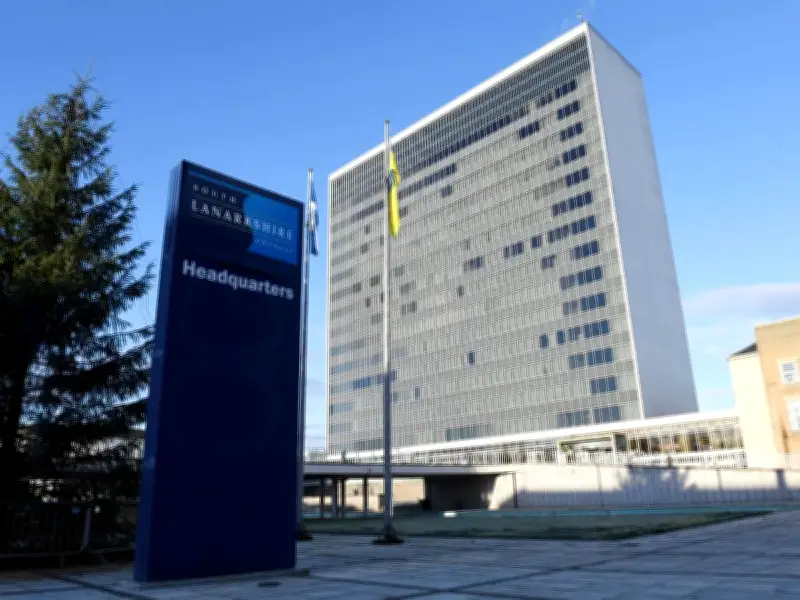
South Lanarkshire Council has unveiled a £24 million investment programme as part of a major 10-year plan to reshape its network of public buildings. A report due to be presented to the Executive Committee on Wednesday (August 19) will ask councillors to approve the Estate Strategy for 2026 to 2036, which aims to create a “smaller, higher-quality and more sustainable” estate.
Current estate and proposed changes
The authority currently operates 358 properties across South Lanarkshire, but says average utilisation is around 65 per cent, with some buildings operating significantly below that. The proposed strategy would see investment focused on buildings expected to remain part of the council’s long-term estate, alongside service consolidation, replacement facilities and the removal of properties considered surplus or under-utilised.
In total, 52 properties have been identified for investment, while three are earmarked for replacement or re-provision, two for service consolidation and five for withdrawal from leased accommodation. A further 18 surplus or under-utilised properties have been identified for removal from the council’s estate.
Investment and savings
The council says the strategy is not a programme of building closures, but says it will allow it to make better use of its buildings while responding to financial pressures, changing demand and climate targets. The £24 million investment is proposed to be spread over three years, with £7.3 million allocated in 2026/27, £11.7 million in 2027/28 and £5 million in 2028/29.
The first phase includes more than £4.2 million for condition improvement works, £1.26 million for boiler upgrades and £413,000 for proposed service consolidations. Funding has also been allocated towards new community sports facilities, depot rationalisation, office accommodation, demolition of properties that have already been excited, children’s care facilities and additional support needs provision.
The council claims that changes to its estate are expected to generate £3 million in savings, through lower energy and utility bills and reduced costs associated with rates, rent and facilities management. Those savings are expected to be delivered over the period to 2039.
Depot rationalisation and future plans
A major depot rationalisation project is estimated to cost around £18 million, although only £5 million is currently included within the £24 million programme. The council says the remaining funding will be subject to alternative sources and future capital approvals.
The strategy also proposes the development of a new “front door” approach to council services, designed to give residents clearer and more consistent ways of accessing support in their local communities. Existing libraries and other customer-facing facilities could potentially be used as locations for the new approach, although the council stressed that no decisions on individual locations have been made. The model could provide residents with access to telephone and computer facilities, supported by customer service staff, alongside existing digital services.
A second stage of public consultation on the estate proposals is due to take place between this month and next month. The consultation will seek views from service users, communities and partners on the potential impact of the proposed changes and the level of support or concern surrounding them. The results will be reported back to the Executive Committee in October.
The council says its estate is ageing and much of it was designed around traditional single-service use, limiting opportunities to share buildings and make better use of resources. It also acknowledges that fully decarbonising the estate is currently unaffordable, with the cost of achieving a net-zero operational estate estimated to be beyond available and foreseeable resources. Instead, the strategy will focus investment on buildings expected to remain in long-term use, improving their condition and energy performance while gradually reducing the council’s overall estate.