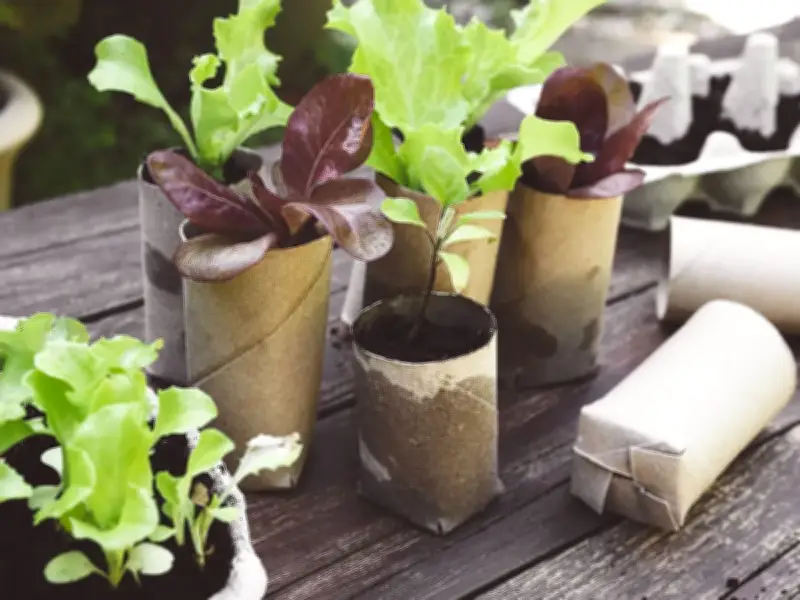
Cardboard tubes from toilet rolls can be reused in the garden instead of being thrown away, offering a free way to boost plants while cutting household waste. The thin cardboard can be turned into seedling pots, compost material, weed barriers, pest deterrents and frost protection.
TikToker Ish (@gardening.with.ish) shared a video explaining why the humble cardboard cylinders are useful for gardeners. Keeping a stash reduces household waste and gives plants a boost at no cost.
Five uses for loo roll cardboard
For zero-waste seedling pots, the tubes can be used to start seeds. After three or four weeks, the whole cylinder can be planted straight into the ground. The cardboard rots down naturally, avoiding root disturbance that could shock the plant.
Ripped-up cardboard is also good for compost heaps. Mixed with other organic garden waste, it breaks down quickly into compost. Ish said: "the worms absolutely love this stuff."
Weed control and pest protection
Split open and laid flat over soil, the tubes act as a weed membrane, blocking light to smother weeds and eventually biodegrading. An intact tube placed over a tiny seedling works as a protective collar, creating a physical barrier against pests and encouraging straight growth.
Flattened cardboard laid over soil acts like a thermal blanket, insulating plant roots from winter frosts.
Other October garden jobs
Autumn is the time to prepare outdoor spaces for colder weather. Spring bulbs such as daffodils, crocuses and alliums should be planted before the ground freezes, while tulips should be left until November to avoid tulip fire disease.
Fallen leaves should be raked off lawns to prevent grass suffocation. Bagged leaves with holes poked in the plastic can be stored in a corner to create nutrient-rich leaf mould by next year. Overgrown perennials like hostas can be dug up and split with a spade to create free plants.
Lawns benefit from raking out dead moss, aerating with a garden fork, and applying autumn-specific lawn feed high in potassium rather than nitrogen to strengthen roots for winter. Tender potted plants should be moved into a greenhouse, shed or conservatory, while fragile plants in the ground can be wrapped in horticultural fleece to protect them from freezing wind.