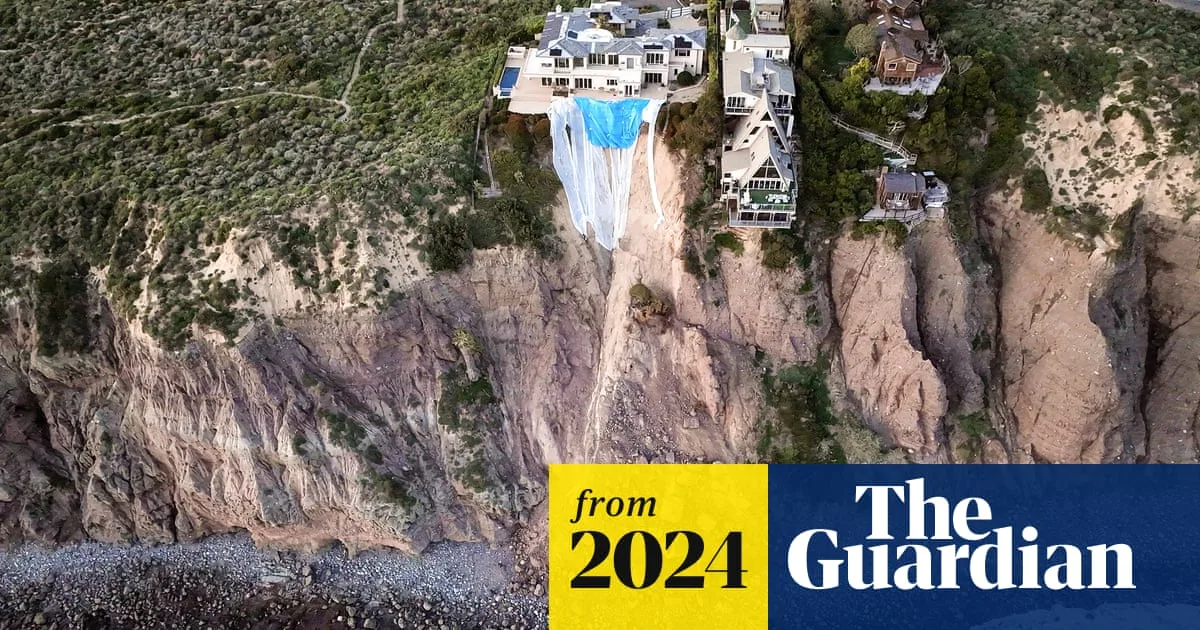
Homeowners in wealthy California coastal towns are watching anxiously as record rainfall causes landslides and coastal erosion, threatening multimillion-dollar clifftop properties. Nearly 18 inches of rain fell in southern California in the first two months of the year, about 8 inches above normal, with more storms forecast.
Governor Gavin Newsom declared a state of emergency in eight counties covering over 20 million people, and flash-flood warnings were issued for parts of Los Angeles, Santa Barbara and San Luis Obispo counties. In cities like San Clemente and Dana Point, homes are dangling above landslides, with one resident, Alan Ashavi, checking his property daily after his swimming pool neared collapse.
The cost of protecting these properties from climate change impacts—stronger storms, higher seas, and landslides—will likely fall on the public through disaster relief and subsidised insurance. The Los Angeles Times estimates $150bn of California property could be affected by coastal flooding and erosion by 2100.
Some cities advocate 'managed retreat' from the shoreline, but others have faced unplanned moves. In 2016, Pacifica demolished a dozen unsafe clifftop residences at a cost of $16m, borne by taxpayers. Meanwhile, insurance for homes in wildfire zones is already strained, with seven of 12 insurance groups in California pulling back from new policies due to wildfire risk.
Climate change professor Kathleen Treseder noted that atmospheric rivers bring rain that erodes hillsides, compounding wave erosion. The problem extends beyond California, with states like Louisiana, Florida, and Texas also grappling with climate-linked disasters and insurance costs.