
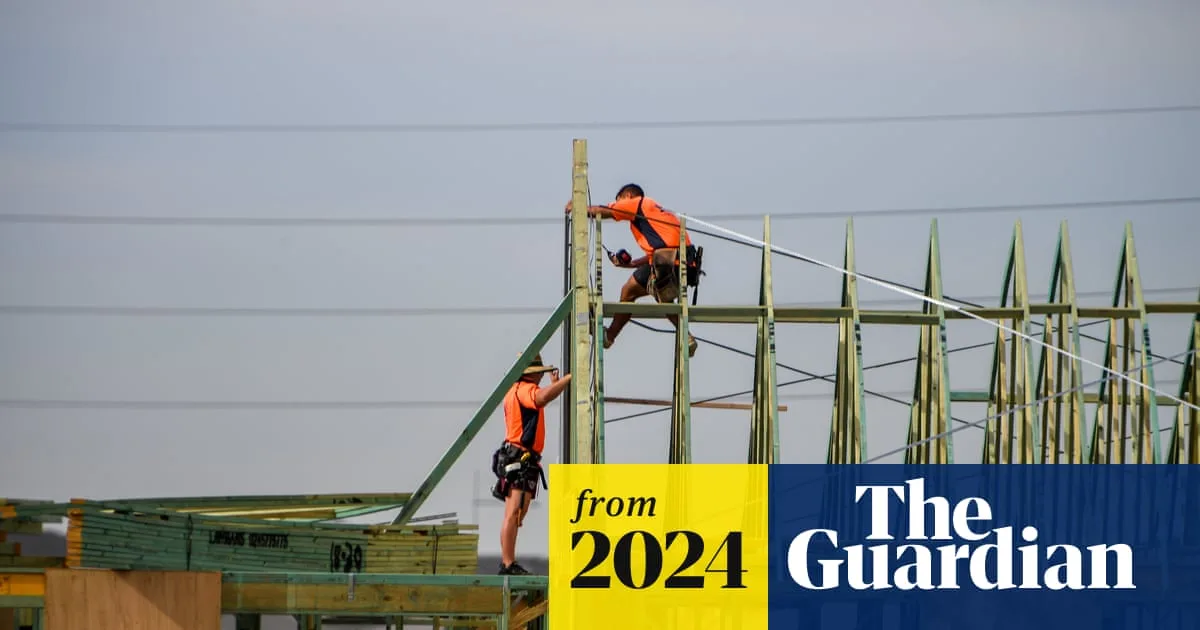
Australia's peak business body, the Business Council of Australia, has urged the government to establish a £10bn housing reform fund that would reward states for streamlining planning and regulation bottlenecks contributing to the supply crisis. The call comes as the Albanese government struggles to meet its target of building 1.2 million new homes by the end of the decade.
The Business Council also recommended phasing out stamp duty nationwide, warning that it discourages people from downsizing and freeing up larger homes. Its report, released on Monday, includes 29 recommendations, with the critical proposal being a national reform fund modelled on a 1990s pro-competition initiative. In today's money, at least £10bn would need to be committed to drive urgent reforms, including transitioning from stamp duty to land taxes.
To achieve the target, an average of 240,000 homes must be built annually, but currently only about six dwellings per 1,000 people are constructed, against a needed nine. The Business Council said an additional 64,000 homes per year are necessary. Chief executive Bran Black emphasised that while many measures are already in place, the scale of the task requires every good reform.
The council also recommended increasing investment in apprenticeships, fast-tracking permanent residency for skilled migrant workers, and standardising trade licensing across states. This comes as the opposition Coalition unveiled its own £5bn plan for infrastructure on greenfield sites, which it claims could unlock up to 500,000 homes. However, Housing Minister Clare O'Neil noted the opposition's plan would cut £19bn from Labour's housing commitments, including the Housing Australia Future Fund.
Experts expressed scepticism about both major parties' targets. Ben Phillips from the Australian National University said the opposition's plan would only have a marginal impact, while Emma Baker from the Australian Centre for Housing Research warned that focusing on greenfield sites would push costs higher in the long term.




