Climate Gentrification Hits Altadena: Black Community Fights Displacement After Wildfire
Altadena's Black community fights displacement after wildfire

‘People Saw Dollar Signs’: A Community’s Fight Against Climate Gentrification

Ellen Williams steered her car through the familiar streets of Altadena, an unincorporated area of Los Angeles County where she was born and raised. Her phone lay silent in her lap; she needed no map to find the plot where her home of 22 years had been consumed by flames. The landscape was a jarring mix of loss and renewal: empty lots with gaping foundations, the relentless bang of hammers, and new wooden frames rising from the dirt, scenting the air with fresh lumber. On street corners, defiant signs proclaimed: “Altadena is not for sale.”

These signs speak to a painful intrusion that has haunted Williams and fellow survivors of the Eaton wildfire over the past year. In the wake of the disaster, which claimed 19 lives and destroyed approximately 9,500 buildings, real estate investors have descended, aggressively pursuing the scorched land. Williams’s own family lost four homes. The first call from an investor came just two days after the fire. “Immediately people saw dollar signs,” she said, noting the unsettling calls have continued relentlessly.

A Legacy at Risk: From Redlining to Fire Lines

Altadena is renowned for its historic and thriving Black community, established in an era when discriminatory redlining practices blocked home purchases elsewhere. Today, academics warn the community is experiencing “climate gentrification.” Long-term residents, financially crippled by insurance shortfalls and soaring rebuild costs, are being forced to sell their land at a discount. Simultaneously, investors see cleared lots as prime opportunities in a land-scarce urban area. One survey found investors have bought up nearly half the empty lots sold post-fire.

The night of the fire, Williams was awoken by her son. Embers, driven by hurricane-force winds, lit palm trees like matchsticks. “It looked like a war zone,” she recalled, realising then that no one would save her home. A UCLA report later quantified the stark racial disparity of the damage: 61% of Black households in Altadena were inside the fire’s perimeter, compared to 50% of non-Black households. Nearly half (48%) of Black homes were destroyed or severely damaged, versus 37% for others.

This disparity is rooted in history. Redlining maps from the last century marked areas with large Black populations in red, deeming them high-risk for mortgages. Pushed west of the major Lake Avenue by such policies and earlier freeway construction, families like Williams’s were situated closer to the fire-prone San Gabriel mountains. Decades later, amplified by climate change, that historical injustice translated into disproportionate risk.

The Crushing Financial Reality: Insurance Gaps and ‘Race-Driven’ Offers

For survivors, the path to rebuilding is strewn with financial obstacles. A critical issue is insurance. One survey of nearly 2,000 people found 70% of insured survivors faced delayed, denied, or underpaid claims. Only one in four with severe or total loss had claims fully approved. Williams’s mother, a homeowner for over 50 years, had her policy cancelled by State Farm months before the fire without proper notification, leaving her underinsured.

This creates a devastating financial gap, estimated by researchers to be potentially $300,000 to $400,000 for the underinsured. Federal aid and loans are hard to access, leaving many in precarious limbo. Into this void steps a controversial compensation scheme from Southern California Edison, whose equipment likely sparked the fire. The company offers payments to survivors who agree not to sue.

Advocates like Jasmin Shupper of the Greenline Housing Foundation note the painful dilemma: uninsured survivors may feel pressured to accept an offer they see as inequitable, while those with insurance can afford to litigate for more. “Can you afford to live another two to five years waiting on a settlement that’s bigger?” asks Lori Gay of Neighborhood Housing Services of Los Angeles County.

The outcome will shape Altadena’s future. Troy Laster, who lost his home of 40 years, sold his lot to a developer who bought multiple properties on his block. He has moved to Las Vegas. “I know, in my heart, the city will never be the same,” he said.

Rebuilding More Than Homes: Preserving a ‘Black Mecca’

Ultimately, this struggle is about more than bricks and mortar. It is about preserving Altadena’s identity as a sanctuary that grew into a “Black Mecca.” “It’s more than just homes, you’re talking about legacies,” Shupper emphasised. “You’re talking about people who, in the face of overwhelming opposition, were able to obtain home ownership and have thriving communities. That’s what’s at stake here.”

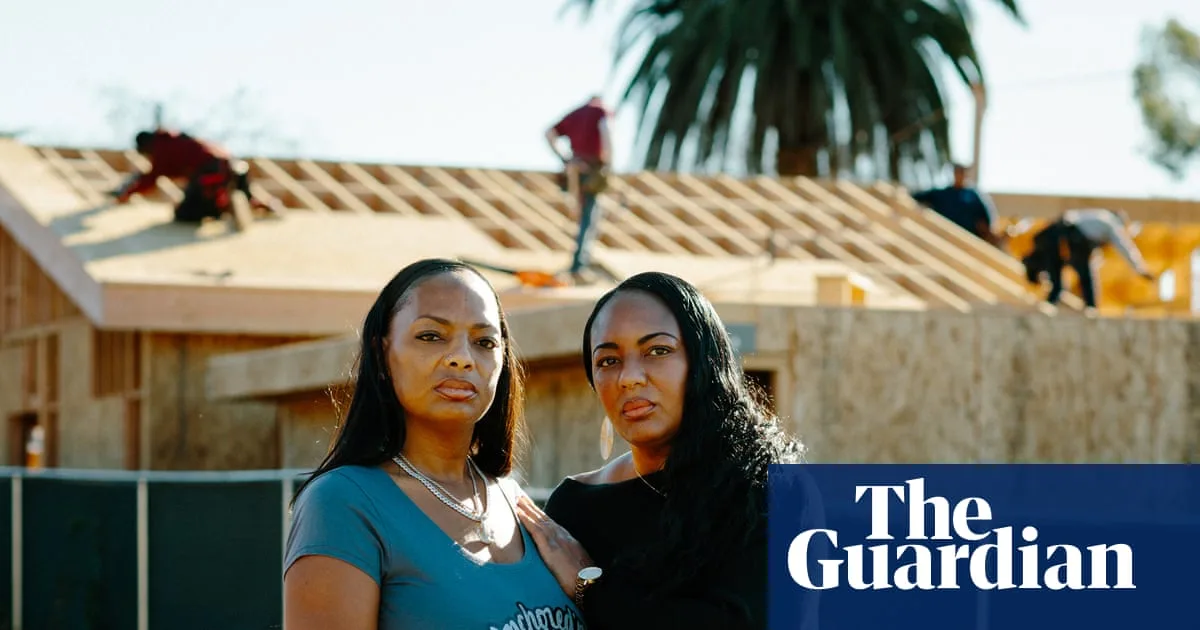
There are glimmers of hope and resistance. Ellen Williams, with help from non-profits, has submitted plans for her dream home. Her sister Eshele is rebuilding nearby. Their mother’s lot will host a more affordable prefabricated home. Looking around, Ellen notes most of her original neighbours are returning. “Other than that, everyone’s coming home, so that’s very exciting. I didn’t want new neighbours,” she joked, a small testament to the community’s enduring spirit in the face of a threat that blends climate disaster with economic predation.




