Albanese Hints at Capital Gains Tax Reform for Property Investors in Budget
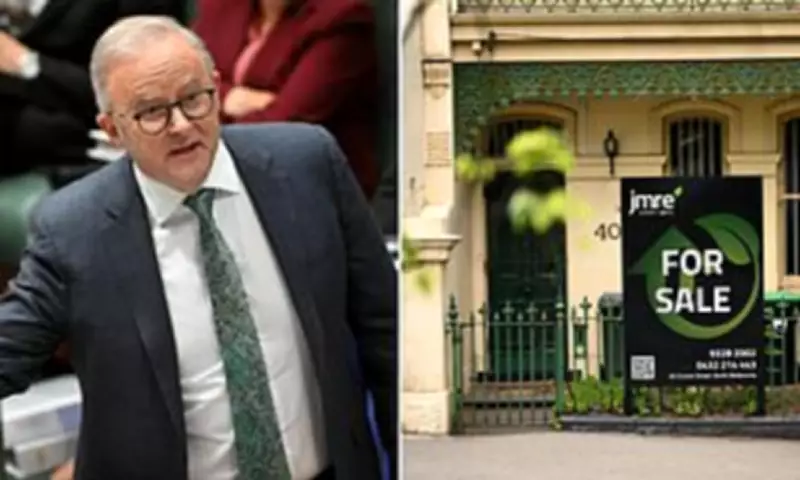
Prime Minister Anthony Albanese has delivered his clearest indication to date that the Labor government is poised to reduce the capital gains tax break for property investors, a move that could influence property prices and rental markets. During an interview on ABC TV on Tuesday, Mr Albanese was questioned on whether the government might pare back capital gains tax relief alongside the already scheduled income tax cuts in the forthcoming Budget.
Focus on Supply, But Deliberations Ongoing
Mr Albanese emphasised that any potential changes would not impact owner-occupiers, who are already exempt from such taxes, but would specifically target investors who currently benefit from substantial tax concessions when selling rental properties. He clarified that the contentious negative gearing tax benefit would remain untouched, and house prices are not expected to plummet as a direct result of these adjustments.
'We have income tax cuts in the Budget already baked in,' the Prime Minister stated. 'It will come in on July 1 and another tax cut the year after. When it comes to housing, our focus is on supply.'

However, when pressed a second time to rule out changes to capital gains tax, Mr Albanese acknowledged that 'deliberations' are a routine component of the Budget-planning process. 'I am not here to announce what might or might not be in the Budget because those deliberations take place every year,' he conceded.
Intergenerational Equity and Housing Affordability Concerns
Treasurer Jim Chalmers has previously signalled that the May Budget might incorporate modifications to the capital gains tax discount to tackle issues of intergenerational inequity and housing affordability. In late 2024, Mr Chalmers directed Treasury officials to scrutinise possible alterations to the discount.
Nick Dyrenfurth, executive director of the John Curtin Research Centre, commented that rolling back capital gains tax concessions for property investors is not a panacea for the housing crisis but could yield a meaningful impact. 'This is not about demonising older Australians or property investors,' he wrote in The Australian. 'Most played by the rules as they were written. But rules can be wrong and, over time, wrong rules corrode the social contract.'
Mr Dyrenfurth highlighted that younger Australians are burdened with higher personal income taxes to fund health and aged care for older, property-owning generations, yet they remain excluded from home ownership. He noted that Mr Chalmers has consistently approached tax reform through an 'intergenerational' perspective, recognising that the system relies excessively on personal income tax and insufficiently on accumulated wealth.
Potential Impact on Property Market and Home Ownership
The revived debate coincides with new research revealing that Australians now require an annual income of approximately $200,000 to afford a typical house in most capital cities comfortably without succumbing to mortgage stress. Industry analysts forecast that house prices could decline by one to four percent if reforms to the capital gains tax discount for property investors are implemented.
Under the existing regulations, established in 1999 by the Howard government, investors are taxed on only half the profit generated from selling an investment property held for over a year. Dr Joel Bowman, a senior economist at Domain, asserted that diminishing the capital gains tax discount is unlikely to precipitate a sharp drop in house prices. Nevertheless, it could enhance home ownership rates.
'With less competition from investors, owner-occupiers could find it a bit easier to get a foot on the ladder, potentially lifting home ownership by up to five percentage points,' Dr Bowman explained. 'Depending on the approach, we could see a short-term surge in listings from investors, creating a temporary boost in supply before the market settles again.'
He added that, with other tax advantages still available to investors, the capital gains tax alteration alone is improbable to have a enduring effect on the allure of property investment. It is estimated that around 2.2 million individuals own investment properties across Australia.