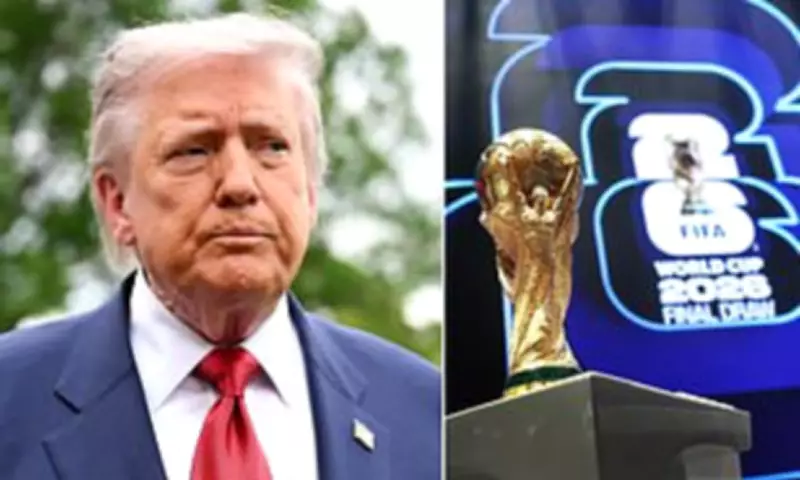
Iran has insisted it will play at this summer's World Cup, but only if a series of demands to FIFA and the United States are met amid mounting political tensions surrounding the tournament. The Iranian Football Federation (FFIRI) declared that the national side would take part 'without any retreat from our beliefs, culture and convictions.' It also warned that tournament organisers and host nations 'must take our concerns into account.'
Visa and Security Concerns
The statement follows an incident where federation president Mehdi Taj was refused entry into Canada ahead of last month’s FIFA Congress, intensifying fears over how Iranian officials and players could be treated during the competition. Taj later revealed that Iran had submitted ten separate conditions to FIFA ahead of the expanded tournament, which begins on June 11 across the United States, Mexico, and Canada.
Among the key requests are guarantees that every member of the Iranian delegation—including players, coaching staff, and officials—will be granted visas to travel freely between host nations. This issue is particularly sensitive because some delegation members are understood to have completed military service linked to Iran’s Islamic Revolutionary Guard Corps (IRGC), an organisation designated as a terrorist group by both Canada and the United States. Taj’s reported connections to the IRGC were cited as one reason Canadian authorities blocked his entry before the FIFA gathering.

Flag, Anthem, and Protection
Iran is also seeking formal assurances over how the team will be treated throughout the tournament, including guarantees surrounding the Iranian flag and national anthem, along with heightened security protection at airports, hotels, and stadiums. While FIFA may oversee matters related to tournament operations, official ceremonies, and team protocols, some of Tehran's demands lie beyond football's governing body's control. Questions surrounding visas, border access, and security checks ultimately fall under US immigration and national security laws rather than FIFA regulations.
US Secretary of State Marco Rubio has already stated that Iranian footballers would be permitted to compete at the World Cup, though he warned that individuals with ties to the IRGC could still encounter restrictions when attempting to enter the country. The situation leaves FIFA caught between guaranteeing the participation of qualified nations and navigating increasingly fraught relations between Tehran and Washington.
Diplomatic Tensions Escalate
The diplomatic backdrop has become even more volatile in recent months. Israel and the US carried out large-scale strikes on Iran on February 28, prompting retaliatory attacks by Iran on Israel and Gulf states allied to Washington. In March, Iran claimed it would not take part in the FIFA World Cup, citing safety concerns after the strikes. Trump said at the time that Iran would be 'welcome' at the tournament, though he signalled he felt they should not be involved 'for their own life and safety.' Although a ceasefire is currently in place, it remains fragile.
Media and Political Scrutiny
Some of the Iranian federation's other requests could also prove difficult to manage once the tournament begins. Iranian officials have reportedly urged journalists to limit questioning to 'technical football matters'—a request likely to face resistance given the political scrutiny surrounding the national side. In Iran's case, football and politics have repeatedly intertwined, with issues such as squad selection, fan demonstrations, and player conduct often taking on wider political significance.
That tension was highlighted during the women's Asian Cup in Australia earlier this year, when several Iranian players attempted to seek asylum. Seven members of the squad were granted humanitarian visas while in Australia, although five later reversed their decision and returned to Iran. Men’s national team coach Amir Ghalenoei has since admitted that politically charged atmospheres could accompany some of Iran’s matches during the World Cup. Despite the growing controversy, there is currently no sign that Iran plans to pull out of the tournament.