

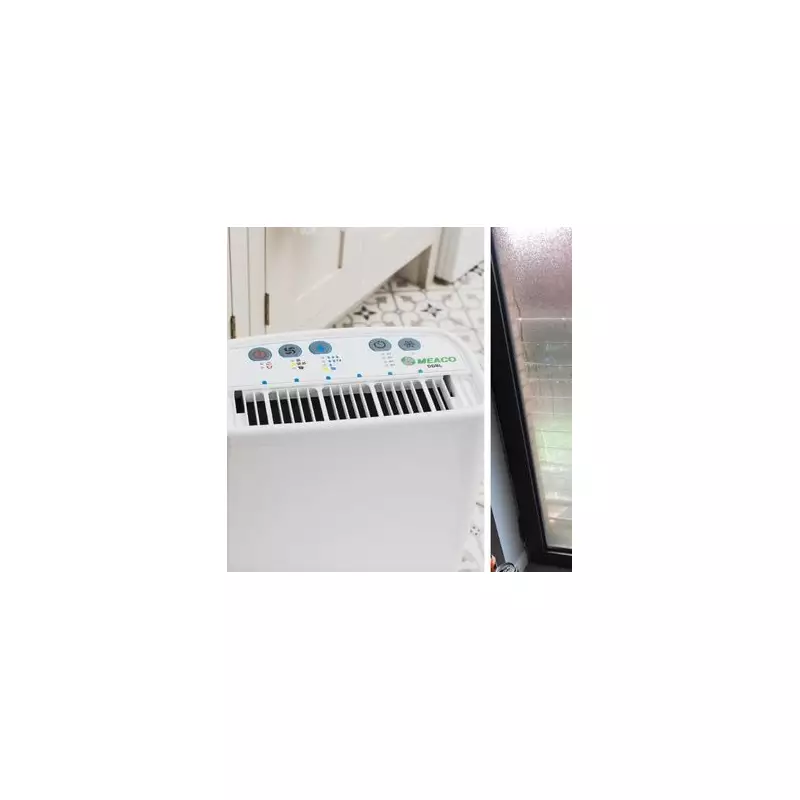
In the winter of 2020, a revolting discovery in a spare room sparked a battle against damp that would lead to a significant purchase. Confronted with a severe mould infestation, one UK resident decided to invest £180 in a Meaco DD8L desiccant dehumidifier. Five years on, they deliver a comprehensive verdict on whether this appliance truly helps combat the pervasive issues of condensation and mould in British homes.
The Mould Crisis That Forced Action
Just weeks before Christmas in 2020, the problem became impossible to ignore. A peculiar black, squiggly line on a wall led to a horrifying find: a cascade of black mould, with paint bubbled over a 10-inch patch. The investigation worsened upon checking a closet, where a torch revealed possessions blanketed in a toxic-smelling, powdery green mould. The stench from ruined items, including a pair of festive slippers, was unforgettable. After a frantic clean-up using mould spray, it was clear that common advice like "airing the room out" was insufficient for a building with fundamental damp issues.
The root cause, often seen in poorly insulated UK properties, was external walls. Placing items like shoes, backpacks, or furniture near these cold surfaces creates a damp pocket ideal for mould growth. Having already tried cheaper solutions like a £12 Unibond Moisture Absorber and a £35 Pro Breeze dehumidifier with no success, the homeowner began proper research. This led them to desiccant dehumidifiers, which work effectively in colder temperatures and release warm air.

Investing in a Meaco Dehumidifier: The Five-Year Test
The choice fell on the Meaco DD8L, a model frequently recommended by Which?, Good Housekeeping, and community groups, despite its near-£200 price tag. For five consecutive winters, from October through March, the appliance became a staple in the household.
Combating Condensation and Damp
The impact on condensation was visibly apparent from outside the building. While neighbours' windows streamed with droplets, their own showed a marked reduction, often by more than half. The dehumidifier was run on its lowest setting overnight, strategically placed in the doorway of the problematic spare room to tackle humidity and warm a chilly hallway. During the day, it was moved to damp-prone areas like an open-plan kitchen-living space or placed next to drying laundry.
However, it was not a miracle cure. Mould and condensation remained a persistent, if reduced, battle. The effect was largely confined to the room where the unit was operating, despite it being marketed for properties of up to five bedrooms.
Performance, Noise, and an Unexpected Bonus
The appliance proved exceptionally useful for drying laundry, cutting the typical four-day drying time down to just two days. It also provided a consistent flow of warm air, contributing to heating cost savings. On its lowest fan setting, it produced a gentle white noise that was not intrusive, though the highest "laundry" setting was notably loud. It consistently collected a full 8-litre tank of water every other day, a satisfying metric of its work.
The Meaco DD8L offers three fan speeds, four humidity settings, and four timer options. Meaco states it costs roughly 8p per hour to run on the lowest setting, based on a 27.03p/kWh energy tariff. It features an auto function, switching off when the target humidity is reached and checking every 30 minutes.
The only notable drawback encountered over five years was a sporadic, unexplained leak occurring roughly 5% of the time. A simple precaution of placing paper towels underneath the unit managed this occasional issue.
Desiccant vs. Compressor: Choosing the Right Dehumidifier
This experience underscores the importance of selecting the correct type of dehumidifier. Compressor models work by cooling a surface to condense moisture from the air, making them less effective in colder rooms. Desiccant models, like the Meaco DD8L, use a moisture-absorbing wheel and work consistently at any temperature, which is crucial for many UK homes.
As a rule of thumb, experts recommend a desiccant dehumidifier for rooms below 10°C, a desiccant or large compressor model (20L/25L) for temperatures between 10°C and 15°C, and any type for rooms above 15°C.

The final verdict after five years is positive. While not a complete solution for a fundamentally damp property, the Meaco dehumidifier provided a significant, measurable improvement in the fight against condensation, mould, and humidity, while also aiding laundry drying and providing supplemental warmth. For those trapped in a mouldy rental or owning a hard-to-heat home, it represents a calculated and largely successful investment for healthier living.





