

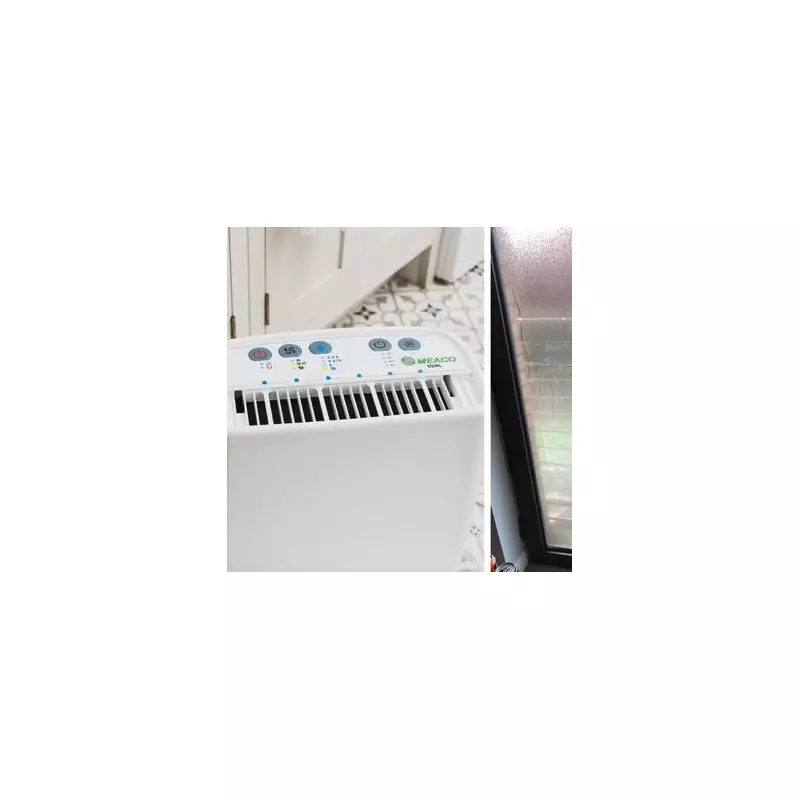
In the winter of 2020, a revolting discovery in a spare room sparked a years-long battle against a pervasive household enemy: mould. The experience led to a significant investment in a dedicated dehumidifier, and five years on, the verdict is in on whether the £180 spend was justified for a UK home plagued by damp.
The Mould Crisis That Forced Action
Just before Christmas 2020, the author uncovered a severe mould infestation. A strange black line on a wall revealed itself to be a three-dimensional squiggle of mould. Moving a cardboard box exposed a cascade of black growth, with a paint patch roughly 10 inches wide bubbled and distorted by damp. The skirting board beneath was sweating beads of black mould.
The trail led into a closet, where a phone torch illuminated possessions blanketed in a toxic-smelling, powdery mould. The stench from mould-covered items, including a pair of red slippers, was unforgettable. After a major clean-up, it became clear that common advice like "airing the room out" was insufficient for a property with fundamental damp issues, a situation common in poorly insulated UK homes.

Choosing the Heavy Artillery: A Desiccant Dehumidifier
Having tried cheaper solutions like a £12 Unibond Moisture Absorber and a £35 Pro Breeze model with little effect, proper research began. The author learned that external walls are notorious for causing damp, and that placing items near them creates perfect mould conditions.
The investigation pointed towards desiccant dehumidifiers, which work effectively in cooler temperatures and release warm air. The brand Meaco, frequently recommended by Which?, Good Housekeeping, and community groups, was chosen. Despite the tight budget, a calculated gamble was taken on the nearly £200 Meaco DD8L model.
Five Winters of Use: The Long-Term Results
For five consecutive winters, the Meaco DD8L (now £20 cheaper on Amazon than at purchase) was put to work. The impact on condensation was visible from outside the building: while neighbours' windows streamed with water, theirs stood out as clearer. Condensation was reduced by more than half when the unit was run nightly from October through March.
However, it was not a miracle cure. Mould and condensation persisted, and the dehumidifier's effect was largely confined to the room it occupied, despite being rated for up to five-bedroom homes. It was strategically placed in the doorway of the worst-affected spare room overnight on the lowest setting, and moved to damp-prone areas like the kitchen-living room or near laundry during the day.
Additional Benefits and Drawbacks
The dehumidifier delivered several unexpected advantages. It halved laundry drying time from four days to two on its turbo laundry setting. The warm air output also contributed to minor heating cost savings. Noise levels were manageable, with the lowest setting providing gentle white noise, though the highest fan setting was notably loud.
The unit collected a full 8-litre tank of water every other day. The only consistent drawback was a sporadic, unexplained leak occurring roughly 5% of the time, necessitating a precautionary paper towel underneath.
Understanding Dehumidifier Types
The experience underscored the importance of choosing the right type. Compressor dehumidifiers work by cooling a surface to condense moisture, making them less effective in cold rooms. Desiccant models, like the Meaco DD8L, use a moisture-absorbing wheel and work at any temperature, which is crucial for many UK homes.
As a rule, desiccant dehumidifiers are recommended for rooms below 10°C, which are common in British winters. The Meaco model offers three fan speeds, four humidity targets, and timer options, costing an estimated 8p per hour to run on its lowest setting.
Five years later, the overall verdict is positive. While not a complete solution for a fundamentally damp property, the Meaco dehumidifier provided a significant, measurable improvement in the fight against mould and condensation, proving a worthwhile investment for countless UK households facing similar damp battles.






