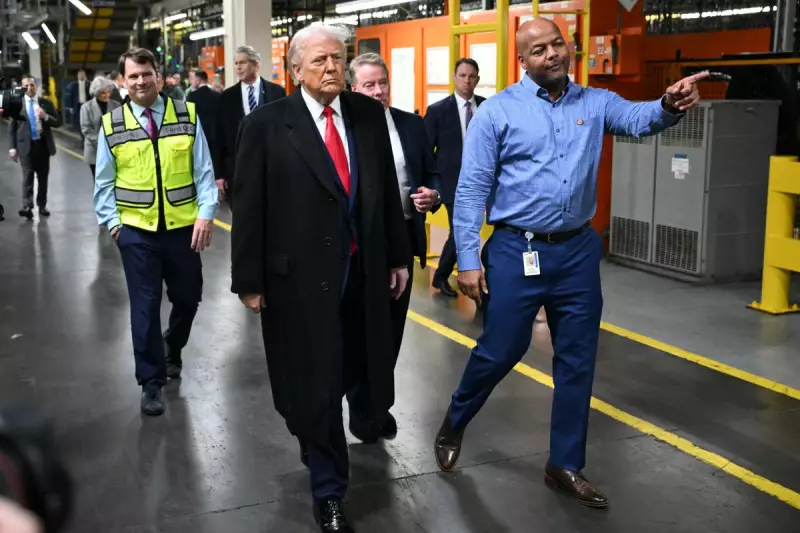
President Donald Trump's heralded "Liberation Day" tariffs, unveiled in April 2025 with a promise to revive American factory floors, have been followed by a persistent decline in manufacturing employment, according to official data.
Monthly Declines Defy 'Renaissance' Promise
The sector lost approximately 8,000 jobs in December 2025, capping a year where total losses are estimated between 68,000 and 72,000 positions. This stands in stark contrast to the administration's forecast of a manufacturing renaissance.
"2025 should have been a good year for manufacturing employment, and that didn't happen," stated economist Michael Hicks of Ball State University's Center for Business and Economic Research. "I think you really have to indict tariffs for that."

Uncertainty and a Looming 'Grim' Period
Manufacturers are grappling with profound uncertainty. Tariff rates have been introduced, modified, and rolled back throughout the year, leaving businesses unable to predict input costs. A pending Supreme Court case that could permanently strike down the emergency measures adds to the instability.
The situation may deteriorate further. Companies stocked up on inventory to beat initial tariff deadlines, and post-pandemic consumer spending is shifting towards services and experiences, away from durable goods.
"The manufacturing job losses that we see now are really just the beginning of what will be a pretty grim couple of quarters," warned Hicks, as the sector adjusts to lower demand.
Broad Sector Impact and Administration Counterpoints
The downturn is widespread:
- A November survey by the Federal Reserve Bank of Richmond found 57% of mid-sized manufacturers lacked certainty over input costs.
- Smaller firms have been particularly likely to delay investments in new facilities and equipment.
- Even priority tech sectors are affected, with semiconductor manufacturers shedding over 13,000 jobs since April.
J.B. Brown, CEO of Indiana metal foundry BCI Solutions Inc., voiced the frustration of many, telling Reuters, "Every time I hear that manufacturing is booming, I scream at the TV." His workforce is now half its size from two years ago.
The Trump administration, however, points to other economic indicators. In a recent Michigan speech, the president cited "the strongest and fastest economic turnaround in our country's history," highlighting strong third-quarter GDP growth, modestly declining unemployment, and increased factory construction spending spurred by tax incentives.
Nevertheless, the broader US labour market added about 584,000 jobs in 2025, marking the slowest pace of growth since 2020 and roughly a quarter of the job gains seen in 2024, President Biden's final year in office.