Remote-controlled ground robots are taking command of the battlefield in Ukraine, marking a new phase in the conflict with Russia. Volodymyr Zelensky claimed that Ukraine’s 3rd Separate Assault Brigade recaptured territory using only unmanned ground vehicles (UGVs) and drones, an operation he described as a first in the war. 'The occupiers surrendered, and the operation was carried out without infantry and without losses on our side,' he said, referring to a mission in the Kharkiv region.
The 3rd Assault Brigade aims to replace around 30 per cent of its infantry with UGVs to reduce troop losses on the eastern front, according to Mykola Zinkevych, commander of the 'NC13' Strike UGV Unit. 'The logic is simple: where the risk to a human is high, a robot should be used. Because the life of an infantryman is priceless, and robots don’t bleed,' he said.
Ukraine has become a world leader in UGV production and use; last year, its UGV market grew by 488 per cent, according to a study by the KSE Institute, BRAVE1, and Defence Builder. The vehicles are used for logistics, evacuating wounded, holding positions, destroying enemy targets, and laying mines. Commander Zinkevych said his unit has carried out more than 100 strike operations with UGVs in recent months, destroying enemy troops and command posts.
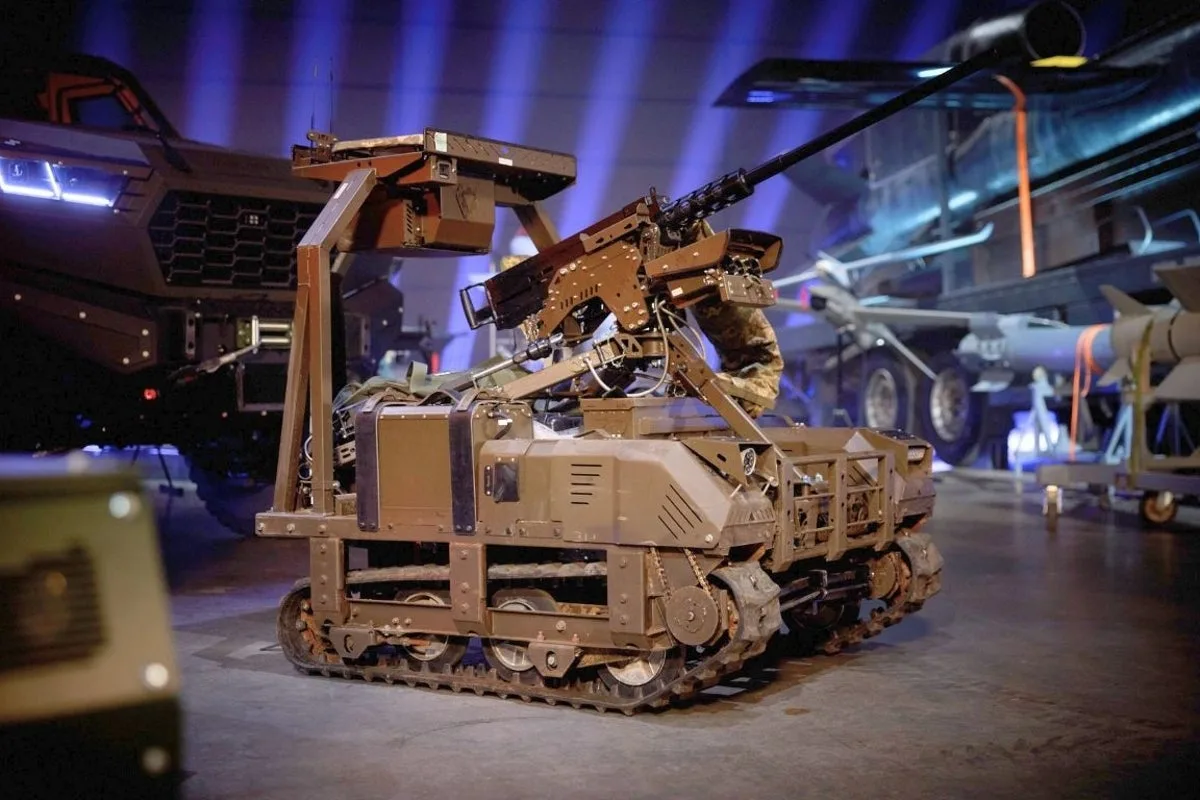
Among the most used robotic units is the TW12.7, produced by Ukrainian company DevDroid, which mounts a Browning machine gun. One TW12.7 held a frontline position for six weeks, providing suppressive fire and monitoring Russian movements. Oleg Fedoryshyn, head of research at DevDroid, said controlling a UGV from a safe zone 50km away is easier than holding a position for 24 hours manually. The average cost of a UGV for the Ukrainian military is $30,000 (£22,100), rising to $50,000 with a Browning machine gun.