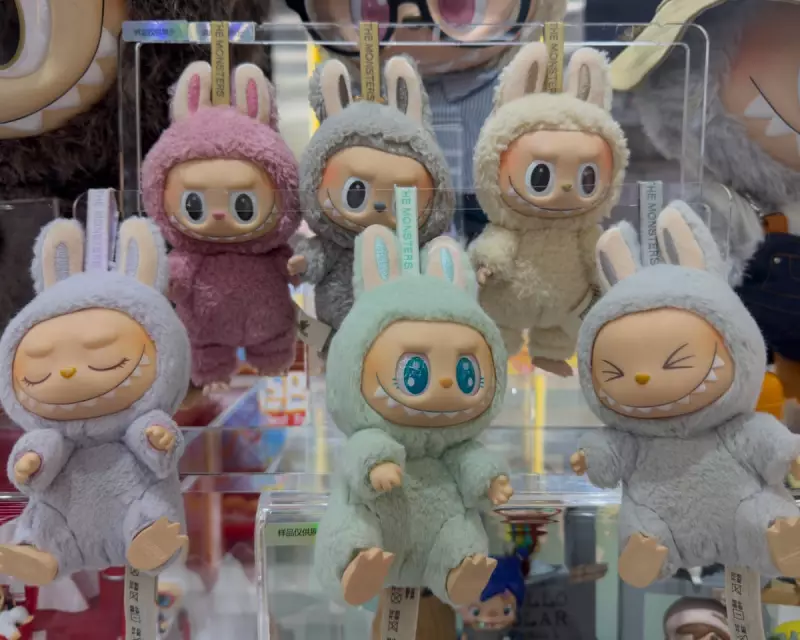
A major supplier for the wildly popular Labubu toys has been accused of systematic worker exploitation, including the illegal employment of teenagers without legal safeguards, according to a new investigation.
Allegations of Systemic Labour Violations
China Labor Watch (CLW), a New York-based non-governmental organisation, conducted a three-month probe in 2025 at the Shunjia Toys factory in Jiangxi province. The facility, which employs over 4,500 people, was found to be producing Labubu toys exclusively. Investigators spoke to more than 50 employees, including three under the age of 18.
The report claims the factory engaged in multiple exploitative practices. A central allegation is that workers aged 16 and 17 were employed without the special protections mandated by Chinese law. While employing individuals of this age is legal, the law requires prohibitions on dangerous or strenuous work. CLW found these young workers on standard assembly lines with identical workloads and targets to adult colleagues.

Furthermore, the investigation asserts that employees were routinely made to sign blank labour contracts. Workers were reportedly given just minutes to fill in personal details, while critical sections on job content, salary, social insurance, and contract duration were left blank and unexplained.
Intense Production Pressure Amid Soaring Demand
The findings highlight the intense pressure within the supply chain fuelled by Labubu's global fame. The "Monsters" line, which includes Labubu, generated a staggering 4.8bn yuan (£511m) in sales for Hong Kong-listed Pop Mart in just the first half of 2025. CEO Wang Ning stated the firm was on track for 20bn yuan in annual revenue.
To meet this demand, workers at Shunjia described unrealistic targets, with teams of 25-30 required to assemble at least 4,000 Labubu toys daily. Chinese law caps monthly overtime at 36 hours, but CLW documented workers frequently exceeding 100 extra hours per month.
Although Shunjia's official capacity is 12 million toys yearly, with plans to expand, CLW's interviews suggested actual output was far higher. Two teams alone were estimated to produce over 24 million units annually. "When market demand rises rapidly, production often expands well beyond planned levels, with the resulting pressure borne directly by workers," said CLW executive director Li Qiang.
Corporate Response and Broader Implications
In response to the allegations, a Pop Mart spokesperson emphasised the company takes worker welfare seriously, citing regular audits and third-party inspections. "We appreciate the information brought to our attention and are currently investigating the matter," the statement read. "Should the findings be substantiated, we will firmly require the relevant partners to implement comprehensive corrective actions."
Shunjia Toys could not be reached for comment. The conditions described are depressingly familiar in parts of China's manufacturing sector, where labour protections are often weakly enforced.
Li Qiang argued that current oversight is insufficient. He called on Pop Mart to establish accessible grievance mechanisms for workers, improve transparency on factory conditions, and disclose its full supply chain structure to enable meaningful external scrutiny.
The controversy underscores the significant challenges facing Chinese consumer brands like Pop Mart as they achieve global success. They face increasing expectations from international consumers and investors to uphold higher ethical and labour standards throughout their often complex and opaque supply networks.